
Saudi Arabia Seeks Help as China Quietly Pressures Iran Over Houthis
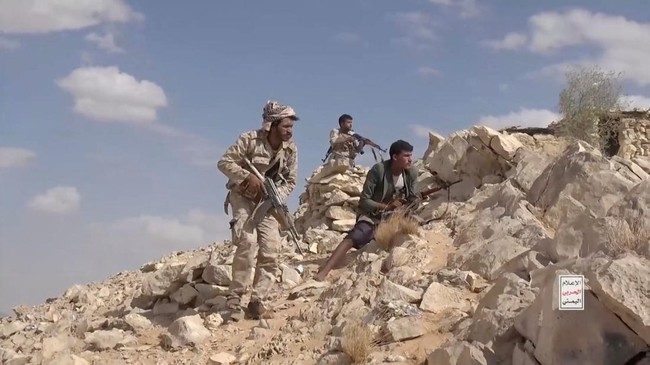
China is quietly asking Iran to use its influence to restrain the Houthlar group in Yemen after Saudi Arabia sought Beijing’s assistance in facing rapid attacks by the Tehran-backed group in recent weeks.
The request follows Houthi movements along the Red Sea coast and the area surrounding the Bab el-Mandeb Strait. Such movements have made Saudi Arabian shipping lanes and oil exports increasingly vulnerable, according to three Iranian sources familiar with the discussions, as reported by Reuters.
Publicly, Beijing has called for all parties to exercise restraint, open space for dialogue, and restore maritime security. However, according to the three sources, the message conveyed by China privately to Iran is far more assertive than its public statements.
China wants Iran to leverage its influence over the Houthis to ensure the conflict does not expand into energy routes that are critical to Beijing. As the world’s second-largest economy, China is heavily dependent on these routes to meet its energy requirements.
The three Iranian sources, speaking on condition of anonymity, did not explain how Beijing’s message was delivered to Tehran or whether the issue was discussed during Iranian Foreign Minister Abbas Araqchi’s visit to China on Wednesday (16/09/2026).
According to the sources, Tehran’s response to Beijing was that regional stability and peace depend on the end of the war between the United States and Israel against Iran.
China has not issued any public threats or indicated it would impose economic pressure on Iran should Tehran fail to use its influence over the Houthis, said the three Iranian sources.
Responding to Reuters’ request for comment, the Chinese Foreign Ministry stated that Beijing does not wish for regional tensions to expand further into Yemen and the Red Sea.
“China does not want to see regional tensions spreading further into Yemen and the Red Sea. Increasing regional instability is not in anyone’s interest,” the ministry said.
“The sovereignty and security of all countries must be respected, and facilities vital to the lives of people must not be targeted. China calls for an end to actions that further complicate the situation and urges a resolution through dialogue and negotiation,” it continued.
Threat of Expanding Regional War
China has been Iran’s largest trading partner for over a decade and remains its primary purchaser of oil. Data from commodity analysis firm Kpler shows that Chinese purchases accounted for more than 80% of Iran’s seaborne oil exports in 2025, averaging approximately 1.4 million barrels per day.
“Beijing is one of the few capitals that can still pressure Iran to control the Houthis,” said a senior Western diplomat in the region.
The Houthis emerged in the 1990s as a group opposing Saudi Arabian Sunni religious influence in Yemen. According to Iranian and Western sources, the group receives weaponry, training, and funding from Iran. The Houthis are also part of what Tehran calls the “Axis of Resistance” against the West and Israel.
The Houthi threat to vessels passing through the Red Sea and the Bab el-Mandeb Strait has the potential to significantly worsen the global energy crisis. The situation has become even more precarious after Iran began blockading the Strait of Hormuz, simultaneously increasing the likelihood of a broader regional conflict.
With the Strait of Hormuz practically closed, sustained Houthi attacks on ships or ports in the Red Sea could disrupt two major Middle Eastern oil export routes simultaneously.
This condition could potentially open a new front in the energy crisis and expand the confrontation between Iran and the United States.
One source noted that Iran and its allies now possess the capability to pressure both ends of the region’s primary maritime networks.
“China relies on both,” the source stated.
Alex Vatanka, Director of the Iran Program at the Middle East Institute in Washington, stated that China’s interests in the Middle East extend far beyond its relationship with Iran. According to him, while Beijing may oppose US pressure on Tehran, China also has a significant interest in regional stability.
Approximately half of China’s oil imports originate from the Middle East. Meanwhile, trade value between China and the Gulf Cooperation Council (GCC) countries reaches approximately US$300 billion per year.
“Iran can disrupt Hormuz. However, at a certain point, that influence begins to harm the very power Tehran increasingly relies upon,” said Vatanka.
China’s Dilemma
It remains unclear whether Tehran will act on the concerns expressed by Beijing, according to the three Iranian sources.
Nevertheless, the relationship with China carries immense economic and strategic weight for Iran, particularly as the country continues to face hostility from the United States.
China is one of the few nations with the financial capacity to provide the investment needed by Tehran to maintain its oil industry and mitigate the pressure on an economy battered by war and sanctions.
Beijing has also demonstrated its diplomatic influence in the region. In 2023, China acted as a mediator in the agreement that restored relations between Iran and Saudi Arabia after years of tension.
However, China’s influence over Iran is not without limits. Several critics within Iran have highlighted the relatively small scale of Chinese trade and investment in non-oil sectors since the two nations signed a 25-year cooperation pact in 2021.
Source: jawawa.id (https://jawawa.id/newsitem/saudi-arabia-seeks-help-as-china-quietly-pressures-iran-over-houthis-1789689164)
Originally published by CNBC Indonesia (https://www.cnbcindonesia.com/news/20260918053624-4-768865/arab-saudi-minta-tolong-china-diam-diam-tekan-iran-soal-houthi), translated from Indonesian