
Saudi Arabia, Pakistan, and Turkey Sign Tripartite Defence Pact in Mecca
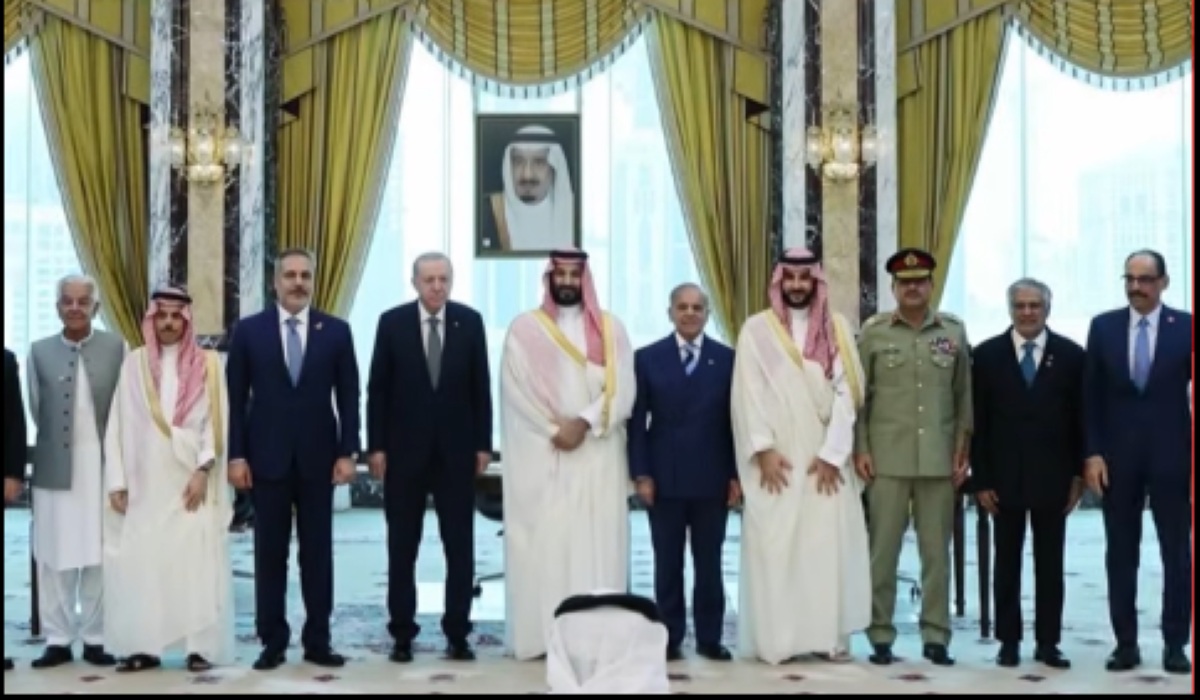
Saudi Arabia, Pakistan, and Turkey have officially signed a joint defence pact amid rising tensions in the Middle East caused by the United States and Israel’s war against Iran. The agreement, named the Mecca Joint Deterrence Agreement, was signed in the holy city of Mecca on Friday (7/8/2026).
The agreement was signed directly by Turkish President Recep Tayyip Erdogan, Saudi Crown Prince and Prime Minister Mohammed bin Salman (MBS), and Pakistani Prime Minister Shehbaz Sharif. The pact stipulates that an armed attack against any one of the three countries will be considered an attack against all three, as a form of collective deterrence against external aggression.
Pakistan’s Ministry of Foreign Affairs stated that the agreement is guided by long historical relations as well as Islamic bonds of brotherhood and solidarity. In addition to strengthening collective security, the pact aims to promote peace and stability in an increasingly volatile region.
The signing took place a day after Prime Minister Shehbaz Sharif, accompanied by Army Chief Asim Munir, arrived in Saudi Arabia. President Erdogan also travelled to Mecca specifically to meet with MBS to formalise this strategic cooperation.
Negotiations for the pact were reported to have been ongoing since the 7 October 2023 attacks and the escalating situation in the Gaza Strip, Palestine. Tensions have further intensified with the direct involvement of the US and Israel in the conflict with Iran. Several key factors driving this alliance include:
Although the Iranian government has not yet issued an official statement, Iranian parliamentarian Ebrahim Rezaei criticised the move. He stated that reliance on paper agreements will not provide true security for Saudi Arabia, just as their dependence on the United States has not.
On the other hand, Israel and the United States have not yet provided official comment. However, some analysts in Jerusalem had previously warned of the formation of a Sunni axis that could be seen as a new challenge to Israeli interests in the region.
With the Mecca Joint Deterrence Agreement, the Middle East’s security architecture now enters a new chapter that places greater emphasis on military coordination, intelligence sharing, and defence industry self-reliance among the major powers of the Islamic world.
The escalation of Houthi attacks in Yemen and the Red Sea threatens Saudi Arabia’s stability and raises concerns about a humanitarian crisis and disruption to global oil supplies.
The Houthi group launched at least 12 missile attacks into Yemeni government territory, killing 30 soldiers and injuring civilians in Saudi Arabia.
Saudi Arabia, Turkey, and Pakistan officially signed a joint defence pact in Jeddah to address the escalating conflict between the US and Iran in the region.
Saudi Arabia formed a NATO-style military alliance with Pakistan and Turkey to strengthen collective defence against the threat of Iranian attacks.
Saudi Arabia is preparing for potential coordinated attacks from Iraqi militias and the Houthis under the direction of Iran’s IRGC, targeting economic and civilian facilities.
Saudi Arabia, Turkey, and Pakistan officially signed a joint defence pact in Jeddah to address the escalating conflict between the US and Iran in the region.
Saudi Arabia formed a NATO-style military alliance with Pakistan and Turkey to strengthen collective defence against the threat of Iranian attacks.
Iranian Foreign Minister Abbas Araghchi conducted intensive diplomacy with Saudi Arabia and Pakistan to de-escalate the conflict in the Middle East.
Source: jawawa.id (https://jawawa.id/newsitem/saudi-arabia-pakistan-and-turkey-sign-tripartite-defence-pact-in-mecca-1786121501)
Originally published by Media Indonesia (https://mediaindonesia.com/internasional/919571/latar-belakang-dan-isi-pakta-pertahanan-saudi-pakistan-turki-di-mekah), translated from Indonesian