
Saudi Arabia Faces Severe Dilemma in Confronting Houthis
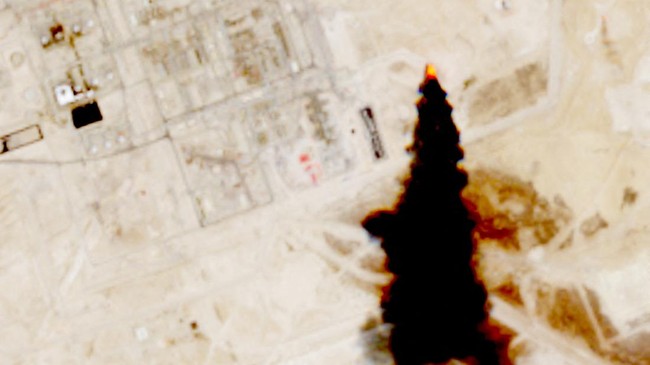
Saudi Arabia is currently in an extremely difficult position with minimal options to respond to the rapid progress and attacks by the Houthi rebel group in Yemen. Experts suggest that any choice made by the Gulf nation will bring significant consequences and immense losses.
Quoting CNN International on Monday (14/09/2026), the primary message emanating from the kingdom is that Riyadh does not desire an all-out war. However, the aggressive behaviour of the Iran-backed Houthis could drag Saudi Arabia into a much broader conflict.
Yemen expert and Washington DC-based risk advisor, Mohammed Al-Bata, warned that all signs now point towards a large-scale Saudi retaliation. “At this point, they have no choice,” he said.
The latest escalation was triggered by the Houthis’ success in seizing the strategic Perim Island at the mouth of the Red Sea, along with the port city of Mocha this week. This move is aimed at controlling the Bab al-Mandeb Strait, a vital global energy route.
Shortly thereafter, a major Saudi oil pipeline was forced to shut down after being bombarded by drones from Iraqi territory. Although no party has claimed responsibility, US President Donald Trump immediately accused Tehran of being the mastermind behind the attack, given that Iranian proxies are known to operate in Iraq.
The East-West pipeline has been used more intensively by Saudi Arabia since the Iran-led conflict forced the closure of the Strait of Hormuz, diverting approximately 5 million barrels of oil per day from the Persian Gulf. This series of attacks validates Riyadh’s initial fears regarding potential coordinated attacks from various fronts by Iranian-backed militias.
The Risky Option of All-Out War
On paper, Saudi Arabia, with its modern military, appears superior to the Houthis. However, in reality, the group—once considered a ragtag militia—has spent years advancing its combat tactics. The Houthis’ popularity has even surged in the Middle East following their attacks on Israel in response to the aggression in Gaza since 7 October.
Visiting researcher at the European Council on Foreign Relations, Cinzia Bianco, highlighted that the option of military escalation brings massive losses for the kingdom.
“Saudi Arabia truly has limited options in the conflict with the Houthis,” she stated.
According to Bianco, if Riyadh chooses a frontal assault, the situation will evolve into an endless open conflict, similar to the Yemeni civil war which has triggered the world’s worst humanitarian crisis. Even worse, an all-out war risks directly involving Iran, which would ultimately force Saudi Arabia into the battlefield as a combatant on the side of the US.
On the other hand, the US appears reluctant to involve itself militarily. Sources reveal that the Saudi Crown Prince has twice called Trump to request assistance with attacks against the Houthis, but was rebuffed.
“They [the Houthis] much prefer that we do not involve ourselves, and they let most ships pass. There is only one country making them unhappy, and we will straighten that out,” Trump asserted.
Despite refusing direct military strikes, sources indicate that the US has sent approximately 100 military advisers to Saudi Arabia specifically to provide intelligence support. Former Saudi government adviser, Nawaf Obaid, emphasised that Saudi requests were essentially for intelligence, not American airstrikes.
Deadlock in the Political Path
Beyond military options, the political path has also reached a deadlock. The head of the Houthi-run Saba News Agency, Nasr al-Din Amer, asserted that his group will continue to pressure Saudi Arabia militarily until the economic and travel blockade in northern Yemen is lifted.
“Pressuring them until they [Saudi Arabia] break the siege that has been unfairly imposed by Saudi enemies for 12 years,” he explained.
Bianco assesses that Saudi strategic patience has failed, and the kingdom appears to have “exhausted its political solutions”. Conversely, Al-Basha believes that even a peace agreement with the Houthis would be viewed as a form of surrender, which would be highly damaging to Riyadh’s reputation.
Nevertheless, Saudi geopolitical analyst Salman Al-Ansari believes that a counter-attack by the Yemeni government, supported by Saudi Arabia, is on the horizon.
“Riyadh now expects the international community to correct course and fully support the liberation of Yemen from these rogue militias,” he concluded.