
Saudi Arabia Faces Renewed Dilemma as MBS Caught in Crossfire, Stability Threatened
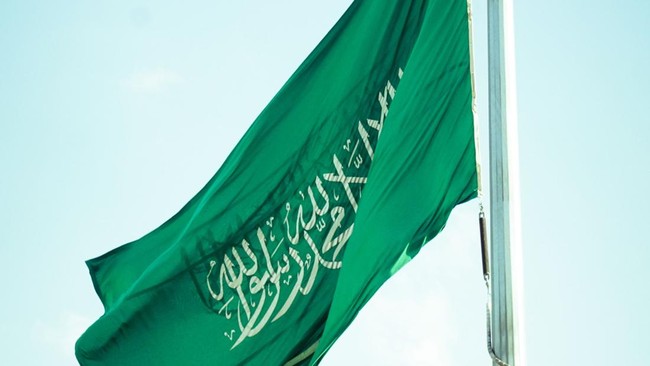
Saudi Arabia is once again in a dilemma as the United States (US) and Iran conflict heats up. Riyadh has been trying to avoid direct involvement since the war broke out five months ago, but a series of drone and missile attacks linked to Iranian proxy groups is forcing the kingdom to take firmer military action. This week, Saudi Arabia launched a joint operation with the US against pro-Iran militias in Iraq, which are accused of being responsible for drone attacks on Saudi territory. Despite this, Riyadh still faces a difficult choice between continuing retaliatory strikes as a deterrent or stepping back to de-escalate tensions and prevent a wider regional conflict.
The dilemma arises because Saudi Arabia has spent recent years striving to maintain regional stability to support Crown Prince Mohammed bin Salman’s (MBS) ambitious economic agenda. Through Vision 2030, Riyadh aims to reduce its dependence on oil, attract foreign investment, and build modern industry and infrastructure. However, these plans are now under threat as drone and missile attacks continue to hit the kingdom.
The ongoing five-month conflict has drawn two opposing blocs into sharper focus. On one side is Iran, along with its Islamic Revolutionary Guard Corps (IRGC) and allied groups such as the Houthis in Yemen, the Popular Mobilisation Forces (PMF) in Iraq, and Hezbollah in Lebanon. On the other side is the US, with its Central Command (Centcom), supported by several Gulf states and Jordan, while Israel remains a close ally of Washington but is not directly involved in current operations. Iran has also increased pressure by launching drone and missile attacks on other Gulf nations, including Jordan, Kuwait, and Bahrain, and by threatening commercial vessels transiting the Strait of Hormuz outside of its stipulated rules. The involvement of Iraqi militias and the Houthis is seen as increasing the risk of the conflict escalating into a wider regional war.
The threat to Saudi Arabia is not new. In September 2019, strategic oil facilities at Abqaiq and Khurais were hit by drone strikes linked to Iranian proxy groups, temporarily halving the kingdom’s oil exports and exposing the vulnerability of its energy infrastructure. Concerns have now resurfaced after satellite imagery this week indicated that the Abqaiq oil facility was targeted again. In response to the US and Israeli strikes, Iran closed the Strait of Hormuz, forcing Saudi Arabia to divert approximately five million barrels of oil per day through its east-west pipeline network to the Yanbu terminal on the Red Sea to maintain supplies to Asian markets.
However, this alternative route is also facing threats. After Saudi Arabia attacked Sanaa airport in mid-July to prevent Iranian aircraft from landing, the Houthis retaliated by striking Abha and Jizan airports and intensifying attacks on Saudi vessels in the Red Sea. This has made shipping through the Bab el-Mandeb Strait increasingly risky and threatens to disrupt Saudi oil exports to Asia. The situation presents a major challenge for Riyadh. After seven years of failing to defeat the Houthis militarily and reaching a fragile ceasefire in 2022, Saudi Arabia is once again facing attacks from the south by the Houthis and from the north by Iraqi militias. This pressure runs counter to the ambitions of Vision 2030, which requires security stability and a conducive investment climate.