
SATO Expands Sanitation Access to Indonesia's 3T Regions to Support Golden Vision 2045
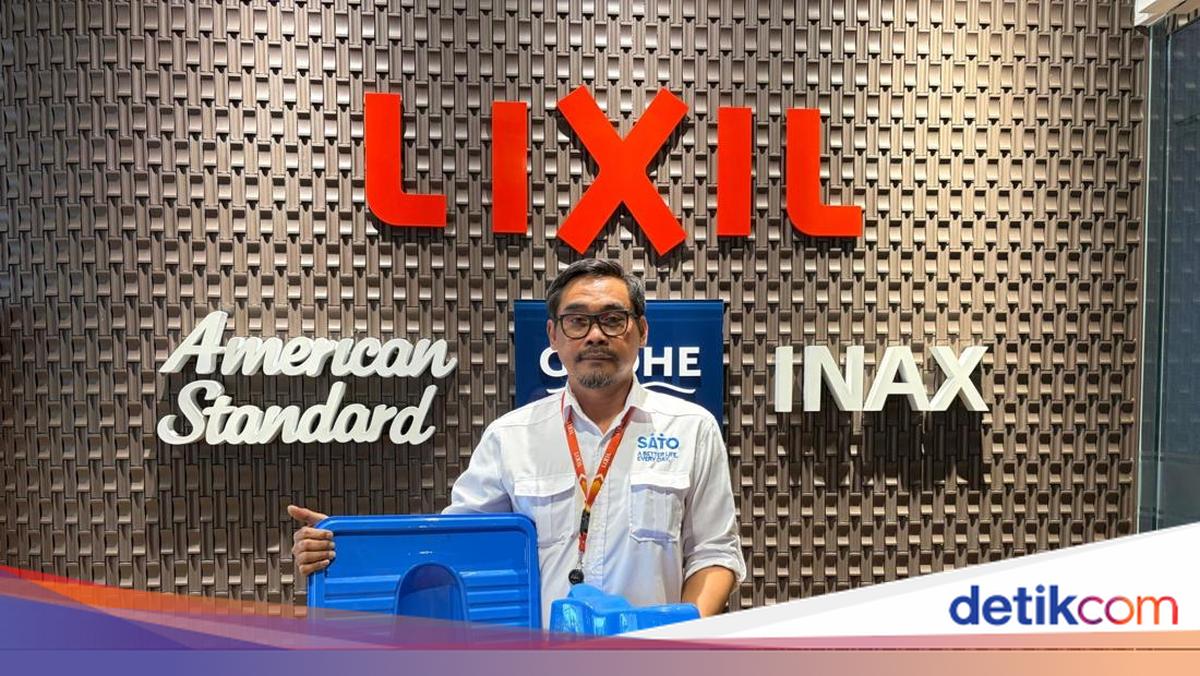
Open defecation (ODF) remains a key challenge requiring collective action. The government aims for 70% safe sanitation to align with Indonesia’s Golden Vision 2045. This also corresponds to Sustainable Development Goal (SDG) 6.2, which focuses on sanitation and hygiene. In light of this, LIXIL’s SATO brand is working to expand sanitation access across Indonesia.
SATO Indonesia Country Leader Agung Kamasan stated Indonesia has made progress in sanitation access, with around 80% of the population having adequate toilets and open defecation rates declining. “However, due to Indonesia’s large population, even a small percentage translates to millions still lacking safe sanitation,” he said in an exclusive interview with detikcom on Tuesday, 19 May 2026.
According to Agung, current sanitation challenges extend beyond providing toilets to safely managing waste through to final treatment. Therefore, SATO has introduced toilet solutions designed to address on-ground challenges such as water scarcity and difficulties in distributing materials to remote areas.
Agung explained SATO toilets are made from lightweight yet durable polypropylene (PP) material, making them easier to transport to remote areas compared to conventional ceramic toilets. “Transporting ceramic toilets carries a high risk of breakage, and workers can typically carry only one unit per trip. SATO toilets, being lighter, allow workers to transport 10 to 20 units in a single journey,” he said. Additionally, SATO toilets are water-efficient, requiring only one scoop of water for flushing compared to multiple scoops for standard toilets, making them suitable for arid regions.
A key SATO innovation is the automatic trap door mechanism in its I-TRAP system. This auto-closing technology not only saves water during flushing but also reduces odours and prevents rodents, snakes, and insects from entering or exiting through drainage channels.
In implementing sanitation programmes, SATO collaborates with local organisations, community groups, and regional governments to ensure effective public education on sanitation. “We recognise sanitation is a major challenge and cannot be tackled alone, so we partner with various stakeholders, including the government,” Agung said. “Most often, we work with local community organisations, as they understand the issues best, allowing us to jointly develop solutions for sanitation challenges,” he added.
One collaboration includes the Youth Sanitation Coalition in Lampung through the “Riverbank Music” education programme targeting young people. SATO also partners with the Poverty Eradication Acceleration Agency (BP Taskin) to expand sanitation access in 3T regions. Together, they support the Community-Based Total Sanitation (STBM) programme, which has provided improved sanitation access to over 16,000 people between 2024 and 2025. This achievement aligns with LIXIL’s vision of “making better homes a reality for everyone, everywhere.”
Beyond Bogor, Lampung, Papua, and Central Java, SATO plans to expand its programme to other regions including East Nusa Tenggara (NTT), West Kalimantan (Kalbar), and West Java (Jabar). These areas are prioritised due to ongoing challenges with clean water scarcity and sanitation access. SATO aims to continue contributing towards Indonesia’s goal of eliminating sanitation issues by 2045. “We want more people to have access to safe sanitation and understand the importance of proper waste management. Sanitation is crucial for public health and Indonesia’s Golden Vision 2045,” Agung said. “This means improving toilet access for communities, with the hope that by 2045, Indonesia will be free from sanitation challenges,” he concluded.