
Satellites Become the Backbone of Digital Connectivity in Eastern Indonesia
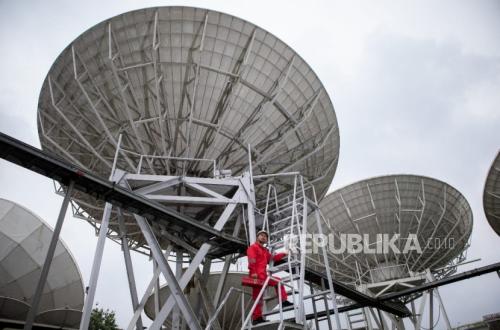
Internet access disparities in Indonesia remain a significant challenge, especially in the eastern regions with difficult geographical conditions that are hard to reach. Limitations in terrestrial network infrastructure mean that several areas still experience blank spots and are not optimally connected to digital services.
A 2025 survey by the Indonesian Internet Service Providers Association (APJII) records that national internet penetration has reached 80.66%. However, eastern regions of Indonesia such as Maluku and Papua are only around 69.26%, indicating ongoing disparities in access between regions.
Telkomsat’s Commercial Director, Andri Yunianto, explained that geographical conditions such as mountains, dense forests, and archipelagic areas pose the main obstacles to building terrestrial networks. He assessed that limitations in fibre optic and BTS (Base Transceiver Stations) impact public access to information, public services, and digital economic activities.
“Limitations in terrestrial infrastructure such as fibre optic networks and BTS result in blank spot areas that limit public access to information, public services, and digital economic activities,” said Andri in his statement in Jakarta on Sunday (19/4/2026).
The government, continued Andri, continues to promote the acceleration of digital infrastructure development, including in underdeveloped, frontier, and outermost regions (3T). This step is taken to expand access and support equitable national development based on digital platforms.
In such conditions, satellite technology is considered a strategic solution to reach areas that cannot be served by land-based networks. Indonesia’s character as an archipelagic nation makes satellite-based network development more flexible compared to building physical infrastructure, which requires significant time and cost.
“This is where satellites play an important role as the backbone of connectivity in those regions,” stated Andri.
The utilisation of satellites has been applied in various sectors, from education to healthcare. Satellite connectivity helps access learning in remote areas and supports telemedicine services for communities in hard-to-reach regions.
In addition, digital connectivity is also considered vital for local governments in developing digital-based public services and opening new economic opportunities, including promoting the digitalisation of MSMEs and market access.
Andri Yunianto emphasised that strengthening connectivity infrastructure in the eastern region needs to be continuously carried out to support national digital transformation. “This effort is important so that the benefits of connectivity can be felt more evenly by all levels of society, while also driving economic growth and improving quality of life in various regions,” said Andri.
With geographical challenges still posing the main barrier, the utilisation of satellite technology is projected to remain a key component in strategies for equitable digital access in Indonesia.