
Satellite Technology Utilised to Protect Whale Sharks in Shipping Lanes
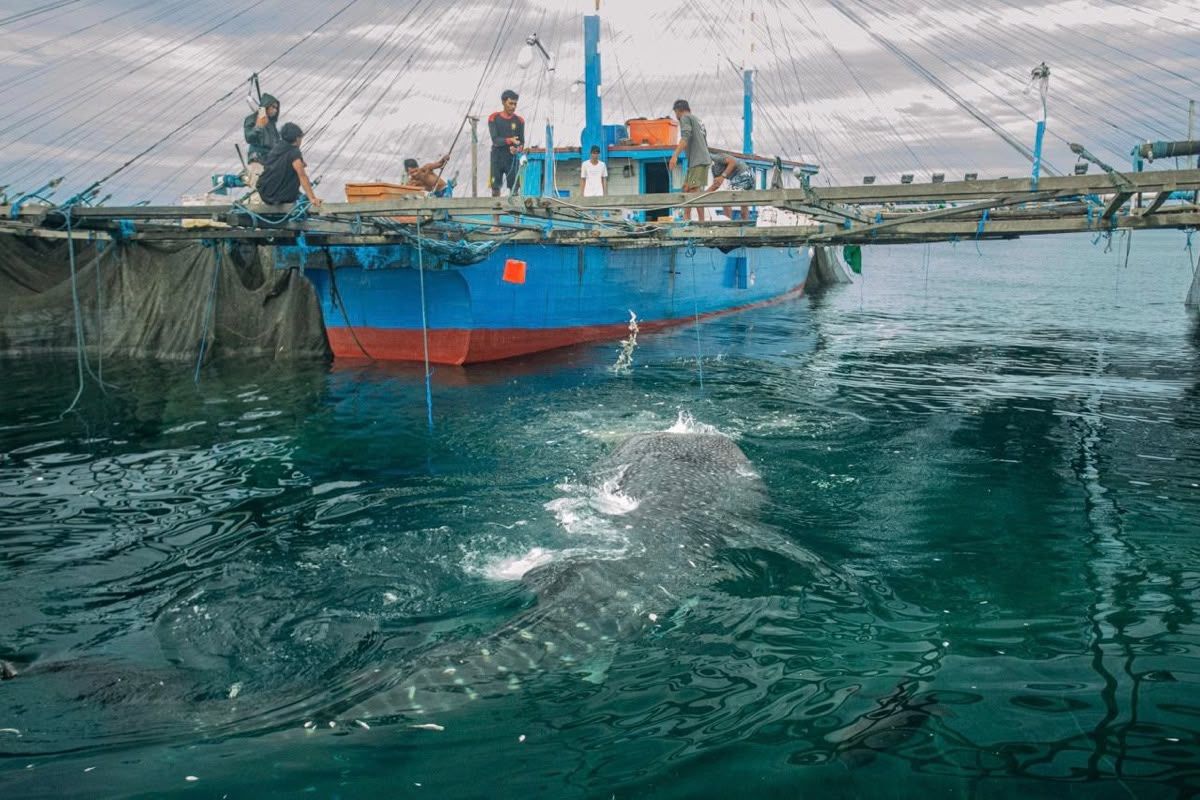
Efforts to protect whale sharks in Indonesian waters are being continuously developed through the use of technology and collaboration between various parties. One method involves installing satellite tags to study the movement patterns of whale sharks, allowing the risks of interaction and collisions with ships to be identified earlier.
In the waters of Talisayan, East Kalimantan, whale sharks have long been part of the lives of coastal communities. For local fishermen, these the largest marine mammals are not merely creatures living in the sea, but a part of the shared living space they utilise. As fishermen seek their livelihoods in these waters, whale sharks also traverse the same area for feeding and migration. Human life and marine fauna have long coexisted.
The presence of whale sharks plays a vital role in the marine ecosystem. As one of the ocean’s megafauna, the species contributes to the ecological balance while opening economic opportunities for coastal communities through the development of conservation-based tourism, or ecotourism. However, the survival of whale sharks faces various threats, including the risk of collisions with ships operating in shipping lanes.
Whale sharks are classified as Endangered by the International Union for Conservation of Nature (IUCN). Their global population is reported to have declined by more than 50 per cent. With relatively slow reproduction rates, the recovery of the whale shark population is expected to take a long time. Indonesia, as one of the important habitats for this species, holds a strategic role in maintaining its preservation.
This situation has prompted PT Pertamina International Shipping (PIS) to take part in marine biodiversity protection efforts, specifically regarding whale sharks. As a company conducting business activities at sea, PIS views that sustainable shipping must go hand-in-hand with efforts to maintain the ecosystem and biodiversity in Indonesian waters.
“PIS is optimising sustainable shipping and maintaining biodiversity, especially the marine ecosystem, so that business and the environment can run harmoniously and sustainably for the future,” said Pjs. Corporate Secretary of PIS, Vega Pita.
According to Vega, whale shark conservation is an example of how the business world can contribute to addressing environmental challenges through innovation and cooperation with various parties.
At the Indonesia Sustainability 3och Forum 2026, PIS presented the approach undertaken alongside the NGO Konservasi Indonesia to support whale shark protection while simultaneously increasing the safety of shipping activities. One of the steps taken is the installation of satellite tags on whale sharks to study movement patterns and identify important habitats for the species. The data obtained from this technology can assist researchers in identifying areas with a high potential for interaction between whale sharks and ships. This information can then be used as a basis for earlier risk mitigation.
Senior Manager of Focal Species Conservation at Konservasi Indonesia, Iqbal Herwata, stated that technology plays a crucial role in developing data-based conservation. “The installation of satellite tags can provide us with information on whale shark movements so that mitigation can be carried out before the risk of ship collisions becomes unidentified and dangerous for the whales,” said Iqbal, who was directly involved in the Whale Shark Tagging programme in the waters of the Derawan Islands initiated by PIS.
In addition to the use of technology, whale shark protection is also carried out through increasing the awareness and capacity of seafarers operating at sea. Understanding whale shark habitats and implementing safer shipping practices are essential parts of the effort to reduce potential risks to these marine megafauna. For seafarers, information regarding the presence and movement of whale sharks can help increase vigilance when ships traverse areas that serve as habitats or migration routes for the species.
“PIS’s initiative in protecting whale shark habitats is very important for the lives of marine megafauna whose threats can come from ships, so that we can be more careful when passing through vulnerable areas,” said Capt. Marsel Williem, a PIS ship seafarer.
This approach demonstrates that shipping activities and marine conservation can proceed side-by-side. Through the use of technology, increased seafarer capacity, and collaboration with various stakeholders, risks to whale sharks can be minimised without neglecting the aspects of safety and operational effectiveness of shipping. For PIS, sustainability is not only about how business activities are conducted, but also how those activities can contribute to the preservation of biodiversity. Ultimately, protecting whale sharks is not just about saving a single species; its existence is part of the effort to maintain the balance of the marine ecosystem, which has long been a source of life for coastal communities and future generations.