
Satellite Internet Connectivity Strengthens Disaster Mitigation and Village Services in Sukabumi
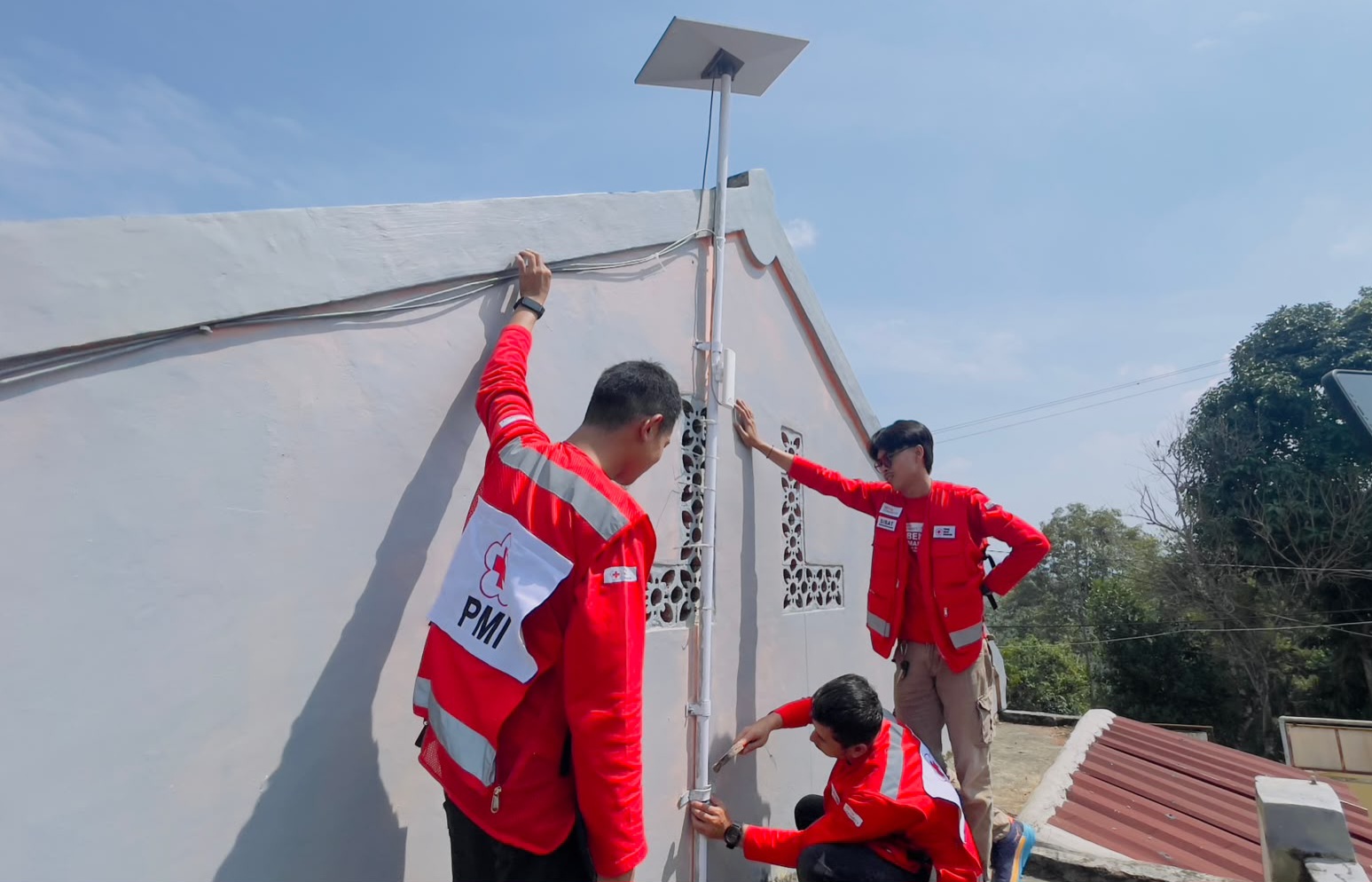
The Indonesian Red Cross (PMI) of Sukabumi Regency, West Java, together with Atma Connect and supported by the Internet Society Foundation, is developing the expansion of community-based internet connectivity. This effort aims to increase community preparedness for various potential disasters while strengthening digital-based village governance.
The first phase of the programme, titled ‘Developing a Sustainable Community-Based Internet Resilience Model for Disaster Management’, was implemented in Sukamaju Village, Nyalindung District, and Ciengang Village, Gegerbitung District. In the second phase, the programme is being expanded to five villages across Purabaya, Cidolog, and Curugkembar Districts.
In Citamiang Village, Purabaya District, the benefits of the programme are already being felt. Internet connectivity allows Community-Based Disaster Preparedness (Sibat) volunteers to receive information more quickly and send real-time field condition reports. It also speeds up coordination with PMI and the village government, as well as providing disaster education to the community through various digital platforms developed by Atma Connect.
Sibat volunteer for Citamiang Village, Lukman Hakim, said that before the satellite-based internet support, Sibat volunteers often faced network constraints when conveying information to fellow volunteers and the community. “Network limitations meant communication did not always run smoothly, so the delivery of disaster information was sometimes received late,” he explained on Thursday (30/7).
According to him, that situation has now changed. The speed of communication makes the mitigation process and initial disaster handling more effective. “Now the communication process is much faster and more effective. We can immediately receive information, report conditions in the field, coordinate with PMI and the village government, as well as provide disaster education to the community. In emergency situations, the speed of information is crucial in determining the handling process,” he stated.
Citamiang Village Secretary, Nenda Shopiya Aspari, said that almost all village administration is now application-based. This condition requires stable internet connection support. “This programme is very beneficial for supporting various village programmes. Apart from disseminating disaster information and strengthening coordination during a disaster, the internet is also a primary need in village administration. Currently, almost all support for village government work is application-based, which really requires an internet connection,” said Nenda.
According to Nenda, in her area, the internet network is used to input Village and Sub-district Profile (Prodeskel) data, village financial administration, village asset data management, and to submit social assistance for underprivileged communities through the Ministry of Social Affairs’ SIKS-NG application operated by village officers. “In addition, the internet connection is also very helpful for conducting online meetings, training, and various activities in the village hall that require internet access,” she said.
Atma Connect Programme Director, Alpan R Kasdar, said satellite-based internet was chosen because it can remain operational when conventional communication networks are disrupted due to a disaster. The second phase of the programme focuses not only on infrastructure development but also on increasing community capacity as the main actors in disaster mitigation at the village level. “The first phase was successful in two villages in Sukabumi Regency. Now we are expanding to five villages in three districts. We are not only installing internet in disaster-prone villages but also providing training to volunteers so they can utilise technology to accelerate the disaster mitigation and response process,” he concluded.