
Sarmuji: Green Industry Is Not Just an Obligation but a New Economic Opportunity
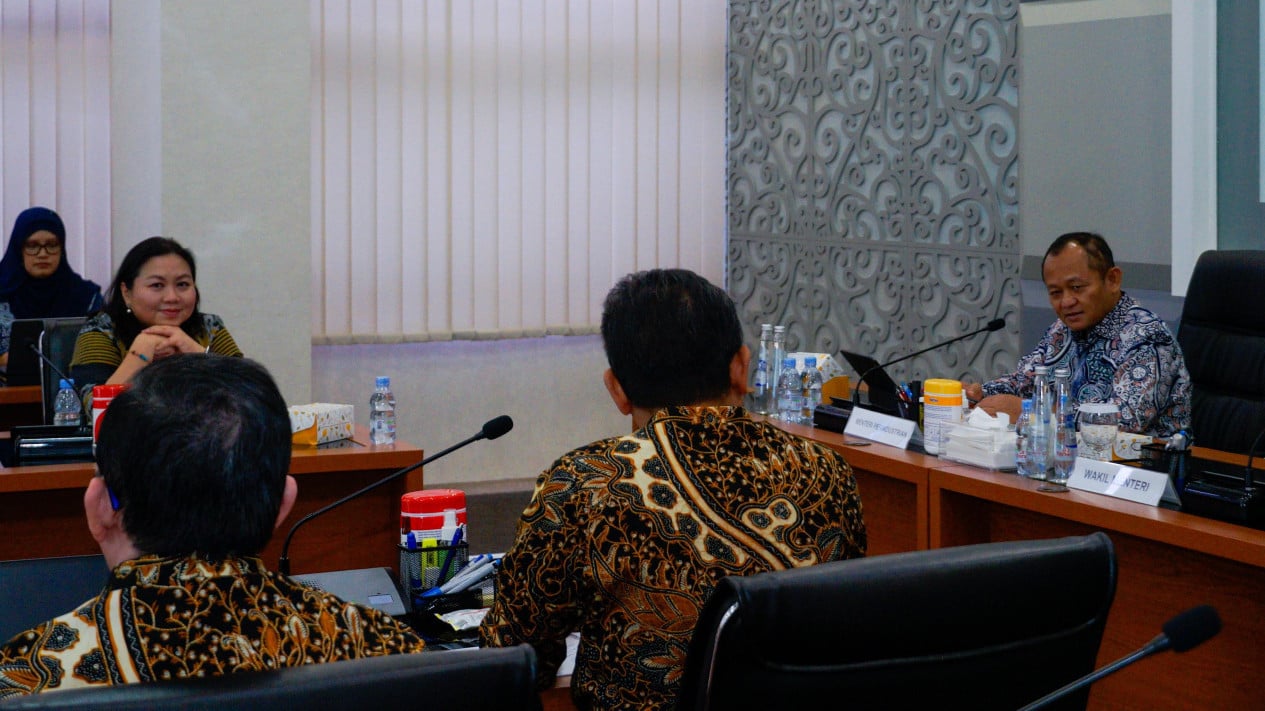
Industry Minister Muhammad Sarmuji has stressed that the transition to green industry represents a new economic opportunity, not merely an environmental obligation. Under carbon trading schemes, industries that save energy and reduce emissions can convert those reductions into valuable commodities in the carbon market, while also strengthening their global competitiveness.
“Transforming towards green industry is not merely an environmental obligation, but a new economic opportunity. By integrating green economy principles and carbon trading, industries that achieve energy efficiency and emissions reductions can convert those reductions into value-added commodities in the carbon market. This will promote efficiency while strengthening the global competitiveness of national industry,” Sarmuji said in Jakarta, quoted on Friday (9 October 2026).
The government, he said, is not only responsible for setting regulations but also for providing assistance and technical guidance to industrial businesses so they can comply with requirements and apply green industry principles in their production processes.
Alongside promoting green industry, the Ministry of Industry is strengthening the competitiveness of national industry through standardisation and certification. Sarmuji said both are important tools for ensuring that products on the market meet quality standards.
“By accelerating certification processes and overseeing industrial standardisation, the Ministry of Industry is encouraging products on the market to meet high standards of quality. This is important given the vital role manufacturing plays in driving national economic growth,” he said.
By September 2026, the ministry had conducted oversight of 45 Indonesian National Standards (SNI), up from 28 the previous year. It had also monitored 78 brands, compared with 73 in the previous year. The ministry plans to oversee a further six SNI and nine brands between October and November 2026.
Oversight is conducted at factories and in markets, and includes sampling products subject to mandatory SNI certification. The work is guided by Minister of Industry Regulation No. 45 of 2022 and ministerial regulations governing the mandatory application of each SNI.
Emmy Suryandari, head of the Ministry of Industry’s Agency for Industrial Standardisation and Services Policy (BSKJI), said standardisation oversight is part of the government’s effort to ensure that products sold comply with established standards. It is also intended to prevent losses to the state and the public arising from the circulation of non-compliant products.
Source: jawawa.id (https://jawawa.id/newsitem/sarmuji-green-industry-is-not-just-an-obligation-but-a-new-economic-opportunity-1791507111)
Originally published by VIVA.co.id (https://www.viva.co.id/bisnis/1934392-sarmuji-industri-hijau-bukan-sekadar-kewajiban-tetapi-peluang-ekonomi-baru), translated from Indonesian