
Sarjito prepares 8 strategic policies for mineral exchange development
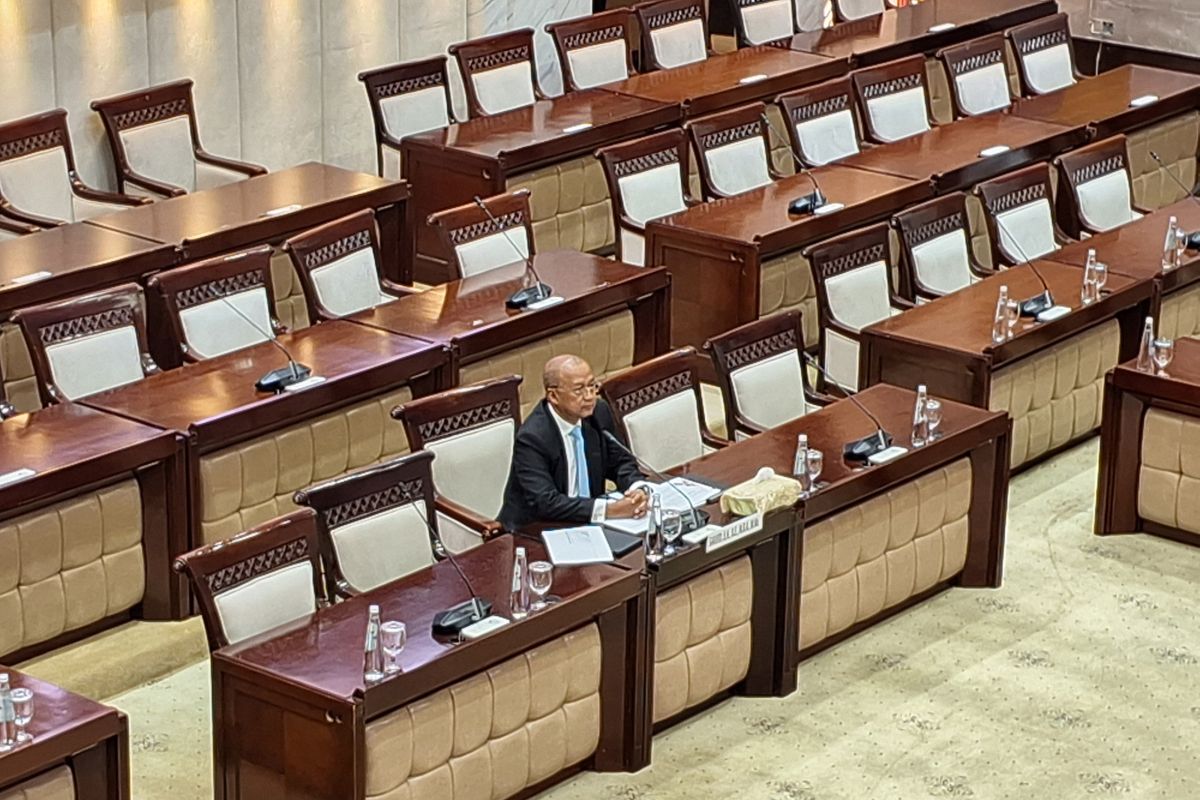
Jakarta (ANTARA) - Candidate for Chief Executive of the Mineral and Strategic Commodities Exchange (BMKS), Sarjito, has prepared eight strategic policies to build a BMKS that is liquid, trusted, and capable of strengthening Indonesia’s market sovereignty.
He said the development of BMKS must be directed so that Indonesia no longer remains merely a price taker, but can gradually become a price influencer and eventually a price maker in the global mineral and strategic commodities market.
“BMKS certainly does not have to be big on the first day, but it must be trusted from the first transaction,” said Sarjito during a fit and proper test at Commission XI of the Indonesian House of Representatives (DPR RI) in Jakarta on Monday.
In his presentation, Sarjito said he has prepared eight strategic policies to serve as the foundation for the future development of Indonesia’s BMKS.
First, building trusted infrastructure, encompassing warehousing, surveyor or appraisal institutions, the exchange itself, and a clearing institution that is secure, reliable, and integrated.
Second, building a trusted market, namely a market that is transparent, fair, orderly, and liquid so as to increase the confidence of business actors and traders.
Third, developing trusted products by ensuring that traded products are structured, standardised, transparent, and provide benefits for the national interest.
Fourth, building trusted data through inter-agency data integration and exchange, whereby mineral and commodity data currently scattered across various institutions need to be operated in an integrated manner so that it can serve as a basis for policy-making and price formation.
Fifth, building a trusted regulator, whereby BMKS supervision must be supported by regulators and related institutions that have a strong understanding of mineral and commodity exchange trading.
Sixth, building a trusted ecosystem involving the Financial Services Authority (OJK), relevant ministries, industry players, and various other stakeholders.
“This ecosystem must be interconnected. OJK cannot act as a sole regulator working alone; it must harmonise with ministries and various other parties,” said Sarjito.
Seventh, strengthening market depth and capacity by expanding participant involvement and developing various mineral and commodity products that can be traded on the BMKS.
Eighth, gradually making BMKS a price reference for Indonesia’s strategic minerals and commodities, so that Indonesia can improve its position from price taker to price influencer and, in the long term, to price maker.
On this occasion, Sarjito stressed that the development of BMKS requires trust from the outset because the preparation time is relatively limited.
“This is a very heavy mandate considering the time is already very tight, only a few months remaining. Therefore, we must build trust,” said Sarjito.
He expressed hope that prices formed through BMKS can become a reference for the market and strengthen Indonesia’s position in the global trade of minerals and strategic commodities.
According to him, the strengthening of BMKS must ultimately be returned to the constitutional mandate, namely ensuring that Indonesia’s natural wealth is managed for the greatest prosperity of the people.
Sarjito explained that Indonesia possesses substantial mineral and strategic commodity wealth and plays an important role in the national economy and global supply chains.
According to him, this situation is ironic if Indonesia, as one of the world’s largest mineral producers, does not yet have adequate capability to determine or influence the prices of the commodities it produces.
He cited as an example that the prices of a number of commodities still largely refer to mineral exchanges abroad, such as the London Metal Exchange, Shanghai Futures Exchange, Chicago Mercantile Exchange, and exchanges in Singapore.
“How is it possible that we, as the world’s largest tin producer and the world’s largest nickel producer, do not have our prices determined by our own country,” said Sarjito.
In addition to price formation, Sarjito highlighted the risk of economic leakage through under-invoicing and transfer pricing practices in mineral commodity trading.
He assessed that the practice of reporting volumes or prices lower than actual conditions can harm the state.
Meanwhile, transfer pricing can cause state revenue, particularly from taxation, to be suboptimal.
Along with this, he said the existence of BMKS is deemed necessary to be supported by an integrated, transparent trading ecosystem with adequate market depth.