
Sarimukti Landfill Management Transforms into Waste-to-Energy Plant, MQ Iswara: A Long-Term Solution
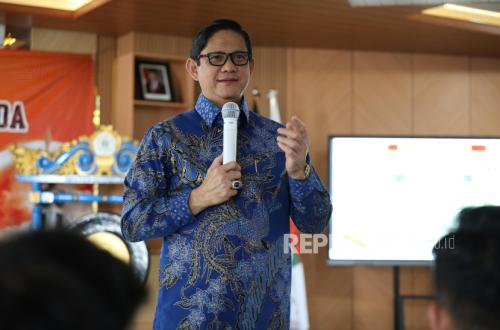
REPUBLIKA.CO.ID, BANDUNG - Waste management in the Greater Bandung area remains a persistent problem. Waste management in the Greater Bandung region requires serious attention from the West Java Provincial Government (Pemprov Jabar). For a long time, the Sarimukti Landfill has been the mainstay for waste disposal. However, its capacity is very limited. Deputy Chairman of the West Java Provincial Legislative Council (DPRD Jabar), MQ Iswara, stated that the Sarimukti Landfill is currently being prepared to transform from conventional methods to cutting-edge technology. Iswara explained that the development plan for the Sarimukti Final Waste Processing and Processing Site (TPPAS) has entered a new phase. According to him, a memorandum of understanding (MoU) with the central government has been carried out to change the waste management system there. “Sarimukti has already signed an MoU with the central government. So far, it has still been using the open dumping method that does not utilise technology,” said Iswara to Republika.co.id in Bandung on Wednesday (6/5/2026). According to him, in the future, the Sarimukti Landfill will be developed into a Waste to Energy project or Waste to Electricity Power Plant (PSEL). This project is estimated to require a very large investment, reaching Rp5 to 6 trillion. The funding is planned to be carried out through the Danaantara financing scheme. Currently, he said, the process is undergoing several regulatory and technical stages. One crucial point is coordination regarding land with Perhutani. From a total of 39.4 hectares of Perhutani-owned land, initial information indicates that around 21 hectares will be used for this project through an Operational Cooperation Scheme (KSO). “In addition to land issues, there is also a study from the Ministry of Environment and Forestry regarding the feasibility of the AMDAL, distance from residential areas, to coordination with the Coordinating Minister for Maritime Affairs and Investment for vendor determination,” he said. Iswara stated that the physical construction process is estimated to take around two years. If all administrative stages are completed and construction begins at the end of this year, this waste processing technology is projected to start operating in 2028. In the future, he said, the waste processing capacity at Sarimukti will increase dramatically to 3,515 tonnes per day. The service coverage will not only be limited to Greater Bandung (Bandung City, Cimahi City, Bandung Regency, and West Bandung Regency), but will also reach Cianjur and Purwakarta regions. However, Iswara said that although this project becomes a major solution for the future, Iswara still urges the community to play an active role in managing waste from the source. “While waiting (for operations in 2028), the community is expected to remain consistent in reducing waste usage and carrying out sorting from home,” he said.