
Sapa UMKM Platform Becomes Foundation for Micro Business Development and Partnerships with Large Companies
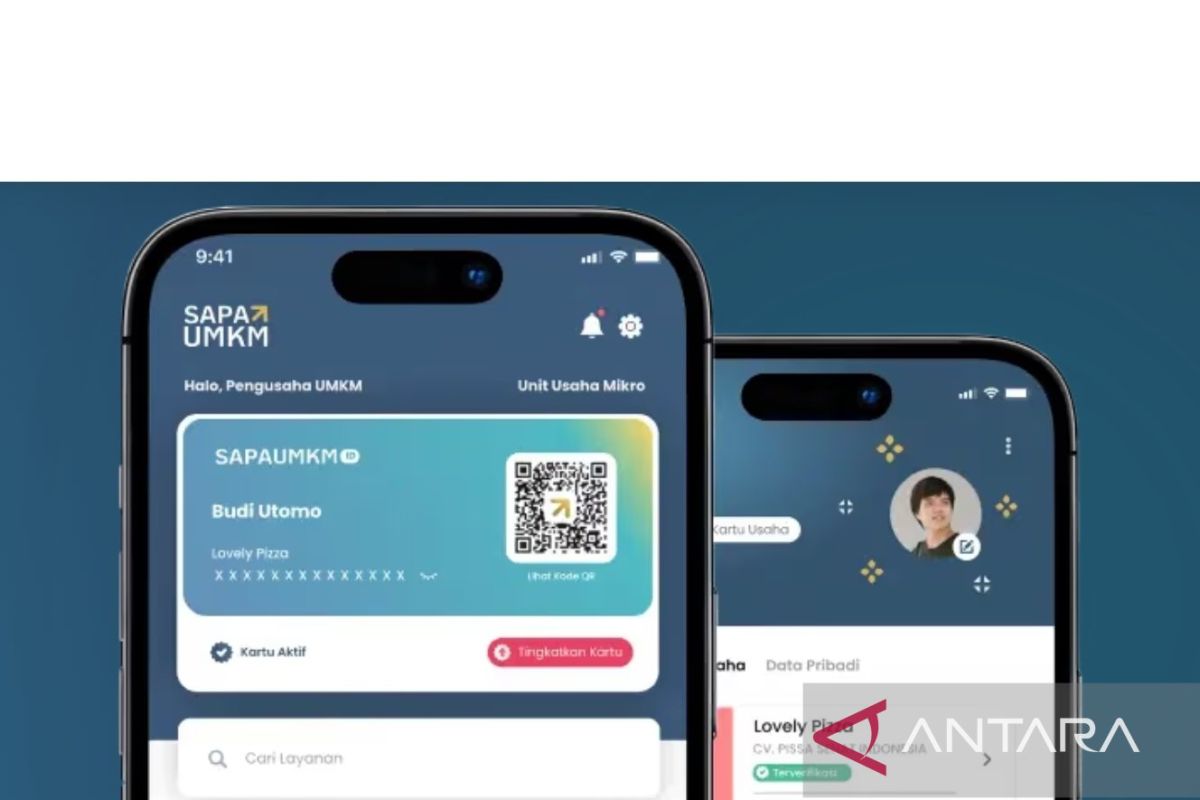
Jakarta (ANTARA) - The Ministry of Micro, Small, and Medium Enterprises (MSMEs) is establishing the ‘Sapa UMKM’ platform as the primary foundation for implementing coaching and developing partnerships between micro-entrepreneurs and large corporations.
Pristiyanto, Assistant Deputy for Partnerships and Micro-Enterprise Supply Chains at the Ministry of MSMEs, stated that the platform was developed to collect data on MSME players so that the government can provide mentoring programmes tailored to the specific needs of each business.
“We at the Ministry of MSMEs currently have Sapa UMKM. This platform is intended to ensure that the ecosystem for strengthening MSMEs can be implemented effectively,” said Pristiyanto during a discussion in Jakarta on Sunday.
Pristiyanto explained that the data collected through Sapa UMKM is subsequently used to classify the condition of each business operator, as regulated under the Ministry of MSME Regulation Number 8 of 2025.
Through this classification, the government can determine the most appropriate form of coaching based on the MSME’s level of readiness, ranging from capacity building and meeting business standards to facilitating partnerships with the industrial sector.
Consequently, all MSME players are encouraged to register on the platform as an initial step to access business development services.
“MSMEs provide their data, we then classify their condition, and there is specific treatment provided for each classification,” he said.
Furthermore, Pristiyorkan noted that a data-driven approach allows the government to conduct more targeted coaching compared to providing identical programmes to all business operators.
Once business operators are deemed to have met the established standards, the government facilitates their entry into the Micro-Enterprise Partnership Ease (Kumitra) programme. This programme serves as a bridge for MSMEs to establish cooperation with large companies within the national supply chain.
Pristiyanto assessed that the success of such partnerships relies not only on the readiness of business operators but also requires consistent policy support.
“The key points for ensuring partnerships can function effectively are mandatory regulations, structured incentives, and inclusive interventions,” he remarked.
He expressed hope that these measures would strengthen the position of MSMEs within the national industrial ecosystem. According to him, micro-entrepreneurs should no longer be positioned as parties that merely enjoy the impacts of industrial growth, but rather as integral parts of the supply chain contributing to national production activities.
“In this way, MSMEs are no longer mere spectators, but are an active part of the national industrial supply chain,” said Pristiyanto.