
Santri Build a Digital Future
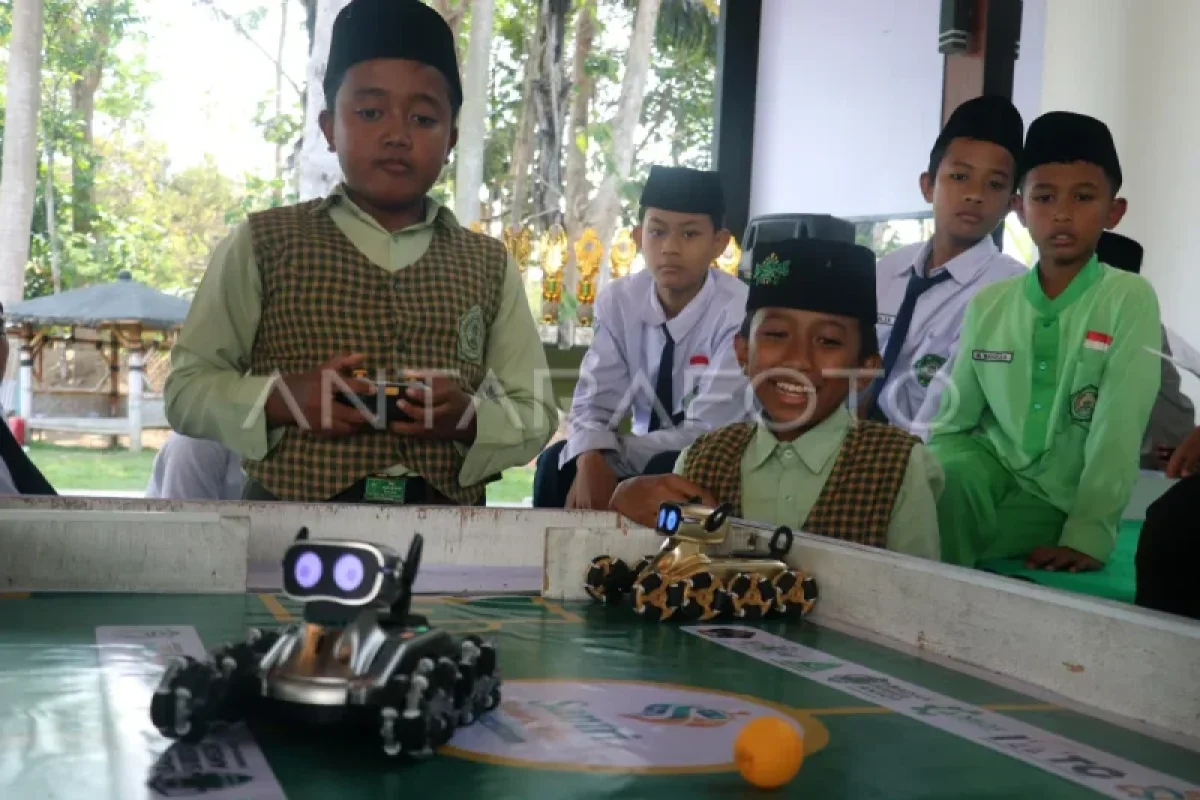
The future for santri is not simply about operating machines or writing code. More important is the ability to combine knowledge, character, creativity and social concern to develop solutions.
Surabaya (ANTARA) - In a pesantren classroom, students who would usually be immersed in traditional Islamic texts are now working with robotics equipment, programming and artificial intelligence (AI).
They are not only learning to understand religious texts, but also practising how to give commands to machines, design applications and turn ideas into real projects.
This is no longer merely a vision of future education. On Friday (16 October 2026), Vice-President Gibran Rakabuming Raka observed AI and robotics lessons at Pondok Pesantren Darullughah Waddawa’ah (Dalwa), in Pasuruan Regency, East Java.
During the visit, students demonstrated practical projects including 3D printing and an AI-based facial-recognition application. The following day, East Java Governor Khofifah Indar Parawansa praised the programme as a concrete step towards expanding mastery of science and technology in pesantren.
The development carries an important message: pesantren do not have to choose between preserving the Islamic scholarly tradition and embracing technological progress. The two can go hand in hand, provided technology is treated as a tool to extend the benefits of knowledge, rather than replace human character, reasoning and responsibility.
The more fundamental question is how AI and robotics education can grow from pilot activities into a lasting capability, reach more santri and produce innovations that benefit society.
Learning spaces
The experience at Dalwa shows that santri can enter technology fields often considered remote from pesantren life.
In Pacitan, Pondok Pesantren Tremas also drew attention after introducing AI and robotics on 30 April 2026. The two-day programme involved 30 male and female students at Madrasah Aliyah level, using a robotics curriculum based on computational thinking.
These experiences show that technology education is beginning to develop in pesantren. But success cannot be measured solely by the sophistication of the equipment or visits by officials.
A more important measure is whether santri can understand problems, plan solutions, test ideas and produce useful work.