
Santa Market Fades, Sociologist Points to Changing Youth Trends and Urban Dynamics
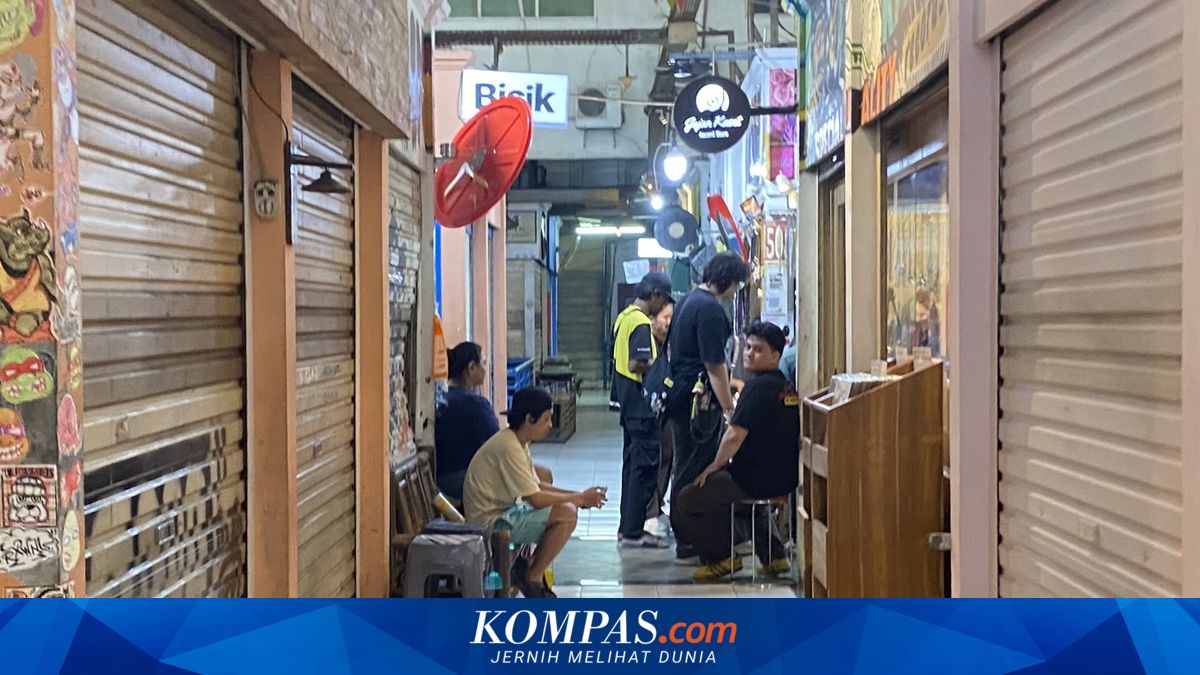
JAKARTA, KOMPAS.com - Pasar Santa in Jalan Cipaku I No. 1, Petogogan, Kebayoran Baru, South Jakarta, was once an iconic creative space for young people. In this place, coffee, vinyl records, thrift items, and zines once coexisted in narrow, always bustling corridors. However, when Kompas.com visited Pasar Santa on Tuesday (21/4/2026) afternoon, that atmosphere was no longer felt. “Pasar Santa was previously known as a creative space for young people in the Blok M area, South Jakarta. It became one of the landmarks or icons for young people. But it then experienced a decline and is quiet now,” said Rakhmat when contacted by Kompas.com. According to him, Pasar Santa initially succeeded in creating a tight-knit community between traders and visitors, becoming a strong venue for cultural and creative expression. However, he assesses that such creative spaces are vulnerable to losing appeal when they fail to adapt to shifts in youth consumption trends and social needs. Rakhmat explained that the ever-changing trends among young people over time greatly influence the sustainability of creative spaces. He mentioned that young people who previously sought alternative spaces to express culture and creativity are now shifting to more integrated and easily accessible places, including shopping centres or public areas offering various facilities. “One of the causes is also due to generational turnover or succession, from millennials experiencing rapid and massive changes with Generation Z,” said Rakhmat. Amid globalisation and the expansion of new commercial spaces in Jakarta, Rakhmat assesses that Pasar Santa no longer has the social magnetism it once did. Besides trends, Rakhmat considers physical space factors also play a role. Pasar Santa, shaped as a multi-storey building, has limitations in social interaction space compared to other places offering more expansive open areas. “The size and physical space limitations can indeed affect a place’s social appeal. Limited space can restrict social interactions and the collective experiences occurring within a community,” said Rakhmat. Those physical space limitations, said Rakhmat, make visitors feel they do not have many options to explore, so the social experience created is not as strong as in other destinations. “When physical space is limited, visitors might feel unsatisfied because there are not many choices to explore,” he said. This condition is evident at Pasar Santa today. The open space that should serve as a gathering point for visitors is only found on the top floor. The ground floor and second floor are dominated by stalls functioning like a typical market. Most of its corridors feel narrow and enclosed, making the market atmosphere more like a trading building than a public space for young people. The area still providing space for casual sitting and communal interaction is only on the third floor, while the lower floors resemble conventional markets with household goods stalls, clothing, and tailoring services. Rakhmat added that, besides physical space, viral momentum and social networks also play a very significant role in determining the life or death of an urban space. According to him, Blok M, which went viral earlier, benefits from a strong network effect. When a place goes viral, it attracts wider attention and shapes social perceptions. “Although Pasar Santa has unique and creatively and culturally appealing products, it may not receive enough attention to create the buzz that can attract various social layers,” said Rakhmat. In the field, the picture of space limitations is clearly visible. The ground floor is still filled with household goods stalls, gold shops, stationery, clothing, and sewing services. Buying and selling activities continue, but more traders are sitting waiting for customers than serving transactions. When ascending to the second floor, the atmosphere changes slightly. This area still has coffee shops, thrift stalls, and some remaining creative tenants. However, its corridors are filled with empty stalls, making the atmosphere seem uneven, with some busy spots but many dead spaces that disrupt visitor flow. Meanwhile, the third floor is the only space that feels more “open” compared to the others.