
Santa Market Deserted, Vendors Request Blok M-Style Rebranding
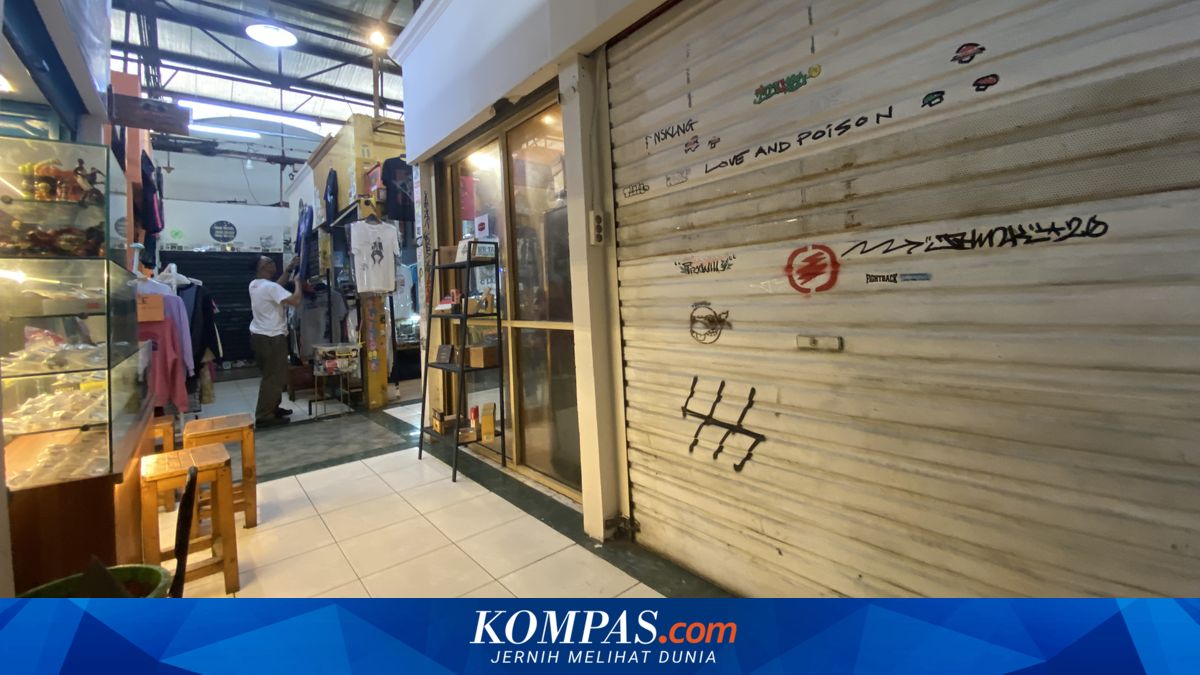
JAKARTA, KOMPAS.com – Fathan (27) still vividly remembers the time when Pasar Santa was at the peak of its glory.
His small coffee shop on the second floor, opened in 2016, was once part of the vibrant “creative hub” for young people in South Jakarta.
At that time, the corridors of Pasar Santa were almost never empty. Seats were always filled, coffee queues snaked around, and visitors came not just to drink, but to enjoy the atmosphere.
“It was what you could call the golden era back then. Daily turnover could reach Rp 2 million to Rp 3 million, even more if there were events or long weekends,” said Fathan when met by Kompas.com on Tuesday (21/4/2026).
However, that story is now just nostalgia. In recent years, Fathan has felt a sharp decline, not only in the number of visitors but also in their behaviour.
He said that the young people who used to sit for long periods, chat, or even work on their laptops in his shop, now tend to stop by briefly and then leave.
The rhythm of visitor turnover has become much faster.
“Now people come quicker, they don’t sit for long. So the turnover is different too. Back then they could hang out for hours, now it’s quick in and quick out,” he explained.
For Fathan, the emptiness of Pasar Santa cannot be separated from the major changes in the ecosystem of hangout spots in South Jakarta.
If Pasar Santa was once considered unique and different, now the city offers too many more modern and tidy alternatives.
“Now there are lots of choices, standalone coffee shops, new malls, places that are neater, more comfortable, with more consistent branding,” he said.
He also assessed that Pasar Santa has lost its main strength, namely the identity that was once built through tenant selection.
According to Fathan, the tenant concept used to feel clear—coffee, vinyl, thrift, zines, and complementary creative spaces. Now, the composition is mixed up.
Fathan added that social media has also influenced this dynamic. Pasar Santa once thrived because of virality, but virality also makes people easily switch when trends shift.
Nevertheless, he is not entirely pessimistic. He believes Pasar Santa still has potential if there is a serious effort to renew the concept.
“If there’s a serious rebranding, it can come alive again. This location is actually still strategic,” said Fathan.
Not far from Fathan’s stall, Theo (28) feels the same. The seller of t-shirts and thrift items who opened his stall in 2017 said Pasar Santa is now far from bustling.
He is one of the traders who has directly experienced the ups and downs of the place’s trend.
“Back then I could get Rp 800,000 to Rp 1.5 million a day, especially on weekends. The kids came specifically to find unique items,” said Theo.
“Now sometimes Rp 200,000 to Rp 400,000 a day is already good. There have even been times when it was just over Rp 100,000,” he said.
Theo assessed that the drop in visitors happened gradually, not suddenly. He felt that the period after the pandemic briefly gave hope, but then it continued to decline.
He saw changes in young people’s shopping behaviour hitting traders like him. Thrift shopping, once synonymous with in-person hunting, has now largely moved to digital platforms.
“Now thrift is also widely available online. So people don’t need to come in person. They just scroll, choose, and pay,” he said.
However, Theo said the biggest problem is not just online versus offline. He assessed that Pasar Santa has lost its main magnet because there is no one thing that truly stands out as a reason for people to come.
“Back then people came because they knew this was the place for creative kids. Now there’s nothing that really becomes the magnet,” said Theo.
Theo also mentioned the impact of empty stalls that make the atmosphere even less appealing. According to him, visitors who go up to the upper floor often immediately lose interest when they see many closed stall doors.
“I can still cover costs, but it’s no longer a place to grow. It’s more about surviving,” said Theo.
A similar situation is felt by Warni (52), a seller of household plastic supplies on the ground floor who has been trading since 2010.
She has witnessed the changes in Pasar Santa herself, from when it was still an ordinary market to briefly becoming an icon for young people’s hangouts.
“Back when I first started selling here, it was really busy. People were coming and going constantly, so the downstairs sales got a boost too,” said Warni when met at her stall.
Warni described the period from 2014 until before the pandemic as the time when the impact was most felt for the entire market floor.
Even though creative tenants were mostly upstairs, the bustle’s effect spilled over to the household needs traders downstairs.
“Around 2014 until before the pandemic, it was really noticeable. Lots of young people came, went upstairs, but downstairs got busy too,” she said.
Warni said her income has declined gradually.
“If back then it could be Rp 500,000 to Rp 800,000 a day, now it’s most often Rp 200,000 to Rp 400,000. Sometimes if it’s really quiet, it’s below that,” she said.