
Sangiang sailing boats and Tambora drive nature-based ecotourism
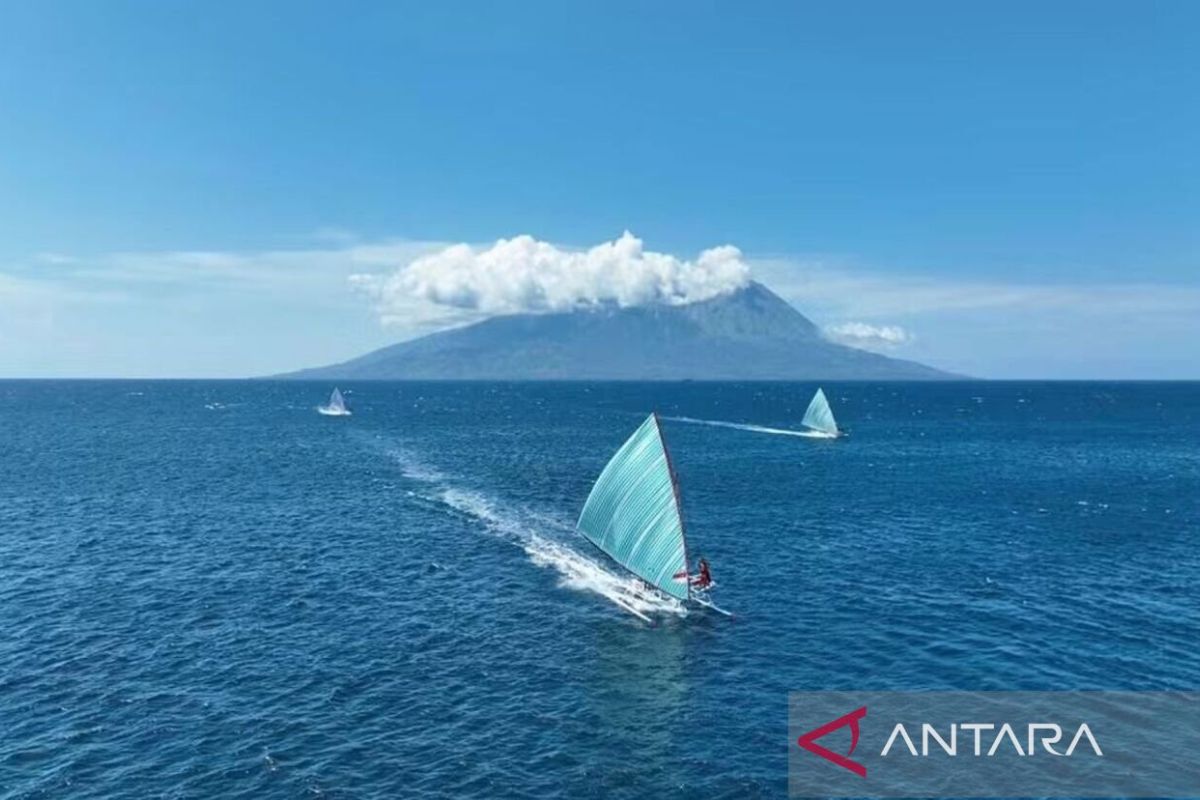
Sangiang with the allure of its sails, Tambora with the charm of its trails. If managed sustainably, the stories from these two destinations will continue to draw visitors back time and again.
Bima (ANTARA) - The sails of boats chasing the wind in the waters of Sangiang and the strides of runners crossing the savanna of Tambora have long since left the start and finish lines. Yet the impressions left by both events remain strongly etched.
In Sangiang, the cheers of residents and tourists accompanied traditional boats racing towards the shore. Several days later, at the foot of Mount Tambora, hundreds of runners from various regions arrived to conquer the route from coast to highland.
Though held in different settings, both events left behind a similar story: when communities enjoy their traditions and natural surroundings, the local economic wheels turn as well.
Food stalls were overflowing, small and medium enterprise (UMKM) goods sold briskly, transport services were flooded with passengers, and local products gained wider recognition. A coffee bar at the Tambora Jungle Run venue even managed to double its turnover, turning Rp1 million in capital into Rp2 million in sales in less than a single day.
This is where the Sangiang Api Festival and the Tambora Jungle Run 2026 revealed another face of tourism on Sumbawa Island. An event that is not merely a festivity that ends when the stage is dismantled, but rather a gateway for a sustainable, community-based tourism economy.
Sails Bring Maritime Stories to Life
In Sangiang Village, Wera Subdistrict, Bima Regency, that impression shone clearly through the Sangiang Api Festival 2026, held from 30 August to 8 September 2026.
Sangiang Village is the gateway to Sangiang Island, a volcanic island located to the north-east of Sumbawa Island. On this island stands Mount Sangiang Api, an active volcano that forms an important part of the local landscape and identity.
The combination of volcano, coastline and community traditions gives Sangiang its own particular tourist appeal. It is this great potential that is packaged through the Sangiang Api Festival, offering arts and culture, sport and the creative economy.
One of the main attractions is the sailing boat race. Seven traditional boats competed at speed across the sea from the direction of Mount Sangiang Api towards Sangiang Village, watched by boisterous crowds packing the shoreline.
Not only local residents, the festival also drew tourists from across the archipelago, from Makassar, Labuan Bajo, Lombok and Java, as well as from abroad. The arrival of these travellers proves that attractions rooted in local tradition can become a primary draw, driving inter-regional tourism.
The festival did not stop there; it was further enlivened by rowing competitions, traditional art performances, local culinary delights and a UMKM bazaar. This series of activities became a mutually beneficial meeting point between tourists and the products and services offered by local communities.
For Saifullah, owner of the Sembilan Naga sailing boat, building a sailboat is not merely about preserving maritime tradition, but also part of welcoming the stirrings of tourism.
To build a single racing boat, he must spend more than Rp30 million with a construction period of around three months. The boats, measuring 7 to 9 metres in length, are supported by a seven-metre mast, combining wood, bamboo, tarpaulin and other fittings, some of which must be brought in from outside Sangiang.
This flurry of racing activity proved capable of turning the economic wheels long before the boats launched from the starting line. The activity provided livelihoods for boat builders, material suppliers and labourers alike. When the festival took place, the bounty continued on to traders of food, drink, souvenirs and clothing, as well as transport service providers.
Farida, a creative economy entrepreneur near the festival site, felt the sweet impact directly. Her goods sold far more quickly than on ordinary days, so much so that she had to bring in additional raw material supplies from Bima City.
“They sell very well and the profits multiply many times over. My stock has sold out several times,” she said.
It was not only the culinary side; UMKM making souvenir t-shirts also reaped the rewards. Their products were snapped up in large quantities by visitors as keepsakes.
The Sangiang Api Festival was first initiated by village youth in 2014 and has been held regularly since 2018. The Bima Regency Government now continues to push its development so that the festival can break into the ranks of the Kharisma Event Nusantara (KEN) calendar.
The Head of the Bima Regency Tourism Office, Muhamad Akbar, believes the festival holds even greater potential if developed in an integrated manner in the future, connecting Sangiang with other leading destinations such as Sape, Lambu and Sanggar.
Source: jawawa.id (https://jawawa.id/newsitem/sangiang-sailing-boats-and-tambora-drive-nature-based-ecotourism-1789430065)
Originally published by Antara (Indonesian) (https://www.antaranews.com/berita/5741107/perahu-layar-sangiang-dan-tambora-gerakkan-ekowisata-berbasis-alam), translated from Indonesian