
Sangbu-Sangjo Defence: Korea and Indonesia's KF-21 Jet Ready for Combat
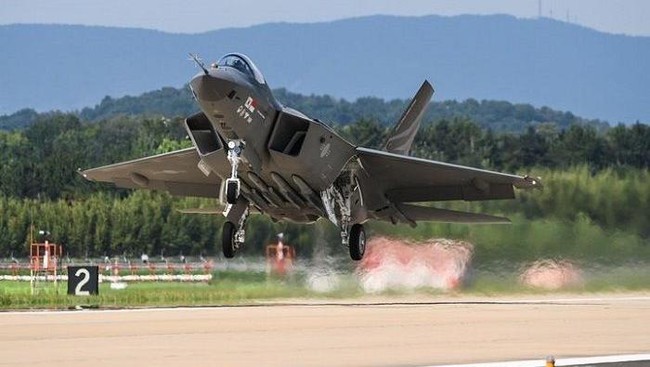
The KF-21 Boramae fighter jet development project between Indonesia and South Korea stands as a symbol of strong cooperation in building primary defence system equipment for both nations. Both countries implement the spirit of their ancestors in strengthening cooperation, including in the defence sector. In South Korea, this principle of cooperation is known as sangbu-sangjo, while in Indonesia it is called gotong-royong. The KF-21, jointly developed by South Korea and Indonesia since 2015, has entered the final stage of development and achieved combat-ready status in May 2026, meaning it is fit for use in military operations. Indonesia is scheduled to receive six prototype fighter jets after the Indonesian and South Korean defence ministries finalised the joint development project agreement in June 2026. “This week, delegations from both countries will meet for further detailed discussions,” said Junhyun Jo, Director and Head of International Business Development for Asia at Korea Aerospace Industries (KAI) Ltd, on the sidelines of the Indonesian Next-Generation Journalist Network event organised by the Korea Foundation and the Foreign Policy Community of Indonesia in Seoul. Indonesia’s agreed financial contribution for the joint development programme is 600 billion KRW, equivalent to Rp 7.02 trillion, related to the six KF-21 prototypes. This contribution equates to 6% in 2025, reduced from the previous 20%. The remaining investment, originally part of the Indonesian government’s 14% share, has been fully covered by the South Korean government together with KAI. Despite the reduction in the contribution share, Indonesia and South Korea agreed to continue cooperation in the KF-21 joint development programme. According to KAI, as part of the technology transfer and industrial cooperation package, PT Dirgantara Indonesia is expected to supply materials and components related to KF-21 spare parts. Shaun Seonghee Park, Senior Manager and Team Leader of the International Business Development Asia Team 2 at KAI, stated that before the delivery or transfer of the first KF-21 prototype, certain modifications to the aircraft are still needed to adapt to the needs of industry in Indonesia. “The prototype is intended solely for testing and validation of the aircraft development process; the main goal of the joint development programme is not the production of the prototype itself,” he stressed. Beyond the prototype transfer, KAI and Indonesia are discussing the procurement of 16 aircraft from the initial plan of 48. This procurement arrangement is separate from the KF-21 development partnership included in the prototype transfer package. For South Korea, the KF-21 development is highly strategic and a symbol of its defence industry’s progress, even though it has also been able to build submarine strength and maritime combat fleets with Canada. Kim Gi-Hyeon, Chairman of the South Korea-Indonesia Parliamentarians Friendship Association, noted that when issues arose regarding technology transfer and uneven investment commitment shares, the fighter jet development project with Indonesia could be said not to have proceeded as it should. Moreover, an issue emerged that the Indonesian government preferred purchasing fighter jets from Europe rather than reinforcing its commitment to buying the jointly developed KF-21. ‘Based on the information I received, Indonesia was considering two options: buying the KF-21 or European-made fighter jets. After various studies, Indonesia finally decided to buy European fighter jets. Therefore, I must say that the cooperation regarding the KF-21 did not run on a very successful track,’ he said. Nevertheless, Kim emphasised that as middle-power countries, Indonesia and Korea still need to strengthen cooperation in the defence sector, not just in other fields like the economy. This is important to ensure that major powers such as the United States, Russia, and China do not act arbitrarily, violate the sovereignty of other nations, or commit aggression at the global level. ‘In an increasingly uncertain world situation like now, it is becoming more important for every country to have the ability to defend itself, maintain its sovereignty, and master its own technology,’ Kim explained. ‘Therefore, as I have said, I believe it would be very beneficial for Indonesia to strengthen its cooperation with Korea,’ he added. Kim confirmed that South Korea also has a cooperation system that focuses not only on technology transfer but also on human resource development and talent cultivation so that partner countries can operate and develop the technology independently. Meanwhile, Indonesian Ambassador to South Korea Cecep Herawan confirmed that cooperation between the two parties regarding the KF-21 development will continue, despite allegations during the process that some Indonesian engineers involved in the development stole or took sensitive data. ‘But the most important thing here is what is called the transfer of know-how and also contributing to our human resource development in the defence industry. Korea indeed learned the defence industry from America. And we are learning the defence industry that Korea learned from America, from Korea,’ Cecep said. Cecep also confirmed that the Indonesian government will settle the entire contribution share for the KF-21 project development this month so that the six fighter jet prototypes can be transferred to the country soon. ‘Hopefully by the end of June, everything will be completed.’