
Sanaa Airport Bombed, Houthis Threaten Major Retaliation Against Saudi Arabia
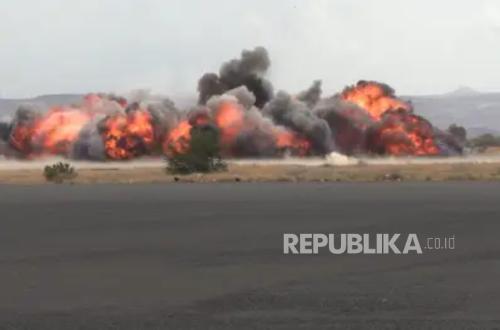
The Armed Forces of the Ansarullah Houthi group in Yemen have accused Saudi fighter jets of targeting Sanaa International Airport on Monday, triggering a retaliatory operation against Abha International Airport using ballistic missiles and drones. The attack was officially claimed by government forces, who said they bombed the runway to prevent a plane carrying a Houthi delegation from Iran from landing. However, the Houthis believe Saudi Arabia was behind the strike.
YAF spokesman Brigadier General Yahya Saree announced the development overnight. “Our forces confronted the Saudi coalition aircraft that launched an attack on Sanaa Airport,” he said, according to Almayadeen. “At exactly 1:54 pm today, Monday, the Saudi enemy launched a blatant act of aggression using fighter jets against Sanaa International Airport. They carried out several air strikes aimed at crippling the airport’s operations for humanitarian flights transporting patients and stranded civilians to and from Sanaa International Airport.”
Saudi Arabia’s military intervention in Yemen began on 26 March 2015, when King Salman bin Abdulaziz ordered operations against the Houthis after they seized the capital Sanaa and advanced towards Aden, where President Abd Rabbuh Mansour Hadi had taken refuge. The campaign to support the internationally recognised government was backed by several Gulf states. However, the Saudi-led military action failed to dislodge the Houthis, who continue to control large swathes of Yemen, including the capital. The coalition’s operations have also caused a severe humanitarian crisis.
Since the Saudi-led coalition intervened in the conflict, between 150,000 and more than 377,000 people have been killed by direct military violence and indirect causes such as famine and disease. The Armed Conflict Location & Event Data Project and the Yemen Data Project have recorded over 150,000 deaths from direct military action, including bombings, artillery, and ground battles, since 2015. Coalition air strikes alone have resulted in approximately 19,200 civilian casualties, with nearly 9,000 civilian deaths directly attributed to the bombing campaign. The Council on Foreign Relations notes that 60 per cent of the estimated 377,000 deaths between 2015 and 2022 were caused by indirect factors such as food insecurity, lack of access to medical services, and conflict-induced cholera outbreaks. Humanitarian organisations, including the Global Centre for the Responsibility to Protect, have highlighted that these air strikes have repeatedly hit critical civilian infrastructure, including schools, hospitals, markets, and fishing boats.
Saudi Arabia and the Zaidi Shia Houthi group had previously agreed to a ceasefire in 2022. That truce allowed the Iran-backed Houthis to exert a series of pressures on Israel to halt the genocide in Gaza that began in October 2023. The United States was forced to intervene with strikes on Yemen to stop the Houthi actions. After significant losses to the US military in the Red Sea, a ceasefire with the Houthis was agreed in 2035. Recently, the Houthis again threatened to close the Red Sea following US-Israeli strikes on Iran in February 2026, culminating in the government military’s bombing of Sanaa Airport yesterday.
The Houthi group has vowed to retaliate against Saudi Arabia. They assert that the strike targeting a vital artery for Sanaa constitutes an act of war that ends any pretence of a ceasefire. Houthi military media identified several major Saudi airports, ports, and oil facilities as potential targets after Riyadh struck Sanaa International Airport, signalling that Yemen will not allow its sovereignty or civilian infrastructure to be violated without consequence. Houthi military media released a video titled “Retaliation is coming,” featuring several strategic airports, ports, and energy facilities across Saudi Arabia. The footage marked the locations of King Khalid International Airport in Riyadh, King Abdulaziz International Airport in Jeddah, and King Fahd International Airport in Dammam. The video also identified the Port of Jazan, Jeddah Islamic Port, King Fahd Industrial Port, and the Ras Tanura oil refinery and export complex. The locations shown in the footage stretch from the Saudi capital and the Red Sea coast to the oil-producing Eastern Province, indicating the range of Yemeni missile and drone capabilities. King Khalid International Airport serves routes to Riyadh, while the airports in Jeddah and Dammam are among the Kingdom’s most important civil and commercial aviation hubs. The ports of Jazan and Jeddah are vital for Saudi maritime trade and activity, while King Fahd Industrial Port and Ras Tanura are central to the Kingdom’s petroleum infrastructure and exports. The footage did not state that every listed location would definitely be targeted. However, it delivered a clear warning that Riyadh cannot expect to strike Yemen while maintaining full security for its own economy and infrastructure.
Source: jawawa.id (https://jawawa.id/newsitem/sanaa-airport-bombed-houthis-threaten-major-retaliation-against-saudi-arabia-1783986657)
Originally published by Republika (https://news.republika.co.id/berita/ti4ycq393/bandara-sanaa-diserang-houthi-ancam-serangan-besar-ke-saudi), translated from Indonesian