
Samsung Executive Explains Difference of AI in Galaxy S26 Series Smartphones
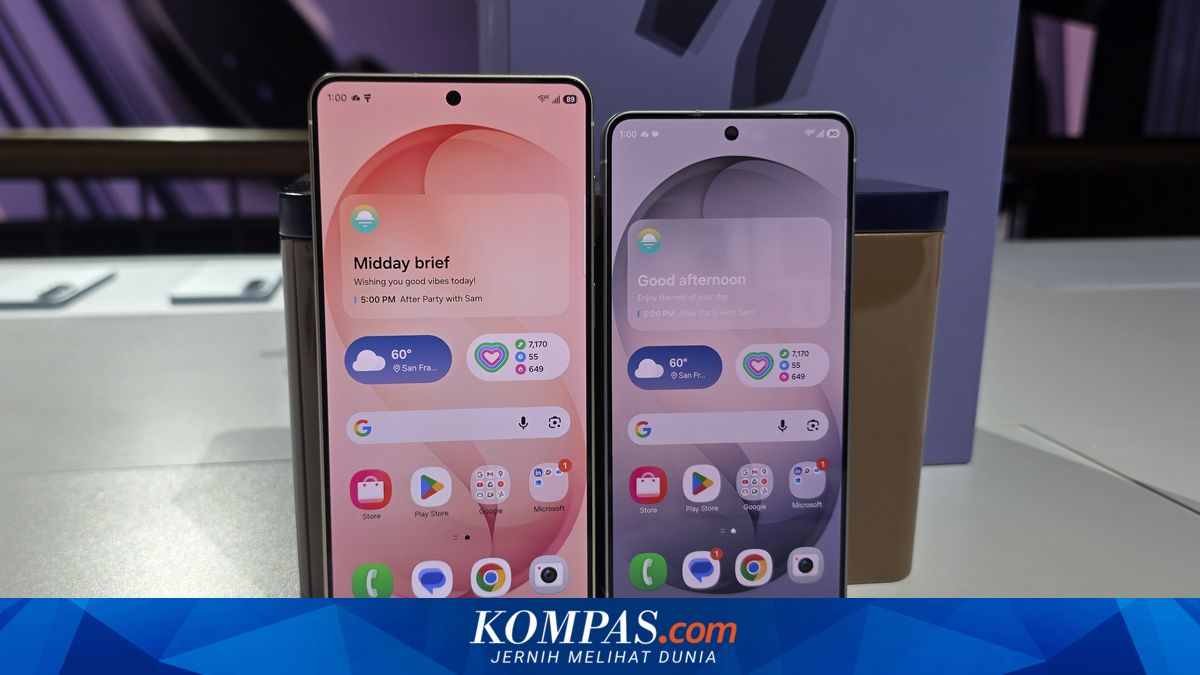
SAN FRANCISCO — The artificial intelligence features embedded in Samsung’s Galaxy S26 series smartphones function not merely as supplementary tools, but rather as digital assistants designed to simplify user experience.
Examples include the Now Brief feature, which can summarise important information routinely, and Now Nudge, which displays contextually relevant content. Both are capable of understanding context and executing tasks directly without awaiting user commands.
This was explained by Minseok Kang, Head of Mobile Product Planning for Samsung MX at Samsung Electronics, during an interview with Kompas.com correspondent Lely Maulida at the Galaxy S26 series launch in San Francisco in early March.
To create AI features that genuinely improve user experience, Kang emphasised that Samsung has designed AI to operate in the background and assist users automatically. In essence, the AI features in the Galaxy S26 series are designed with a task-centric approach rather than an application-centric one.
This concept allows the Galaxy S26 series to reduce usage steps, so users experience AI benefits directly without complicated processes. The features can also understand user context. For instance, if a user forgets to enter a reservation into their calendar, Now Brief can recognise this and provide a reminder at the appropriate time.
Kang also illustrated the Now Nudge feature, which can recommend follow-up actions that users can select automatically. For example, when a friend asks a user to send a photo, the system immediately displays shortcuts to relevant images without requiring the user to open the gallery and search manually.
Additionally, the Galaxy S26 series is equipped with agentic AI capable of executing tasks independently. An example is the Call Screening feature, which answers calls from unknown numbers with hidden identities.
“Galaxy AI will check who is calling and their reason for calling. It then provides a clear summary on screen, allowing the user to easily decide whether to accept or decline the call,” Kang explained.
This feature also detects spam and fraudulent calls, whilst providing phishing alerts when calls appear suspicious. Another feature relying on agentic AI is Automated App Actions, which allows users to run device-supported activities without needing to continuously look at their smartphone.