
Samsung Agrees to Chip Workers' Bonus, Sparking Internal Labour Dispute
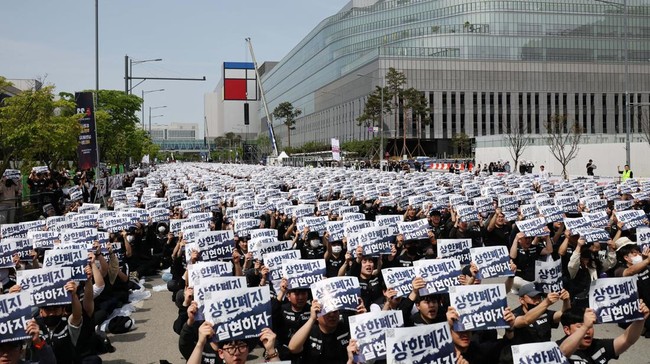
Samsung’s chip division workers’ threat of a mass strike has finally borne fruit. After tough negotiations, management agreed to allocate 10.5% of the company’s annual operating profit as a bonus.
Consequently, the 18-day mass strike planned to begin on 21 May 2026 has been postponed. A vote is now underway among eligible employees regarding the salary and bonus scheme.
However, another Samsung union representing the consumer electronics division has asked South Korean courts to annul the vote on the payment agreement. They argue the deal only benefits chip division workers, Reuters reported on Tuesday (26 May 2026).
The mass strike threat was triggered by Samsung’s chip business surge due to high demand, as the world faces a global memory chip crisis driven by the AI boom.
Samsung’s market capitalisation has surpassed $1 trillion due to massive chip business growth, yet chip division employees feel this growth has not translated into improved worker welfare.
As a result, chip division workers threatened a mass strike involving 48,000 employees. The South Korean government had to intervene to mediate between management and unions, as a strike could endanger the national economy.
Union voting began on Friday (22 May) and runs until Wednesday (27 May). The vote is expected to ratify the agreement between management and the chip division union.
However, another union, the Samsung Electronics Co Union (SECU), comprising 13,000 members, plans legal action over the vote. They claim they were excluded from the vote. SECU primarily represents workers in smartphone, TV, and home appliance divisions.
Disagreements during negotiations led SECU to withdraw from the bargaining team before a deal was reached with management.
Negotiations between unions and management were led by the Samsung Electronics Labour Union (SELU), which includes 57,290 members. Ninety percent of SELU members are eligible to vote.
Approval requires a majority of eligible union members to participate and a majority of those voting to support the deal. Otherwise, negotiations must restart from scratch.
Some consumer electronics workers from the separate National Samsung Electronics Union (NSEU) expressed disappointment with the deal. NSEU official Lee Ho-seok told Reuters the union voted against the agreement.
He added that some chip factory workers were also frustrated with the deal and hoped it would be rejected, though this seems unlikely.
NSEU has around 20,000 members, according to its website, mostly chip workers. Samsung contributes about a quarter of the country’s exports, and the deal has brought relief across South Korea.
However, the dispute has exposed deep divisions over how AI-driven profits should be distributed.
Some memory chip workers will receive bonuses totalling around $416,000 this year.
Workers in Samsung’s logic chip manufacturing and design units will receive smaller but still substantial bonuses, while those in other divisions such as smartphones and home appliances will get even smaller amounts.
A small group of individual shareholders announced they would sue if the deal is ratified by union members, arguing parts of the agreement violate law unless approved by shareholders.
Samsung shares closed 2.2% higher on Tuesday (26 May), having risen 8% since the deal was reached last week, though the gain was lower than rival SK Hynix’s 18% surge.