
Same Diagnosis, Different Therapy: The New Face of Cancer Treatment
Modern medical advancements have significantly altered the landscape of cancer management. While cancer treatment was previously synonymous with conventional chemotherapy, clinical approaches have now shifted towards personalised medicine, which is based on the biological and genetic profiles of each individual.
The rise in global cancer cases, including in Indonesia which recorded over 400,000 new cases in 2022, demands more precise management strategies. The Ministry of Health continues to promote early detection through the expansion of health screening programmes; however, these initial diagnostic steps must be balanced with the formulation of targeted treatment plans.
Medical management no longer relies solely on the type of tumour or the stage of the disease. Molecular characteristics, the presence of specific biomarkers, and individual genetic responses have become the primary foundations for determining the type of therapy.
Various cutting-edge treatment options, such as targeted therapy, antibody-drug conjugates (ADC), immunotherapy, and CAR T-cell therapy, have proven to offer higher levels of effectiveness with more controlled side effects.
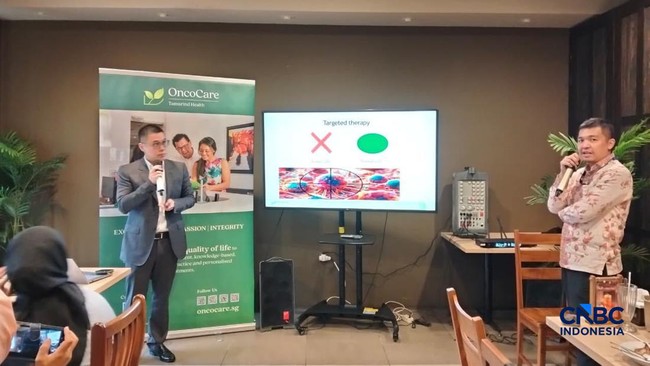
Dr Kevin Tay, Senior Consultant in Medical Oncology at OncoCare Cancer Centre Singapore, emphasised the importance of a personalised approach in determining patient treatment strategies.
“Two patients may present with the same diagnosis. After we examine the cancer biologically and the clinical picture of each individual, their treatment strategies could be very different. The first step is ensuring patients are treated by the right specialists, equipped with the necessary information to make those decisions correctly,” said Dr Kevin at Beautika Panglima Polim, South Jakarta, on Friday (18/9/2026).
Furthermore, he stated that for patients who have already received a diagnosis, developments in therapy provide increasingly more possibilities to consider.
“The message is not that one therapy can be used for all patients, but rather that cancer treatment is moving towards decisions tailored to the characteristics of each patient and their disease,” he explained.
The Importance of Multidisciplinary Collaboration and Specialisation
The main challenge in cancer care often lies in fragmented medical decision-making processes. Creating therapy plans in isolation across different departments risks triggering repetitive testing, inflating costs, and causing delays in treatment that place an emotional burden on patients.
To avoid this, precision medicine requires integrated work from cross-disciplinary teams. This includes medical oncologists, surgeons, radiologists, pathologists, and genetic counsellors.
Genetic testing through tumour or blood tests is specifically directed towards identifying relevant biomarkers, ensuring that the chosen therapy provides optimal benefits for the patient.
With management by the appropriate sub-specialists and the integration of complete clinical data from the outset, the opportunities for patients to maintain their quality of life and achieve longer life expectancy are now wider than ever.