
Samarinda Seeks to Turn Environmental Laboratory into New Source of Local Revenue
The Samarinda City Government in East Kalimantan is seeking to optimise the functions of its environmental laboratory. The facility is expected to become more than an internal testing centre and develop into a new source of locally generated revenue (PAD), helping to support the 2027 PAD target of Rp1.3 trillion.
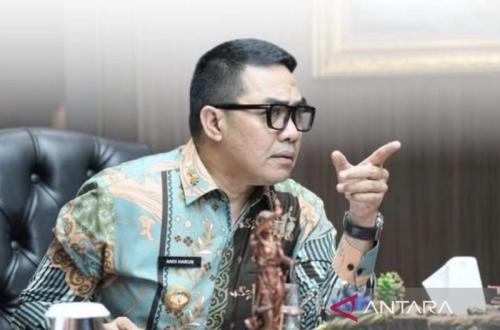
Samarinda Mayor Andi Harun on Friday instructed the relevant regional government agencies to strengthen cross-sector coordination and promptly prepare operational measures to develop the facility.
“Laboratory development must be prepared in an integrated manner, covering institutional, legal, technical and budgetary aspects, so that it can eventually provide a wider range of services,” Andi Harun said after chairing a meeting on the laboratory’s development with the Samarinda Environmental Agency (DLH).
He said a roadmap to secure accreditation from the National Accreditation Committee (KAN), registration with the Ministry of Environment, and adoption of a Regional Public Service Agency (BLUD) management model was a strategic step that needed to be implemented soon.
Developing new revenue sources is crucial following an agreement between the executive and legislative branches to raise Samarinda’s PAD target for 2027 to Rp1.3 trillion. The target is set out in a draft regional budget projected at Rp3.46 trillion.
Market potential and facility readiness
The market for environmental testing services in Samarinda is considered highly promising. According to data from Samarinda’s One Data portal, at least 63 companies required to conduct an Environmental Impact Assessment (AMDAL) were operating in the city as of 2025. This figure excludes hundreds of businesses subject to Environmental Management and Monitoring Efforts (UKL-UPL) or Environmental Management and Monitoring Commitment Statements (SPPL).
Indera Permana, head of the Environmental Laboratory Technical Implementation Unit (UPTD) at the South Sumatra provincial government, said that the requirement for every business to hold environmental documents, as stipulated in Article 4 of Government Regulation No. 22/2021, creates an ongoing need for environmental quality testing.
“This provision creates opportunities to provide businesses with continuous environmental testing and monitoring services,” Indera said.
Businesses in Samarinda currently have to use laboratories run by central government agencies or accredited private providers to fulfil their periodic testing requirements. Meanwhile, the Samarinda City Government has built an Environmental Laboratory UPTD facility, with a budget allocation of around Rp2.89 billion, and equipped it with water and air testing equipment.
Technicians from the Samarinda Environmental Agency laboratory have also taken part in the 2026 Environmental Laboratory Proficiency Testing programme run by the Ministry of Environment, as part of the implementation of the SNI ISO/IEC 17025 quality management system. However, the laboratory’s operations remain limited to internal needs, with a management budget of Rp195.03 million for 2026. This is because the UPTD’s staffing structure and commercial legal requirements have not yet been fully completed.
Promoting fiscal independence
Indera added that adopting the BLUD management model would give the laboratory greater flexibility and financial independence, reducing its reliance on the regional budget. The scheme would also allow it to recruit professional analysts.
Samarinda Regional Secretary Neneng Chamelia Shanti stressed the importance of aligning budget planning with service tariffs so that the laboratory can be fully operational next year. This is in line with a proposed priority programme to improve environmental laboratory management in the Samarinda Environmental Agency’s 2027 work plan.
“We have proposed that the development of this environmental laboratory be included in the 2027 budget, including the prompt coordination of proposed tariffs or unit prices for its services,” Neneng said.
Working with the regional development planning agency (Bapperida), the regional financial and asset management agency (BPKAD), the regional revenue agency (Bapenda) and the personnel and human resources agency (BKPSDM), the Samarinda City Government aims to bring the laboratory into full operation soon. The move is expected to strengthen environmental oversight while improving the region’s fiscal independence.
Source: jawawa.id (https://jawawa.id/newsitem/samarinda-seeks-to-turn-environmental-laboratory-into-new-source-of-local-revenue-1795197033)
Originally published by Republika (https://news.republika.co.id/berita/tot99n5030000/samarinda-optimalkan-lab-lingkungan-jadi-sumber-pad-baru), translated from Indonesian