
Samarinda Government and Hasanuddin University Explore Tech Innovation to Support Nusantara Capital City
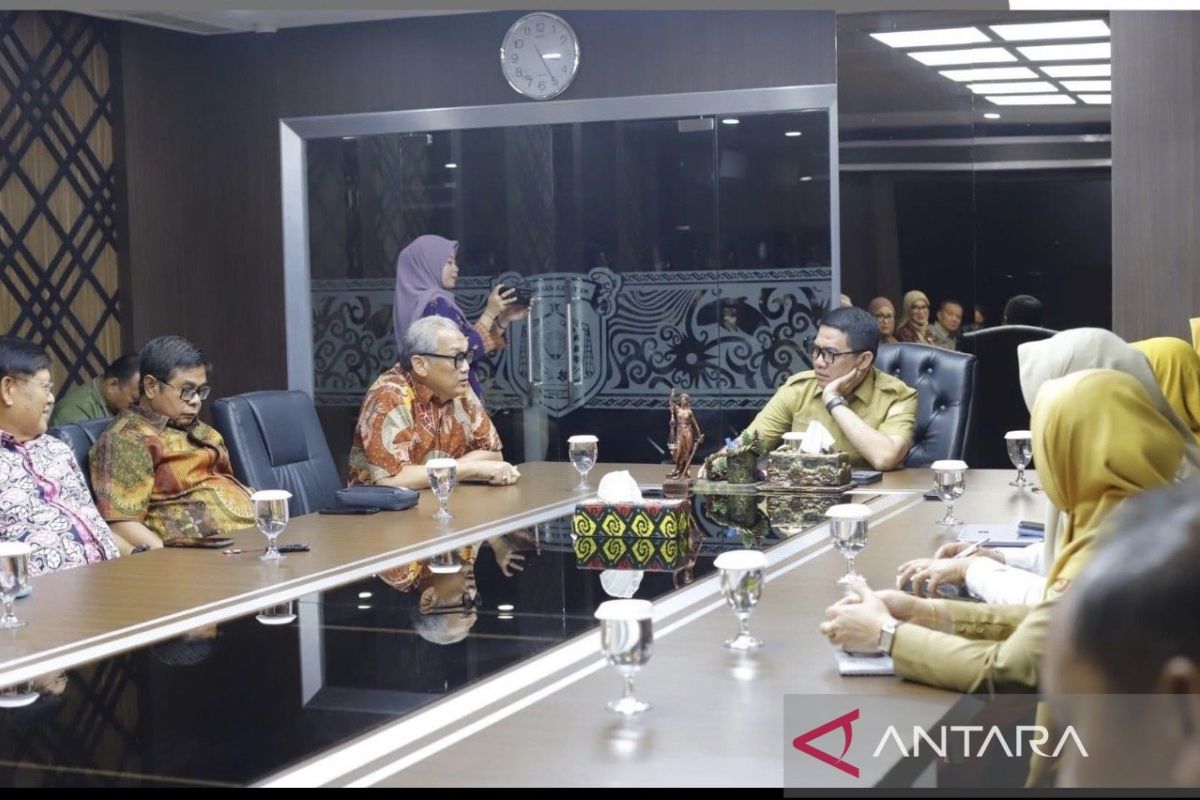
With a population approaching one million, Samarinda requires significant innovation and human resource development amidst the rapid dynamics of the Nusantara Capital City (IKN) construction.
The Samarinda City Government, in conjunction with the Board of Trustees (MWA) of Hasanuddin University (Unhas), is exploring a strategic collaboration to strengthen the sectors of education, research, and technological development. This initiative is projected to support Samarinda’s position as a buffer region for the IKN.
Speaking in Samarinda on Wednesday, the Mayor of Samarinda, Andi Harun, explained that the city’s growing population necessitates enhanced human resource capabilities. “Samarinda is very open to cooperation. There are many areas we can collaborate on, and I hope this synergy will eventually produce something concrete and beneficial for the community,” said Andi Harun while receiving the Unhas delegation led by the Chairman of the Board of Trustees, Prof. Dr. Andi Alimuddin Unde, at the Samarinda City Hall.
Prof. Andi Alimuddin emphasised that as a Legal Entity State University (PTN-BH), Unhas possesses the autonomy to build partnership networks that directly impact regional development. “Local governments possess natural resource potential and development needs, while universities provide human resources, research, and innovation. When these two meet, real solutions will emerge,” stated Prof. Andi Alimuddin.
Several regional potentials identified by the Samarinda City Government for collaboration include the maritime and shipyard industries, the utilisation of ship scrap, the management of old oil and gas wells, STEM-based healthcare and education services, raw water processing, as well as the food and livestock sectors.
Furthermore, the Samarinda leadership emphasised the importance of downstream research implementation to ensure that findings do not merely remain on paper but are applied to create an ecosystem that directly benefits the citizens of Samarinda.
One notable idea discussed during the meeting was the plan to develop an electric-powered waste collection fleet. Andi Harun enthusiastically welcomed the electric vehicle innovation, which Unhas had previously showcased in the IKN area, noting its potential to increase efficiency and maintain environmental sustainability.
In addition to electric fleets, both parties are exploring the development of modern Smart City Incinerator technology. Through Unhas’s international network, Samarinda has the opportunity to partner with Australian entities to convert waste into value-added energy. This innovation would complement the incinerator programmes already established by the Samarinda City Government in several sub-districts.
In the fields of agriculture and fisheries, Unhas is also offering various ready-to-use research, such as high-productivity maize varieties, shipping technology, and raw water processing research to reduce the operational costs of the regional water utility company (PDAM).
As a follow-up and legal framework for this cooperation, the Samarinda City Government and Unhas will soon draft a Memorandum of Understanding (MoU). For programmes ready for immediate execution, such as the electric waste fleet and incinerators, both parties will proceed directly to formalising a Cooperation Agreement (PKS) to ensure rapid field implementation.