
Salt Self-Sufficiency Target Demands Overhaul of Import Governance
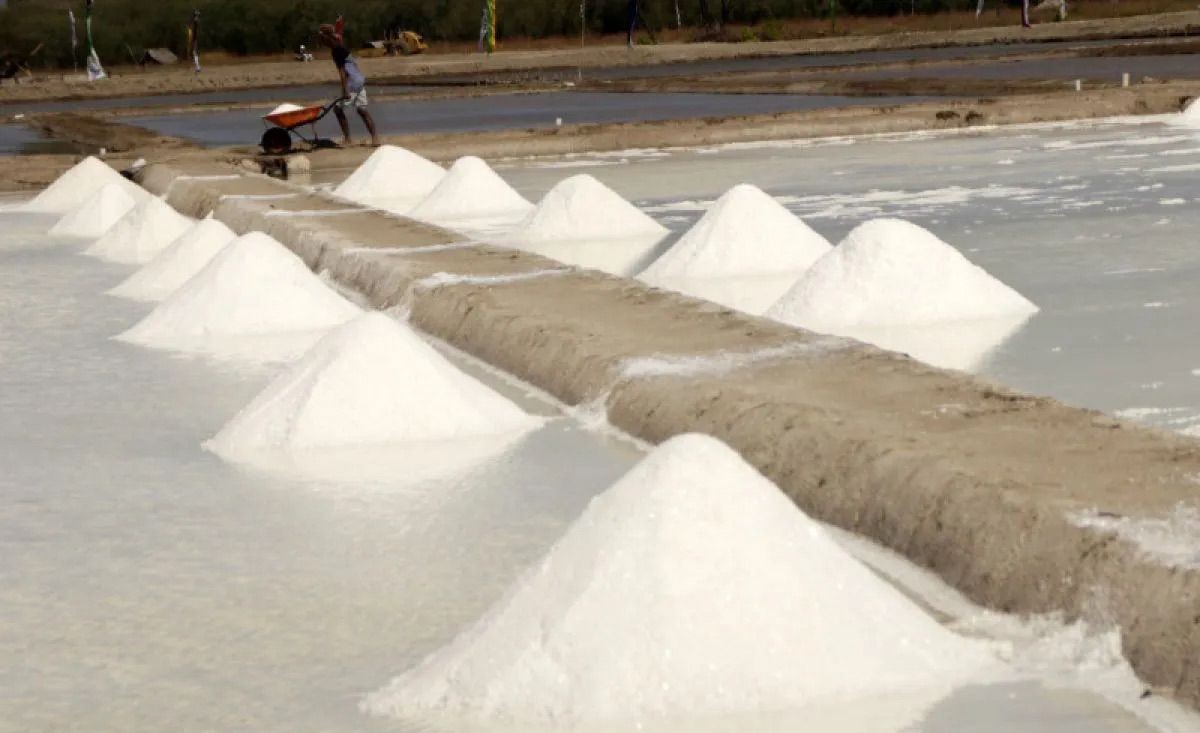
The government’s target to stop salt imports by 2027 is considered difficult to achieve if the national salt balance sheet is not compiled openly and based on verifiable supply and industrial demand data. The absence of an accurate balance sheet risks import policies setting volumes that exceed actual needs, leading to utilisation that often does not match its intended purpose.
Previously, Coordinating Minister for Food Zulkifli Hasan expressed confidence that Indonesia could stop salt imports by 2027. In line with this target, the Ministry of Marine Affairs and Fisheries (KKP) continues to push for the acceleration of national salt self-sufficiency through improved production quality, downstream development, and governance reform in the salt sector.
Muhammad Rizal Taufikurahman, Head of the Macroeconomics and Finance Centre at the Institute for Development of Economics and Finance (Indef), assessed that import policy should refer to a valid industrial needs balance sheet and be applied selectively, only to meet salt specifications that cannot yet be produced domestically. “Import policy must be accompanied by distribution monitoring to prevent entry into the consumer market, and integrated with the obligation to absorb local salt that has met quality standards,” Rizal said on Tuesday (30/6).
As an illustration, national salt production currently reaches around 2.5 million tonnes per year. Meanwhile, domestic demand is estimated at 4.9 million tonnes and is projected to increase to around 5.3 million tonnes by 2029. In 2024, more than 55% of national salt demand was still met through imports, particularly for high-specification industrial salt. This supply shortage mainly occurs in the industrial salt sector, not consumer salt. To address this, the government issued Presidential Regulation Number 17 of 2025 on the Acceleration of National Salt Development as the basis for implementing the 2027 salt self-sufficiency programme. The government is also opening opportunities for the private sector to invest in supporting the achievement of this target.
Nevertheless, issues of quality and supply continuity should not continue to be used as reasons to expand or increase salt import quotas. This is because several national salt industry players have been able to apply purification technology and quality standardisation that no longer depends on weather conditions. Additionally, the government is developing a national salt industry centre area (K-SIGN) in Rote Ndao, East Nusa Tenggara. The programme, one of the KKP’s national priorities, is expected to strengthen efforts to achieve salt self-sufficiency by 2027.
Domestic production capacity that has met quality standards needs to be objectively accounted for in the preparation of the national needs balance sheet. Without an effective monitoring system, there is a risk that import needs will be set too loosely, while viable local production is not taken into account. One example is in the food and beverage industry segment, which receives special treatment under current regulations. Therefore, a fundamental question remains unanswered: what is the actual import volume required by that segment, and has its determination been based on transparent and accountable data from both producers and consumers?
Rizal stressed that efforts to reduce imports must be carried out gradually, focusing on increasing competitiveness rather than merely through administrative restrictions. According to him, the modernisation of salt ponds, the construction of purification industries, and the strengthening of partnerships between salt farmers and user industries must be the main agenda.