
Saline Coastal Land Transformed into Integrated Food and Fisheries Hub
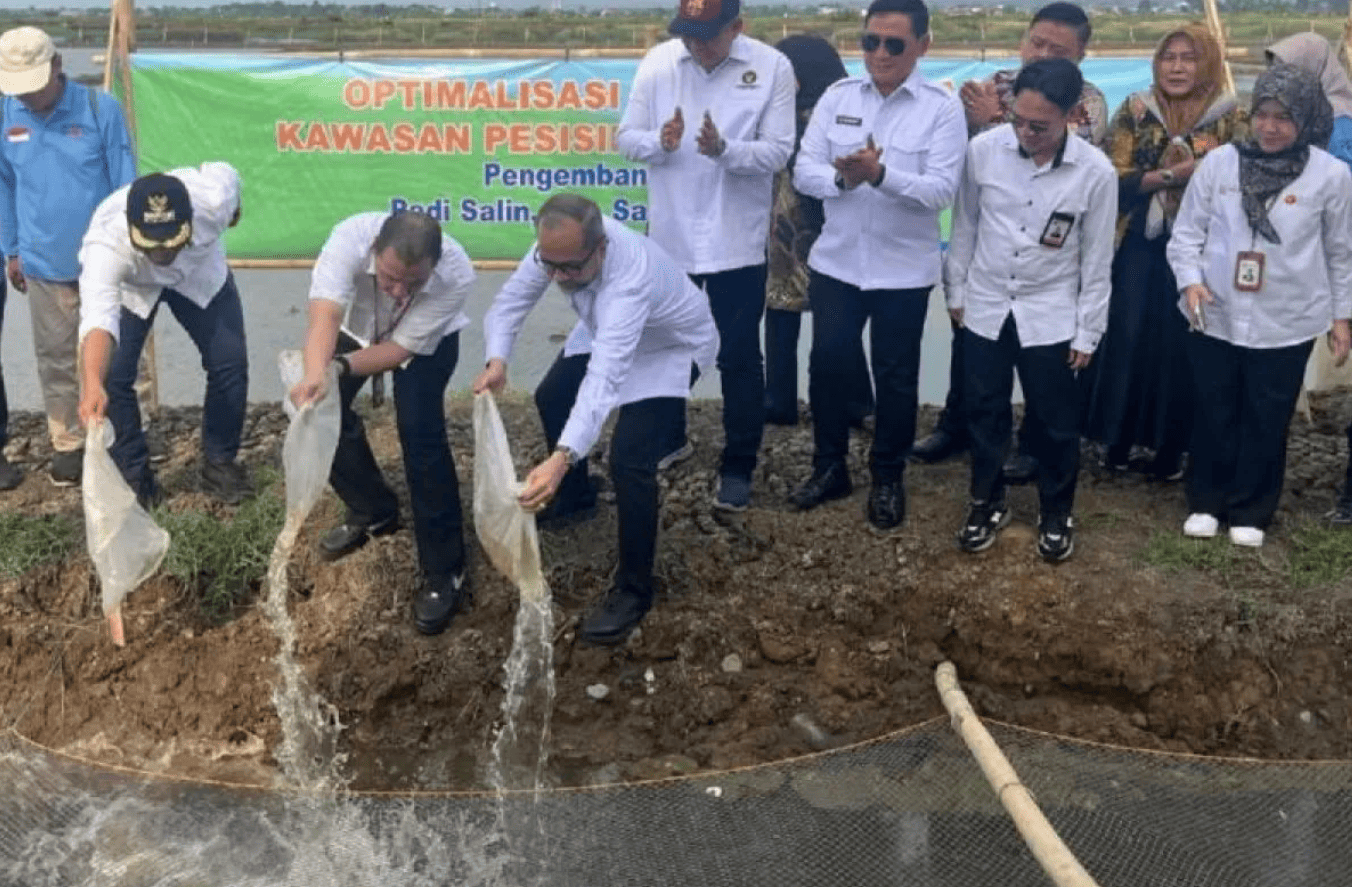
Coastal land previously constrained by high salinity levels is now being optimised into productive agricultural and fisheries areas through the development of the Minapadi Salin programme. This programme integrates the cultivation of biosaline rice, saline tilapia, and seaweed within a single ecosystem to enhance food security while opening new sources of income for coastal communities. The programme is being developed through a collaboration between PT Perusahaan Gas Negara Tbk (PGN), the National Research and Innovation Agency (BRIN), and the Batang Regency Government in the Sicepit Beach area, Batang Regency, Central Java.
PGN Corporate Secretary Fajriyah Usman stated that the programme represents an effort to strengthen food security while improving community welfare through the productive and sustainable use of saline land. “The Minapadi Salin programme is a tangible manifestation of that commitment, integrating agricultural and fisheries innovation, including the development of seaweed commodities, to improve farmers’ welfare while strengthening national food security,” Fajriyah said.
In this programme, biosaline rice cultivation on coastal land is combined with saline tilapia farming on the same plot. The community is also developing Gracilaria verrucosa seaweed, which has high economic value and can adapt to saline coastal waters.
The Minapadi Salin programme was previously implemented in the coastal areas of Mangunharjo, Semarang, and Jepara Regency. In Semarang, the development area expanded from 20 hectares to more than 115 hectares. Meanwhile, in Jepara, the harvest realisation reached 22 hectares with an economic value of approximately IDR 1.23 billion. Overall, the biosaline rice programme has generated an economic value reaching IDR 7.66 billion.
In Batang Regency, the programme is being run on 32.26 hectares of land managed by local farmer groups. In the initial phase, around 30 kilogrammes of seaweed seeds were dispersed and 10,000 saline tilapia fingerlings were released.
BRIN Deputy for Regional Research and Innovation, Yopi, assessed the programme as a concrete example of applying research results to address the productivity challenges of coastal land. “This approach not only restores land productivity but also increases the economic value of the area,” he said.
With technological support developed by BRIN, the programme is targeted to achieve rice productivity of 6–7 tonnes per hectare. Meanwhile, the saline tilapia are projected to reach an average weight of around 300 grammes per fish at harvest.
Going forward, the programme will also be strengthened by planting mangroves around the cultivation area as a measure to mitigate abrasion while maintaining the sustainability of the coastal ecosystem.
Batang Regent M Faiz Kurniawan stated that the development of Minapadi Salin is a strategic step to transform previously less productive land into an area of economic value. “This programme not only supports national food security but also opens opportunities to improve the welfare of farmers and coastal communities through the productive use of saline land,” he said.
Source: jawawa.id (https://jawawa.id/newsitem/saline-coastal-land-transformed-into-integrated-food-and-fisheries-hub-1781783459)
Originally published by Media Indonesia (https://mediaindonesia.com/ekonomi/901852/lahan-pesisir-salin-disulap-jadi-sentra-pangan-dan-perikanan-terpadu), translated from Indonesian