
Salim Business Empire Collapsed After Three Decades of Success
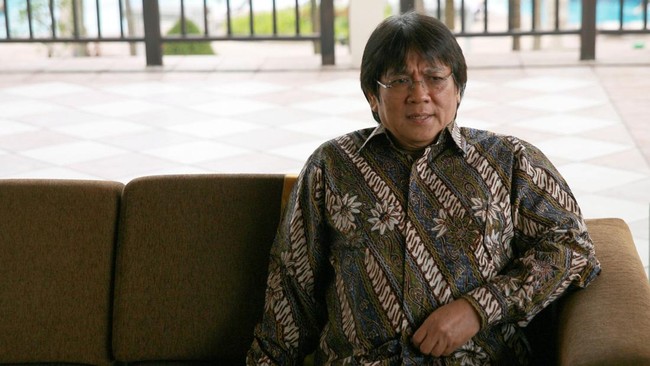
Indofood is one of the main pillars of the Salim family’s business, a major conglomerate now entering its third generation of leadership. Yet behind its current success, the Salim Group once suffered a collapse that brought it close to losing all its strength.
The Salim Group’s fortunes have been closely tied to its founder, Sudono Salim (Liem Sioe Liong), and the close relationship he built with the ruling authorities of the time. To understand how the conglomerate grew so rapidly before being nearly destroyed, it is necessary to revisit the early partnerships Sudono forged with the authorities of the New Order regime.
Sudono Salim had a personal relationship with Indonesia’s second president, Suharto. After independence, Sudono worked as a clove importer and a supplier of logistics to the army. His extensive business network attracted the interest of Colonel Suharto, who sought to work with him.
Salim and Suharto first met through Salim’s cousin, Sulardi. Salim subsequently supplied logistics to Colonel Suharto’s troops during the Indonesian War of Independence (1945–1949). That introduction would later change Salim’s life.
“After Suharto seized power in Indonesia in the mid-1960s and became president, he was backed by a group of business cronies, the largest and most powerful of whom was Liem Sioe Liong,” Richard Borsuk and Nancy Chng wrote in their 2016 book, Liem Sioe Liong and the Salim Group.
For three decades, the two men were involved in a mutually beneficial relationship. Suharto protected Liem and ensured his businesses could operate smoothly. In return, through the Salim Group business empire, Liem channelled funds to Suharto, his family and other cronies. Both men consequently prospered in their respective spheres.
Salim became Indonesia’s richest man, while Suharto firmly held the country’s highest office. But their fortunes collapsed in a matter of days in May 1998.
A target of public fury
Over three decades, Salim built a business empire across three main sectors: banking (Bank Central Asia/BCA), building materials (Indocement) and food (Bogasari and Indofood). Those pillars began to crumble during the 1998 monetary crisis, with BCA suffering the heaviest impact.
Historian M.C. Ricklefs wrote in A History of Modern Indonesia (2009) that customers made mass withdrawals during the crisis. Hundreds of people were willing to queue for hours to take out all their savings. BCA lost public confidence and came close to bankruptcy.
The crisis reached its peak in May 1998. Salim’s close ties to Suharto had turned into a major liability.
Anti-Suharto sentiment, fuelled by the spreading economic crisis and ensuing political turmoil, dealt Salim a severe blow. People who knew of the pair’s closeness made Salim a target of their anger, believing that the country’s richest man had to be brought down. Tensions escalated after demonstrations turned into racial riots on 13 May 1998.
That day, Jakarta and its surrounding areas were hit by riots, looting and arson targeting homes, shops and many vehicles, Kompas reported on 14 May 1998. The acts of violence were carried out by an incited mob. They targeted buildings and vehicles belonging to people of Chinese descent and threatened their lives.
In her book Anti-Chinese Violence in Indonesia, 1996–1999 (2013), Jemma Purdey explained that anti-Chinese sentiment was fuelled by stereotypes that Chinese Indonesians deserved to be hated because of their wealth and their closeness to the Suharto regime. Sudono Salim was the figure most strongly associated with that image.
“Businesses belonging to the cukong [wealthy Chinese-Indonesian businesspeople] and the Suharto family were the main targets of arson and looting. Bank Central Asia, owned by Liem Sioe Liong, was a principal target,” Ricklefs wrote.
According to Borsuk and Chng, when the mob targeted him, Sudono Salim was fortunate to be in the United States with his wife and several children for eye surgery. In Jakarta, only his son, Anthony Salim, remained, working at Wisma Indocement on Jalan Jenderal Sudirman.
At the time, Anthony did not dare return to his father’s home in the Roxy area, as the rioters were also targeting Chinese-Indonesian neighbourhoods. He feared for his life if he stayed at the house.
His fears proved justified. On the morning of 14 May 1998, Anthony learnt that a threatening-looking group had arrived at his father’s home carrying jerrycans of fuel and various tools. They forced their way into Liem’s mansion.
Anthony was powerless to stop them. He immediately instructed the security guards to let the mob in and destroy the house rather than try to block them and risk bloodshed.
“In an instant, all the cars in the garage were on fire, along with everything in the house. They set fire to the furniture, took down paintings and ransacked the rooms. They even scrawled obscene words around the house,” Anthony told Borsuk and Chng.
Within minutes, thick black smoke was rising from the Salim residence. In the street, a poster bearing Salim’s photograph was pelted with stones and set alight by the furious crowd, Kompas reported on 15 May 1998.
As the situation in Jakarta became increasingly uncontrollable, Anthony decided to leave his office, fearing that the building would suffer the same fate as his home. He hurried to Halim Perdanakusuma Airport and flew to Singapore on a private jet. From there, he monitored his businesses through the dark period.
The collapse of a business empire
After the riots subsided and Suharto formally stepped down, BCA suffered the heaviest losses. A total of 122 branches were reported damaged: 17 were completely burned down, 26 were damaged and looted, and 79 sustained damage without being looted. In addition, 150 ATMs were damaged and emptied of cash, resulting in total losses of Rp3 billion.
Indofood’s operations were also attacked. Its factory in Solo was looted and burned, causing losses of Rp42 billion, while its distribution centre in Tangerang was ransacked and destroyed. Only the cement business, Indocement, was relatively able to withstand the crisis.
The most devastating blow, however, hit the group’s banking business. A week after Suharto stepped down on 21 May 1998, the government was forced to take over BCA as its liquidity position continued to deteriorate. Through the Indonesian Bank Restructuring Agency (BPPN), the government formally designated BCA a Bank Taken Over (BTO) to prevent it from sinking further.
From then on, BCA was no longer owned by the Salim family. Borsuk and Chng noted that, in order to keep its business machinery running, the family could then rely only on Indofood.
More than two decades after those harrowing events, the Salim family’s business empire has recovered and prospered again. Its sprawling operations no longer depend on Indofood alone, having expanded into strategic sectors including oil and gas, construction, banking and data centres.
According to Forbes’ 2025 list of Indonesia’s 50 richest people, Anthony Salim and his family rank fifth, with an estimated fortune of US$13.6 billion, equivalent to Rp248 trillion.
Source: jawawa.id (https://jawawa.id/newsitem/salim-business-empire-collapsed-after-three-decades-of-success-1794739844)
Originally published by CNBC Indonesia (https://www.cnbcindonesia.com/market/20261115122954-17-785348/kerajaan-bisnis-salim-runtuh-setelah-berjaya-selama-tiga-dekade), translated from Indonesian