
Sales of Subsidised FLPP Homes Plunge 32%, Developers Cite Stigma and Shrinking Purchasing Power
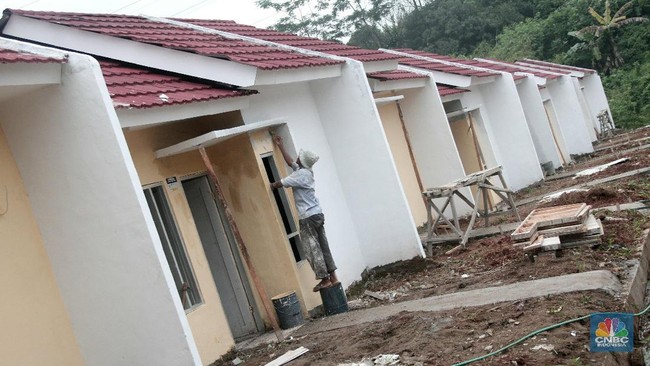
Sales of subsidised houses through the Housing Finance Liquidity Facility (FLPP) have reached only 77,532 units as of mid-June, representing 22.15% of the government’s annual target of 350,000 units. This figure represents a decline of more than 32% compared to the 114,799 units sold during the same period last year.
Associate Director of Leads Property, Martin Samuel Hutapeva, explained that amidst this decline, developers have been attempting various methods to make subsidised houses more attractive, particularly to combat the stigma that such homes are often deemed uninhabitable. However, he acknowledged that the sales trend for subsidised housing this year is under more pressure than the previous year due to declining public purchasing power.
“Subsidised housing faces constraints regarding purchasing power. It is true that I have heard sales statistics are down. Therefore, I predict that this year will be more pressured than last year,” Martin told CNBC Indonesia on Friday (19/6/2026).
Martin explained that the current situation is difficult, especially for developers. Not only have sales figures collapsed, but the rising cost of materials is eroding developer margins. Meanwhile, the room to increase the selling price of subsidised houses is very limited, as developers must once again consider public purchasing power.
“If the construction cost is, for example, Rp5.5 million per m2, and they take a profit, say a healthy amount of Rp7 million. But when construction costs rise and materials become more expensive, it might increase to Rp5.8-5.9 million per m2. If they sell at Rp7 million, the profit is eroded; however, if they want to raise it to Rp7.5 million, there is a challenge, especially since purchasing power is declining,” he elaborated.
The General Treasurer of the Indonesian Real Estate Association (REI), Samuel S. Huang, added that amidst the decline in sales, developers are trying various ways to make subsidised houses more desirable, as there is a stigma that they are often unfit for habitation. He mentioned that developers are collaborating with universities to conduct research on ideal residential locations and regional infrastructure development.
“The hope is that this can serve as a reference for subsidised housing developers in Indonesia to build decent and sustainable dwellings, while simultaneously assisting the government in realising the 3-million-house programme. Based on BPS data, the current housing backlog has reached 9.9 million units,” said Samuel.
Samuel, who is also the President Director of Infiniti Land and has developed the Mulia Gading Kencana (MGK) subsidised housing in Serang, Banten, acknowledged that one of the challenges in building subsidised houses is maintaining an affordable price in accordance with government regulations.
Consequently, he has partnered with the Graduate School of Sustainable Development at the University of Indonesia (SPPB-UI), specifically for research input regarding the construction process, ranging from eco-friendly building materials to spatial planning related to disaster mitigation, including earthquake-resistant structures.
“In building subsidised houses, it is necessary to consider all aspects of sustainability, including green concept housing, from the planning stage through to execution,” he concluded.
Source: jawawa.id (https://jawawa.id/newsitem/sales-of-subsidised-flpp-homes-plunge-32-developers-cite-stigma-and-shrinking-purchasing-power-1781841107)
Originally published by CNBC Indonesia (https://www.cnbcindonesia.com/news/20260619095621-4-743962/muncul-fenomena-penjualan-rumah-subsidi-flpp-anjlok-ada-apa), translated from Indonesian