
Salemba Prison Equips Inmates with Livestock Farming Skills
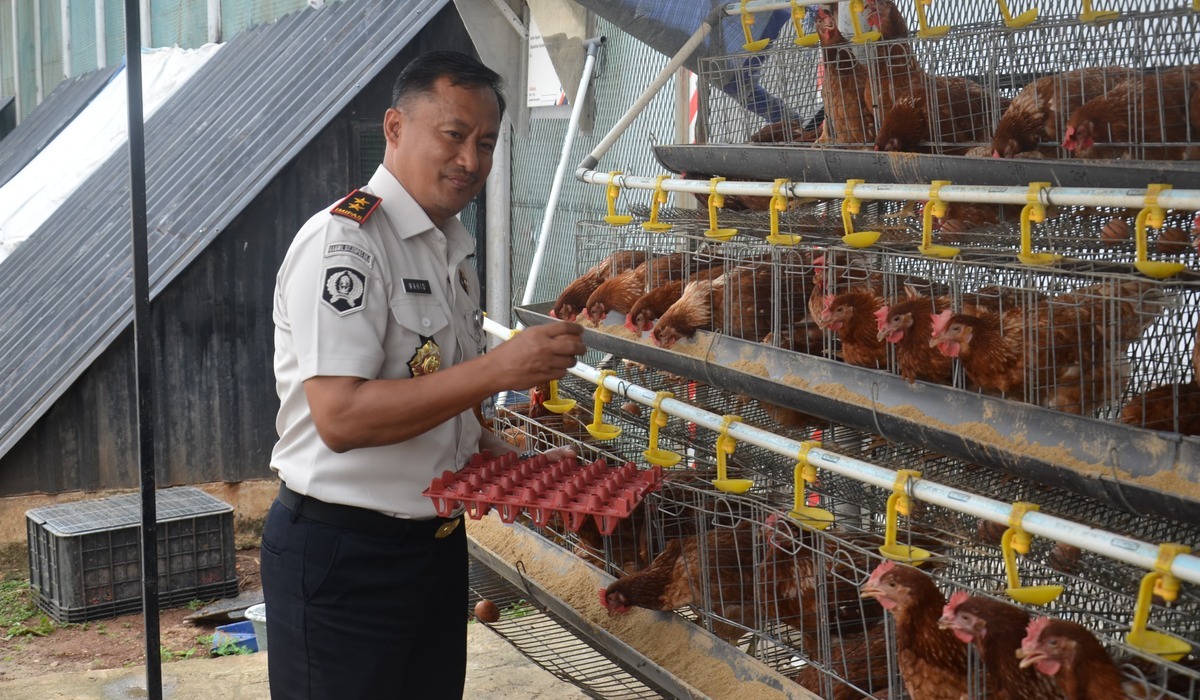
The Salemba Class IIA Correctional Facility has successfully developed a productive independence programme through the livestock sector. The facility currently manages 300 laying hens, achieving a harvest productivity rate of approximately 50 percent. The programme’s success was marked by a joint egg harvest led by the Head of the Regional Office of the Directorate General of Corrections for the Special Capital Region of Jakarta, Wachid Wibowo, at the facility’s independence development area on Thursday (25/6/2026). Wachid expressed high appreciation for the sustainable innovation undertaken by the Salemba prison staff. He stated that this activity serves as tangible proof that the correctional function can contribute directly to strategic national agendas beyond legal rehabilitation. “This laying hen farming activity is a real example of productive development. It not only supports the food security programme but also equips inmates with useful skills as preparation for their return to society,” Wachid said. The poultry farming programme is a direct implementation of the Acceleration Programme of the Minister of Immigration and Corrections, as well as a follow-up to the Directorate General of Corrections’ directive regarding the optimisation of productive spaces within detention centres and prisons. Through this technical livestock training, inmates are taught to understand the upstream-to-downstream production chain, including poultry health maintenance, regular feed management, and the management of egg harvests for consumption. Head of the Salemba Class IIA Correctional Facility, Amico Balalembang, affirmed his commitment to continuously optimising the production capacity of the farm as a primary means of learning and empowerment. Amico aims for this independence programme to produce inmates who are more productive, economically self-reliant, and ready to reintegrate healthily into society after completing their sentences. “The laying hen farming programme will continue to be optimised as a means of learning and empowerment for inmates, while also supporting the food security programme which is a priority of the Ministry of Immigration and Corrections,” Amico asserted.