
Salemba Prison conducts sudden inspections and urine tests on inmates
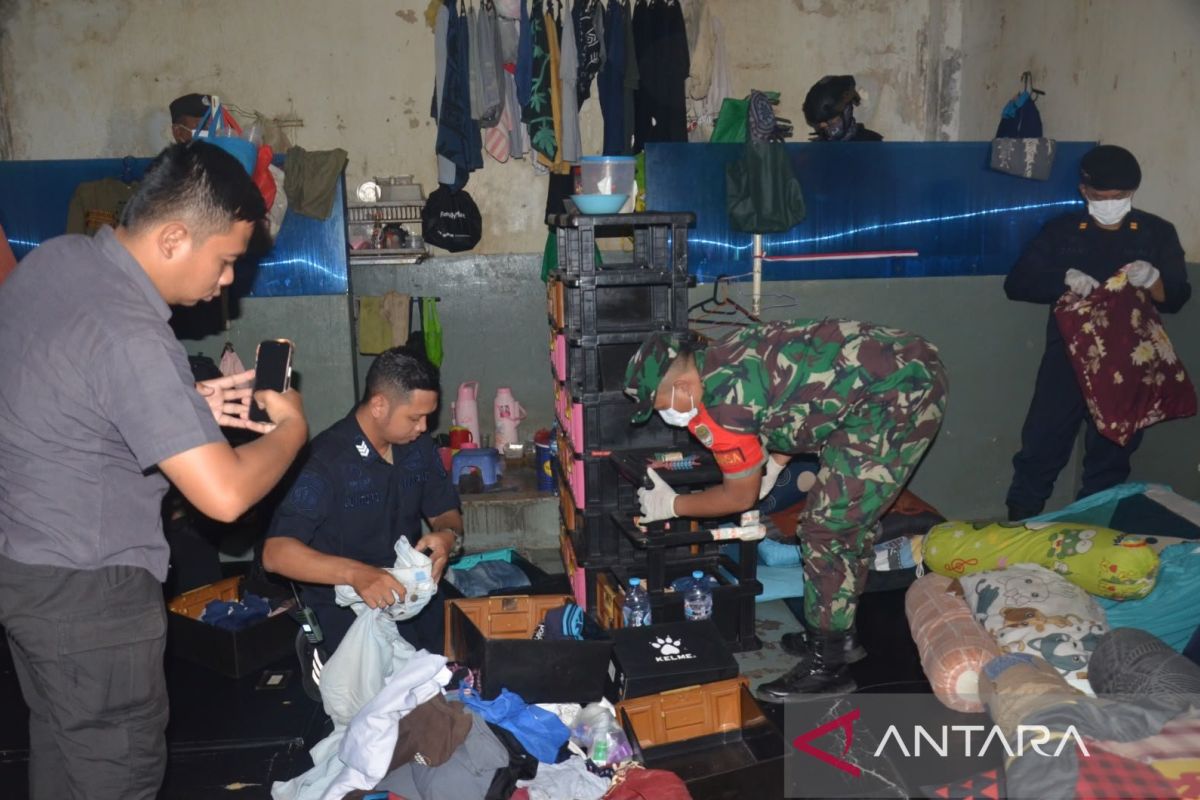
Jakarta (ANTARA) - Salemba Class IIA Prison, in collaboration with several agencies, conducted sudden inspections of inmate cells and urine testing to ensure early detection of security disturbances and narcotics abuse on Friday (18/9).
“We are ready to carry out the orders of the Director General of Corrections in strengthening early detection and maintaining security and order. Random inspections and urine tests will continue to be conducted as a form of our shared commitment,” stated the Head of Salemba Class IIA Prison, Amico Balalembang, in a written statement in Jakarta on Saturday.
He explained that the inspection involved the Regional Office of the Directorate General of Corrections for Jakarta, the North Jakarta City National Narcotics Agency (BNNK), the Indonesian National Armed Forces (TNI), the National Police (Polri), and the Brimob special police unit.
Joint officers targeted several inmate residential cells, performing inspections of the rooms and the items contained within. During the inspection, several items prohibited from being in the residential cells were discovered.
The seized items included five plastic spoons, three razors, five metal spoons, and five perfume bottles.
In addition to the cell inspections, BNNK North Jakarta, alongside Salemba Prison personnel, conducted random urine tests on 3ache 32 inmates and 30 officers.
The results of the examination showed that all participants tested negative for indications of narcotics abuse.
Amico stated that the inspections and urine tests are part of the continuous supervision carried out to strengthen security and order within the prison environment.
He added that synergy with the Regional Office of the Directorate General of Corrections for Jakarta, BNNK North Jakarta, TNI, Polri, and Brimob will continue to be strengthened through regular monitoring and early detection.
Regarding the execution of the inspection, Amico noted that it maintained a humanist and professional approach, respecting the rights and dignity of the inmates.
“This activity is part of the effort to realise a correctional environment that is safe and free from drugs, and to prevent the presence of mobile phones, illegal levies, and narcotics (halinar),” he said.