
Salaries up to Rp2.53 Billion: 4 Professions Hard to Replace with AI, According to Bill Gates
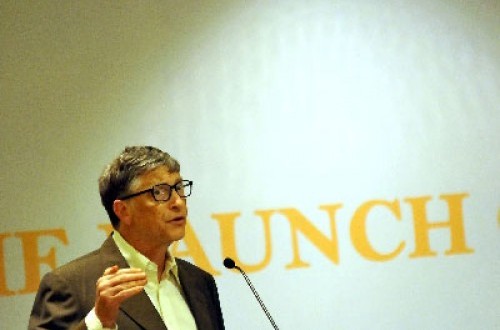
As artificial intelligence begins to displace various types of jobs worldwide, concerns about the loss of millions of positions are intensifying. However, Microsoft founder Bill Gates believes there are several professions that are relatively safe from the threat of automation because they require abilities that AI cannot yet fully replicate.
Interestingly, besides being predicted to have strong long-term prospects, these professions also offer very high average salaries in the United States.
Programmer: Assisted by AI, Not Replaced
The profession of programmer or software developer is becoming even more strategic amidst the AI boom. While machines are capable of writing simple code, helping to find bugs, and drafting application frameworks, AI still cannot fully replace humans in the most critical tasks. These include designing system architecture, understanding user needs, making technical decisions, maintaining application security, and calculating the business impact of every line of code.
These skills are highly valued in the United States. Data from the U.S. Bureau of Labor Statistics (BLS) recorded that the median income for software developers reached 133,080 US dollars, or approximately Rp2.39 billion, per year as of May 2024. This figure equates to around 11,090 US dollars, or Rp198.96 million, per month before tax.
The prospects for this field continue to strengthen. The BLS projects that employment for software developers will grow by 15 percent in the period 2024–2034, much faster than the average for all occupations. In the AI era, programmers are no longer just code writers, but system designers who ensure that artificial intelligence works according to human needs, is safe to use, and is capable of creating value for business and society.
Biologist: AI Assists Research, Humans Still Decide
The profession of biologist, particularly biochemists and biophysicists, is also expected to remain one of the fields most difficult for AI to replace. The development of artificial intelligence has indeed accelerated various research processes, but it has not yet been able to take over the entire role of scientists in generating new discoveries.
AI is currently capable of analysing millions of genetic data points, accelerating the search for drug candidates, and predicting protein structures in a much shorter time compared to conventional methods. This capability helps speed up research, especially in the fields of health and biotechnology.