
SAKA strengthens Pekawai Working Area exploration to discover new oil and gas reserves
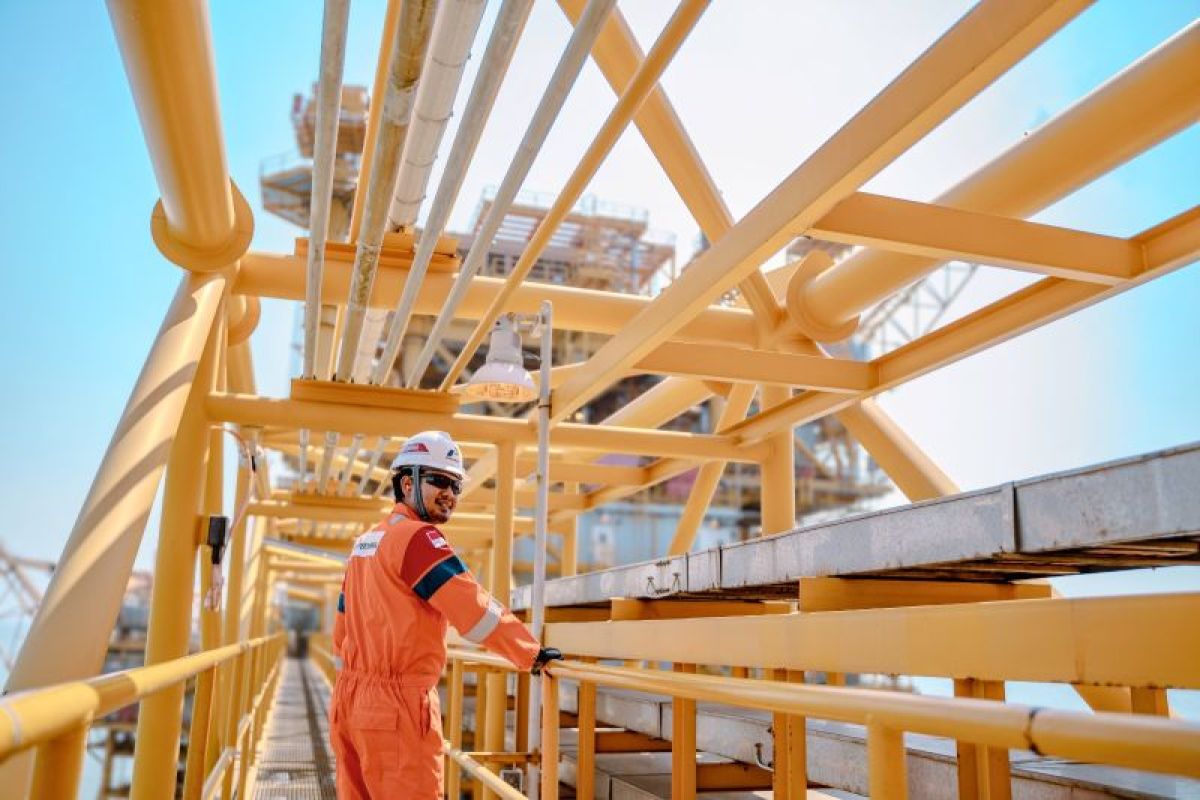
PT Saka Energi Indonesia (SAKA), an upstream oil and gas company and part of PGN as Pertamina’s Gas Subholding, is strengthening its commitment to exploration activities in the Pekawai Working Area (WK) in East Kalimantan to discover new oil and gas reserves as part of efforts to support national energy security.
As part of this commitment, SAKA plans to drill one exploration well in the third quarter of 2026 as a strategic step to unlock the potential of new oil and gas resources within its operational area.
“The Pekawai Working Area is one of SAKA’s strategic exploration assets with highly promising prospects. Through various exploration activities conducted in a gradual and measurable manner, we strive to maximise the gas potential in this working area,” said SAKA’s Director of Exploration and Development, Fuji Koesumadewi, in a statement confirmed in Jakarta on Saturday.
SAKA manages the Pekawai Working Area through PT Saka Energi Sepinggan. Since being appointed by the government through SKK Migas as an operator under the gross split scheme on 16 May 2018, SAKA has continuously developed the potential of the Pekawai area, which covers an exploration area of 1,555 km², including both onshore and offshore zones.
In carrying out its exploration commitments in the Pekawai Working Area, Fuji continued, SAKA has consistently implemented various exploration activities, ranging from geological and geophysical studies that have successfully identified two main prospects: the Saka Manpatu (SM)-1 Prospect and the Hanna Prospect in the offshore area.
Since 2022, SAKA has also been synergising with Pertamina Hulu Mahakam (PHM) to mature these two prospects. This effort was further strengthened in 2024 with the approval of an Extension of the Exploration Period (PJWE) until 15 May 2028, providing space for a more comprehensive exploration programme.
According to Fuji, in early 2026, the company obtained approval from PGN to conduct drilling for the SM-1 appraisal well, with a target depth of approximately 12,000 ft, as part of fulfilling certain exploration commitments.
This drilling is expected to prove the existence of oil and gas resources in the Pekawai Working Area while opening development opportunities through a unitisation scheme with PHM. Additionally, geological and geochemical surveys in the onshore area are currently being conducted as part of geological and geophysical (G&G) activities, which are targeted for completion in 2026.
“The plan to drill an exploration well is a significant milestone to prove the existing resource potential and open opportunities for further development,” Fuji added.
The potential of the Pekawai Working Area is increasingly promising due to its geological characteristics, which are continuous with the Manpatu Field managed by PHM, which already has an approved Plan of Development (POD).
Approximately 10–24 per cent of the Manpatu Field structure lies within the Pekawai Working Area; therefore, hydrocarbons identified in that field are believed to extend into the Pekawai area.
Furthermore, the position of the Pekawai Working Area, situated between several productive oil and gas fields such as Manpatu, E. Mandu, and Jempang Metulang, further strengthens its prospects as a strategic exploration asset for SAKA that has the potential to provide additional oil and gas resources for Indonesia, Fuji concluded.