
Said Iqbal Reveals an Unexpected Fact About Factory Closures and Lay-offs in Indonesia
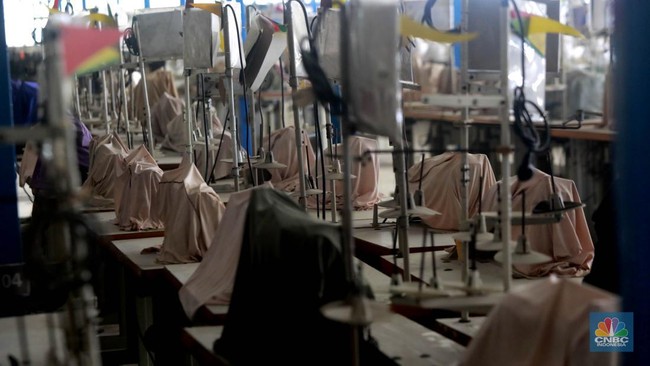
Jakarta, CNBC Indonesia — Plans to raise the 2027 minimum wage have reignited debate over the impact on business viability and employment. The Confederation of Indonesian Trade Unions (KSPI) argues that wage increases are not the main factor behind factory closures and waves of lay-offs in Indonesia.
KSPI president Said Iqbal highlighted factory closures recorded by his organisation from 2025 through June 2026. Several areas with relatively low minimum wages, he said, were among the locations where companies had shut down.
“If it is claimed that a 7.5% to 9.5% increase in the minimum wage will cause companies to close, let us look at the facts on the ground. From 2025 up to KSPI’s records through June 2026, the factories that closed in the greatest numbers were in areas where the minimum wage is low,” he said at a press conference on Monday (13 October 2026).
Said named Central Java, the Special Region of Yogyakarta, Majalengka and Sumedang as areas included in the records. The data, he said, underpin his rejection of the argument that minimum-wage rises automatically lead to company closures.
“Where? Central Java, where wages are low. In Yogyakarta, Majalengka and Sumedang. Their minimum wages are low,” Said said.
The textile, garment and footwear industries have drawn particular attention because many businesses in these sectors are export-oriented. Demand in international markets is crucial to their continued production, and when orders decline, labour requirements are affected.
“What caused companies to close? KSPI and the Labour Party’s records point to one factor: international purchasing power has slowed as a result of the Russia-Ukraine war and the United States-Israel war with Iran,” he said.
Rising production costs are also putting pressure on labour-intensive industries. Higher energy, industrial gas and fuel costs can push companies to cut costs, including by reducing their workforce.
“Second, production costs have risen. Because of the wars, industrial energy costs, industrial gas costs and fuel costs, including industrial diesel, have gone up. When production costs rise, companies make production more efficient by reducing staff, bringing down production costs, labour costs and wages,” he said.
In the domestic market, weaker consumer purchasing power can also reduce demand for goods. This adds to the pressure on companies facing higher production costs and falling sales. KSPI also pointed to foreign companies moving their production operations out of Indonesia.
“Third, for goods sold domestically, particularly those from labour-intensive industries, Indonesians’ purchasing power has also declined, so people buy fewer goods. The final factor is the principle of returning to Japan or Korea. For example, Japan’s Sanken Electronics is pulling its factory back to Japan because it no longer wants production to take place in Indonesia,” he said.
Source: jawawa.id (https://jawawa.id/newsitem/said-iqbal-reveals-an-unexpected-fact-about-factory-closures-and-lay-offs-in-indonesia-1791881457)
Originally published by CNBC Indonesia (https://www.cnbcindonesia.com/news/20261013125728-4-775699/said-iqbal-ungkap-hal-tak-terduga-soal-fenomena-pabrik-tutup-phk-di-ri), translated from Indonesian