
Said Iqbal: Ratification of Labour Bill must not sacrifice workers' rights
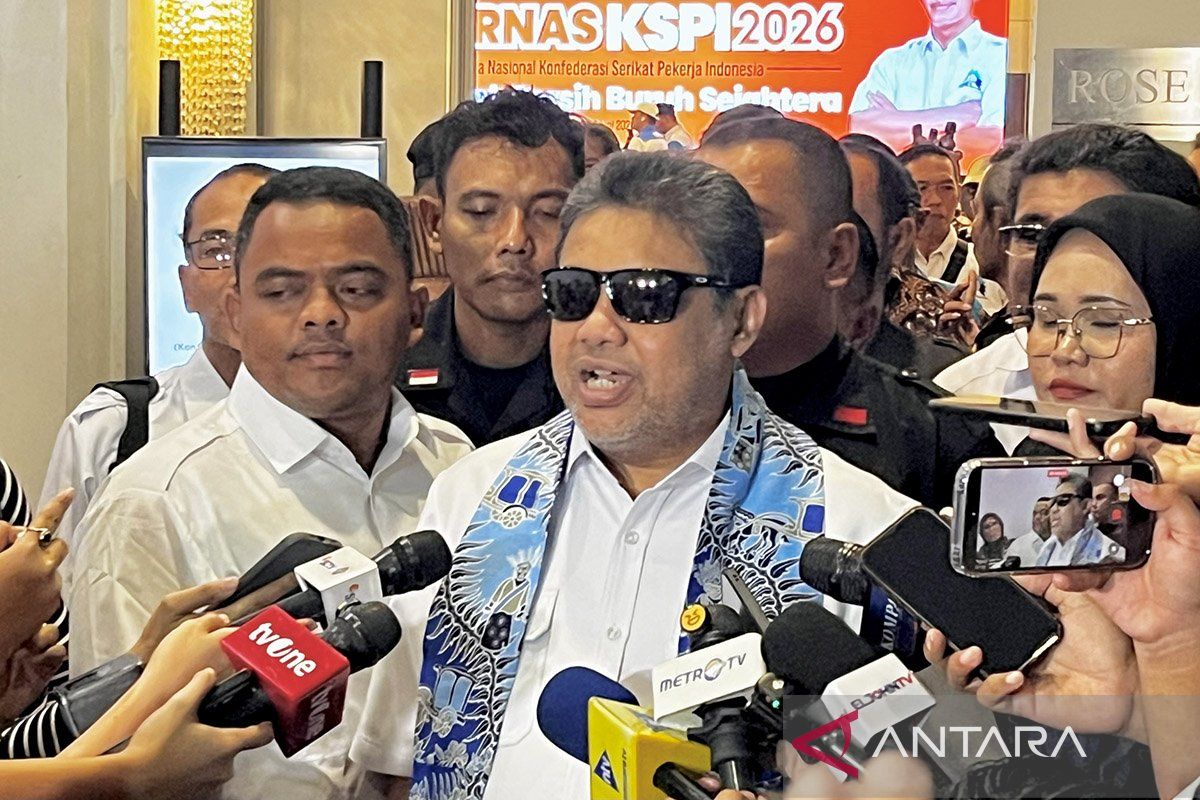
Jakarta (ANTARA) - The President of the Confederation of Indonesian Trade Unions (KSPI), Said Iqbal, stated that the Labour Protection Bill must be ratified by October 2026 at the latest, but insisted that workers’ rights must not be sacrificed in the process.
“The Labour Protection Bill must still be ratified and every effort must be made to achieve this. However, we must not allow the pursuit of a two-month deadline to result in poor legislation that harms workers,” Said Iqbal said in a statement in Jakarta on Sunday.
According to him, although the tight deadline exists, it should not serve as an excuse to discuss the law in a hurry and sacrifice the substance of protections for the workforce.
Said Iqbal noted that the use of the word “protection” in the title of the Bill must have real meaning. The state must be present and take a side in protecting workers from before they enter an employment relationship, during their employment, and after the employment relationship ends.
Therefore, the substance of the Bill must not merely change the title while the articles continue to maintain excessive flexibility that weakens the position of labourers.
“If the title is the Labour Protection Bill, then its content must reflect the presence of the state and its commitment to workers. Protection must apply before, during, and after work,” he said.
Regarding termination of employment (PHK), he argued that layoffs should be made more difficult and positioned as a last resort through fair procedures, rather than being made easier for employers.
Furthermore, KSPI rejects the provision for severance pay at 0.5 times the standard, as currently permitted under Government Regulation Number 35 of 2021. Severance pay must be at least one times the standard and must not be paid in instalments, as it serves as a replacement for income when a worker loses their job.
He compared the two-month deadline to the long history of labour regulation formation. The discussions that eventually led to Law Number 13 of 2003 took many years, while the experience of forming the Omnibus Law demonstrated the dangers of rapid legislation and a lack of transparency.
“Do not repeat the method of forming the Omnibus Law, which was discussed in haste, even until midnight and moving from hotel to hotel. This Bill concerns the lives of tens of millions of workers and their families. The discussions must be open, participatory, and must not become an arena for competing interests that sacrifice workers,” said Said Iqbal.