
Said Iqbal Pledges to Oversee 8% Maximum Commission Cap for Ride-Hailing Apps
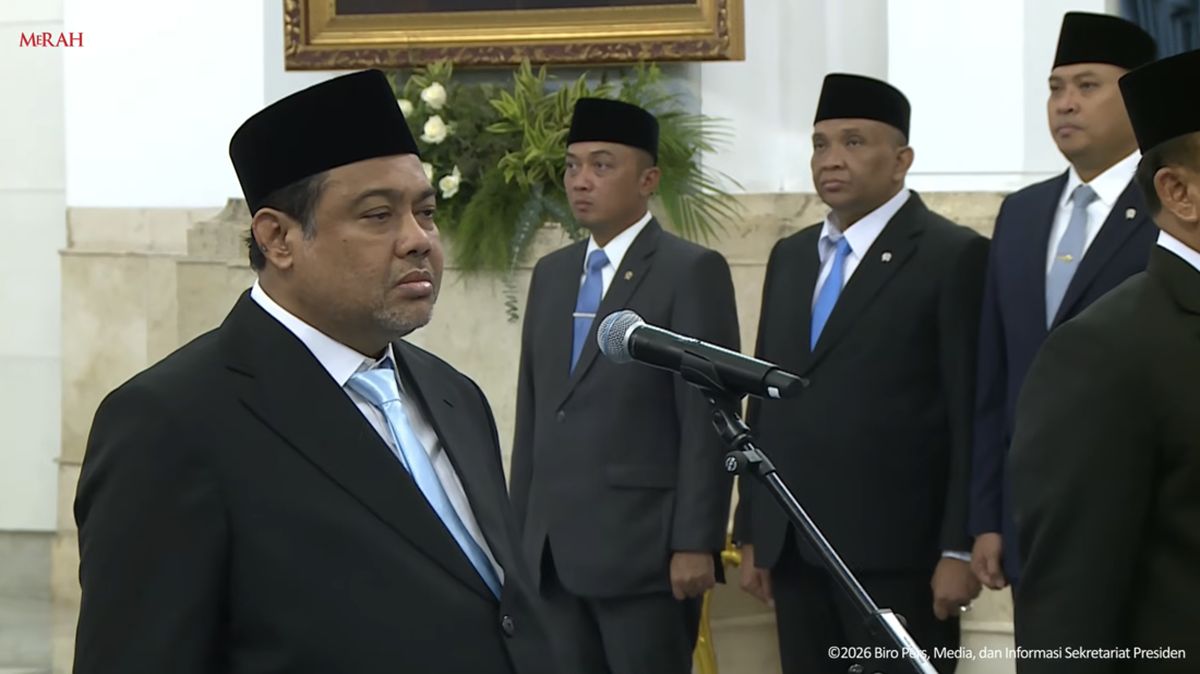
Said Iqbal, the Presidential Special Adviser for Labour and Worker Welfare, has pledged to oversee the implementation of the online motorcycle taxi (ojol) tariff distribution policy, which allocates 92 per cent of income to drivers and limits application provider commissions to a maximum of 8 per cent.
Said stated that this regulation is one of the key labour issues he will prioritise following his appointment by President Prabowo Subianto. “The implementation of the 8 per cent commission cap for ride-hailing apps is also a priority. Complaints from online taxi motorcycle drivers suggest that the policy is not yet functioning as expected,” Said remarked following his inauguration at Istana Merdeka, Central Jakarta, on Monday.
He mentioned that he intends to meet with online taxi drivers soon to gather feedback regarding the policy’s implementation on the ground. “In the near future, we will convene with our online taxi motorcycle driver colleagues. My principle is to spend more time in the field to absorb their input,” he said.
According to Iqbal, the issue facing ride-hailing drivers is part of a broader agenda concerning the improvement of worker welfare. He noted that his focus when advising the President will encompass job security, income security, and social security. He believes that economic growth must be balanced with equitable welfare and broader employment opportunities for both formal and informal sector workers.
Iqbal added that during May, as the leader of the Indonesian Confederation of Trade Unions (KSPI), they presented 11 developing issues. Some of these have already been addressed by President Prabowo, including the Domestic Workers Bill (RUU PPRT) and the tariff distribution for online taxi drivers.
Beyond the ride-hailing issue, Iqbal also highlighted the need for social protection for informal sector workers, such as small traders, rickshaw drivers, and vegetable vendors, to receive basic protections as stipulated by international labour conventions. He emphasised that his role as a presidential adviser is not to make decisions but to provide advice, analysis, and policy input to the President. “I will certainly approach several ministers to discuss these matters because a Presidential Adviser cannot make decisions; we are not executors. However, we can provide persuasion,” he concluded.