
Said Iqbal Details Government Measures to Curb Layoffs
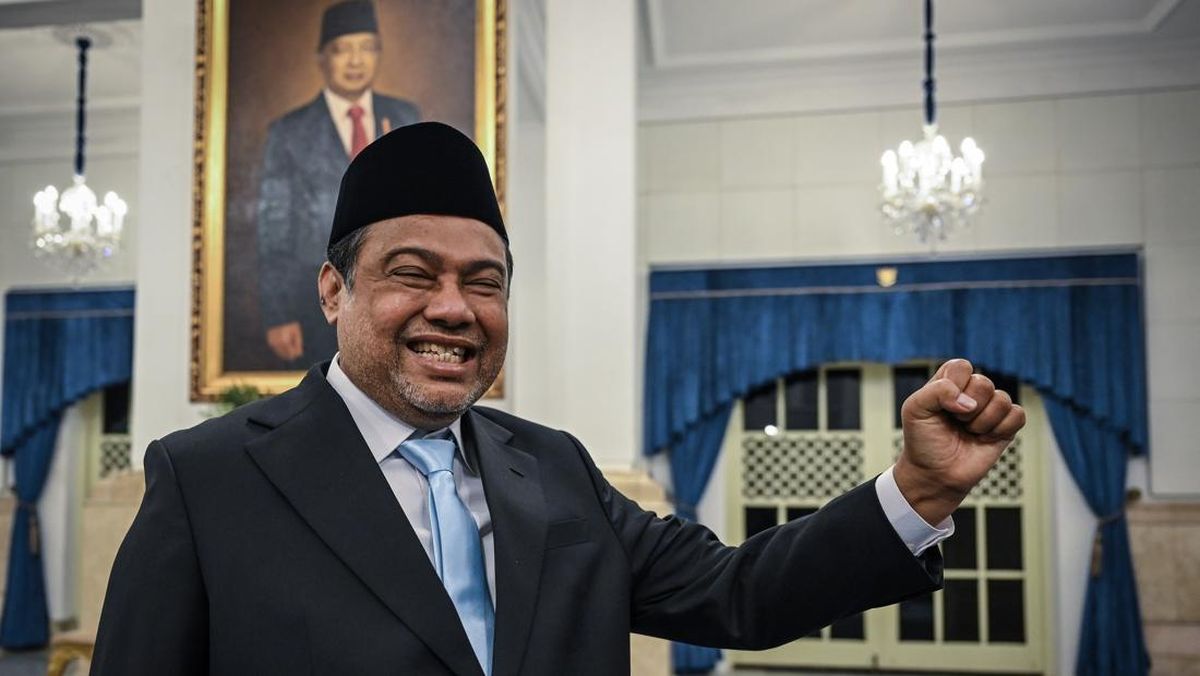
The Special Adviser to the President on Labour and Worker Welfare, Said Iqbal, has revealed a series of mitigation steps being undertaken by the government in collaboration with labour unions to suppress the wave of layoffs (PHK).
These mitigation steps include preventing industrial relocation, ensuring the payment of severance pay, revising outsourcing regulations, and proposing that the tax rate on Old Age Security (JHT) benefits be reduced to 0 per cent.
Iqbal stated that the threat of layoffs still looms over the industrial sector due to the global economic slowdown, weakening domestic purchasing power, high industrial gas prices, and the relocation of multinational company production to other countries.
“The threat of layoffs is indeed still present. However, the government and labour unions are not remaining idle. We have chosen to go directly into the field to perform mitigation so that layoffs can be prevented. Even if layoffs cannot be avoided, workers’ rights must be ensured to be paid according to regulations,” Iqbal said in a written statement on Sunday (28/6).
He noted that a direct approach to companies, or field visits (turba), is considered more effective than merely receiving reports. In recent weeks, he reported visiting several companies in West Java, East Java, and Jakarta. On Monday (29/6), he is scheduled to visit Tangerang Regency.
According to Iqbal, one result of these efforts is the reduction of production relocation plans at PT JAI Pasuruan and PT SAI Mojokerto, which are part of the Yazaki Group. Originally, the company planned to move approximately 50 per cent of its production lines to Vietnam, but following dialogues with labour unions, the relocation has reportedly shrunk to about three to five production lines.
He added that the company has also developed a business plan through 2030 that prioritises natural workforce reduction through the expiration of employment contracts, rather than mass layoffs.
Furthermore, the government is reportedly encouraging a reduction in non-subsidised industrial gas prices for the ceramics, granite, and textile sectors to ensure companies remain competitive and able to maintain their workforce.
“The reduction in industrial gas prices is one of the government’s concrete steps to prevent a wave of layoffs. With more competitive production costs, companies have the space to retain their workers,” said Iqbal.
In the case of PT Pakerin in Mojokerto, Iqbal admitted that layoffs affecting approximately 2,500 workers are likely unavoidable. However, the government is working to ensure that liquidation funds held by the Deposit Insurance Corporation (LPS) can be used to pay workers’ severance while also serving as capital for the company to resume operations.
Regarding regulation, Iqbal confirmed that the revision of Ministerial Regulation (Permenaker) Number 7 of 2026 concerning outsourced workers is expected to be completed between early and mid-July 2026.
He stated that the government proposes that outsourcing should only be permitted for four types of supporting roles: cleaning services, security officers, drivers, and catering. In certain State-Owned Enterprise (BUMN) sectors, the use of subsidiaries as labour providers remains possible, provided that workers receive full protection, ranging from clear employment relationships and equal wages to social security and severance rights.
“Outsourced workers must receive the same protection. Outsourcing must no longer serve merely as a means to reduce workers’ rights,” he said.
Iqbal also revealed that his party has proposed to the government that JHT benefits, severance pay, pension benefits, and religious holiday allowances (THR) be exempted from tax.
In his view, JHT benefits originate from workers’ income, which has already been subject to Article 21 Income Tax (PPh 21); therefore, taxing the withdrawal of JHT constitutes double taxation.
“Workers’ wages have already been deducted for PPh 21 upon receipt. Therefore, when JHT is paid to workers, it should not be taxed again. I am proposing that the JHT tax be set at 0 per cent as a form of the state’s commitment to workers,” Iqbal said.
He mentioned that this proposal will be formally submitted to the Minister of Finance as part of the policy reform for worker welfare protection.