
Said Examines Economic Targets to Food Security in 2027 KEM PPKF
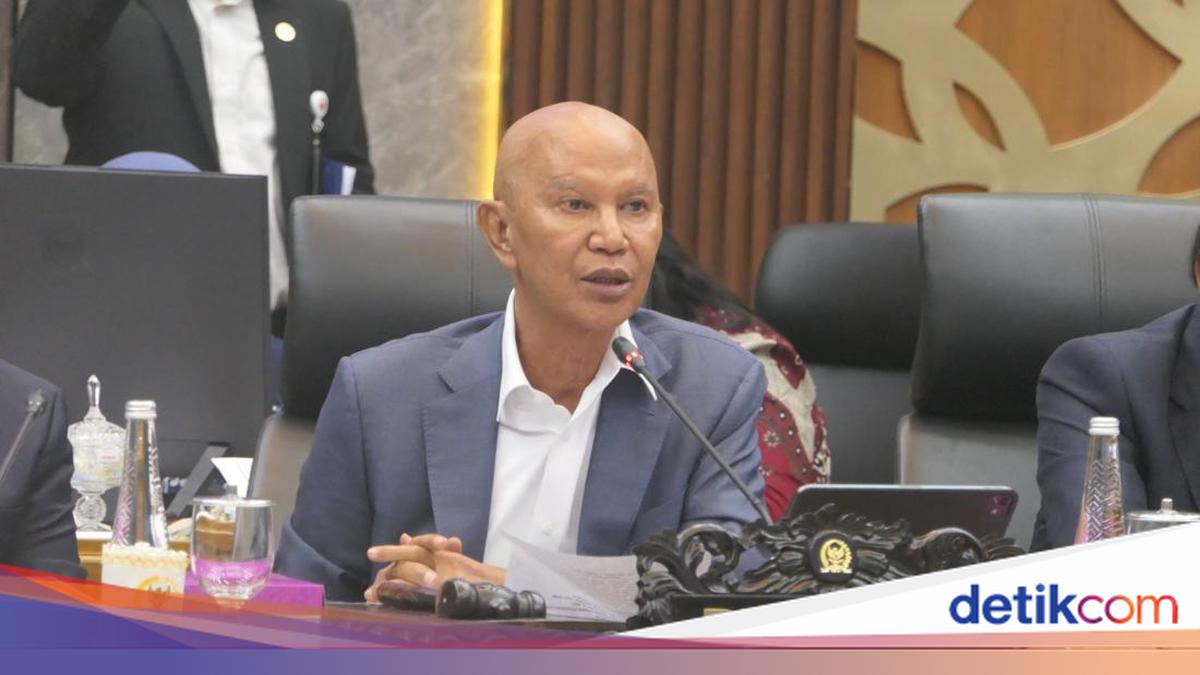
House Budget Committee Chair Said Abdullah appreciated President Prabowo Subianto for directly delivering the introduction to the Macroeconomic Framework and Fiscal Policy Principles (KEM PPKF) for the 2027 State Budget Draft in a DPR RI plenary session. This step marks a new tradition in conveying the government’s economic and fiscal policy direction.
“We appreciate President Prabowo creating a new state tradition by delivering a speech directly in the DPR Plenary to present the Introduction to the 2027 KEM PPKF,” Said stated on Tuesday (9/6/2026).
However, Said examined the various 2027 macroeconomic assumptions proposed by the government, including an economic growth target of 5.8-6.5 percent, inflation of 1.5-3.5 percent, and an exchange rate of Rp16,800-17,500 per US dollar.
Said assessed that high and sustainable economic growth is crucial to bring Indonesia towards becoming a high-income country. Yet, he argued that this growth must proceed in tandem with reductions in poverty, unemployment, and social inequality.
He also highlighted a number of challenges the government needs to anticipate in executing the eight National Priority Programmes outlined in the 2027 KEM PPKF, ranging from food, energy, and water sovereignty, education, and health, to downstream processing and industrialisation.
According to Said, the threat of climate change is a primary concern as it could disrupt food and water security programmes. “The Meteorology, Climatology, and Geophysics Agency (BMKG) has warned that we must prepare for an El Niño Godzilla, or a prolonged dry season. This situation could threaten food and water sovereignty programmes. Therefore, mitigation must be carried out as early as possible,” he said.
Additionally, he highlighted national energy security amidst global geopolitical turmoil. He believes the government needs to improve the synchronisation of domestic energy production and consumption and ensure energy subsidies are well-targeted. “We hope that next year the government can complete the reform of energy subsidies,” he said.
On this occasion, Said also reminded of the importance of capitalising on the demographic bonus, which is expected to end by 2041. He assessed that improvements in the quality of education and workforce need to be accelerated to support the national downstream processing and industrialisation agenda.
Currently, the industrial sector’s contribution to Indonesia’s Gross Domestic Product (GDP) remains around 19 percent, whereas industrialised nations typically have a contribution of around 30 percent to GDP. “Building an industrial nation is not easy, but this steep road must be traversed,” said Said.
He argued that the government must determine priority industrial sectors with competitiveness, the ability to absorb labour, and the capacity to meet future industrial needs so that the national economic transformation can proceed more effectively.