
Said Abdullah Urges Permanent Measures to Mitigate Drought and Forest and Land Fires
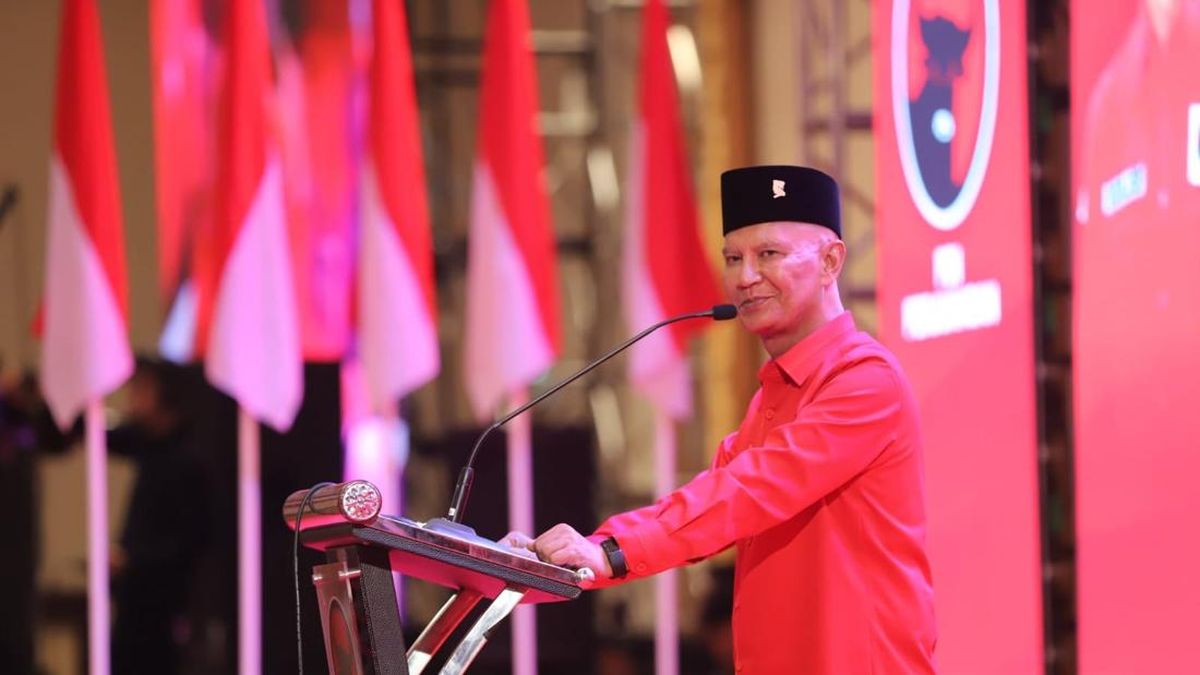
Said Abdullah, chairman of the East Java branch of the Indonesian Democratic Party of Struggle (PDI-P), has called on local governments to strengthen measures to mitigate drought and forest and land fires (karhutla) across East Java during the dry season.
Said said the two problems should no longer be treated as seasonal events. Responses, he said, often begin only after residents are struggling to find water or fires have already spread through forest areas.
“We are concerned to see our fellow citizens in various areas facing a water crisis while fires are occurring in a number of mountainous regions at the same time,” he said in a written statement on Tuesday (20 October).
He said similar incidents recur almost every dry season, making stronger mitigation necessary.
“Do not wait until wells have dried up or forests have burned before everyone takes action,” he said.
Said said the villages affected by drought each year are largely the same, meaning the problem can be mapped. Water-tanker deliveries remain necessary in emergencies, he said.
“Our task is to ensure that, in the years ahead, people in those villages do not have to keep waiting for water tankers to arrive,” he said.
He also highlighted the link between forest and land fires and drought. Forests, he said, serve as a life-support system and as water-catchment areas.
“If the upper reaches are damaged, people downstream ultimately bear the consequences. Protecting the environment must therefore be seen as part of protecting the community,” he said.
Said also recalled a call by PDI-P chairwoman Megawati Soekarnoputri for party members to become “Guardians of the Motherland”. Members, he said, should not stand by when nature is being damaged.
“They must be present, work and help restore it,” he said.
He said party structures and members had been active in several parts of East Java in recent months, helping communities cope with drought and forest and land fires.
In Bojonegoro, Abidin Fikri, a member of the House of Representatives from the PDI-P faction, and the party’s network distributed about 262,000 litres of clean water to 52 drought-affected locations.
In Gresik, the PDI-P branch distributed about 20,000 litres of clean water to residents of Randuboto village in Sidayu. Water deliveries were also made in Nganjuk, Tuban, Trenggalek, Tulungagung, Sampang, Banyuwangi, Bangkalan, Bondowoso, Lamongan and other areas.
In Lamongan, party representatives, together with members serving in the legislature and executive branch, delivered water simultaneously to six villages in five subdistricts. In several areas, reports of water shortages came from village-level branches and subdistrict-level party branches (PAC) before being passed on for relief action.
Said said the party’s presence down to village level was an asset in such situations. He called on village branches and PACs to monitor conditions on the ground.
“If water sources are beginning to dry up, rice fields are running short of water or a fire hotspot appears, information must move quickly so that help can also arrive quickly,” he said.
Similar efforts have been made to tackle forest and land fires. In Batu, party structures helped provide supplies for officers and volunteers dealing with a fire on Mount Butak.
In Magetan, party members were mobilised to assist with fire response. In Ngawi, efforts to tackle fires in the Mount Lawu and Mount Botak areas included wetting the land and creating firebreaks.
Most recently, to address the impact of fires on Mount Arjuno, Mount Ringgit and Mount Welirang, PDI-P East Java prepared 200 volunteers and 20 water tanks to assist affected communities.
Said stressed that these activities were not intended to take over the government’s duties. The involvement of party members, he said, was an expression of mutual cooperation and an opportunity to understand communities’ problems first-hand.
“If every dry season we return with tankers to the same villages, that means there is a problem that has not been resolved,” he said.
He added that emergency assistance must continue, but permanent solutions also need to be pursued.
Said also called for the restoration of forest areas after fires to be included in the response. Once the fire has been extinguished and conditions are declared safe, damage to vegetation, habitats, water sources and catchment areas should be assessed.
That assessment should be followed by rehabilitation suited to the ecological needs of each area. Restoration, he said, must continue after firefighting has ended.
“Putting out the fire does not mean the work is over. Injured forests must be restored and water sources protected,” he said.
He said helping people and caring for nature stem from the same responsibility: protecting life.
“The true measure of success is that fewer villages face water crises each year and that a smaller area of forest burns,” Said concluded.