
Said Abdullah Urges Fiscal-Monetary Synergy to Maintain Investor Confidence
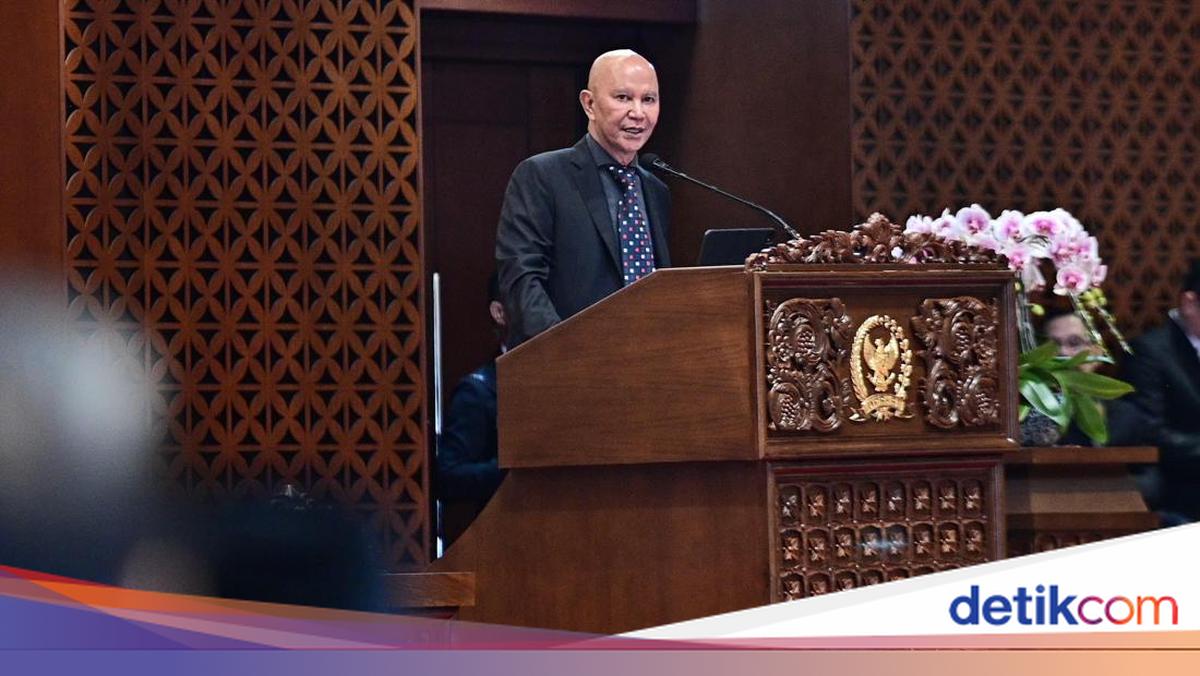
Said Abdullah believes that the current weakness of the rupiah is not solely caused by economic fundamental factors. He noted that the rupiah exchange rate is already at a relatively undervalued level, necessitating measures capable of maintaining market stability.
“The weakness of the rupiah today has touched a psychological level, and subsequently, our financial markets, particularly the Indonesia Composite Index (IHSG), are down by approximately 3.04 per cent. The issue is not merely economic fundamentals, as the rupiah is already undervalued. The rupiah should ideally not exceed the limit of Rp 17,600,” Said stated in his remarks on Thursday (4/6/2026).
Consequently, Said is urging that the synergy between fiscal and monetary policies through the Financial Sector Stability Committee (KSSK) be continuously strengthened. According to him, this forum needs to be utilised optimally to maintain stability while simultaneously strengthening the governance of fiscal policy.
“Therefore, I strongly hope that from the outset, there is a synergy of fiscal and monetary mixes within the KSSK forum; utilise it to the best of your ability while beginning to improve our fiscal policy governance,” he expressed.
Said also highlighted the steps taken by Bank Indonesia in responding to the dynamics of the rupiah exchange rate. However, he assessed that the effectiveness of these policies depends heavily on strong synergy between authorities so that they are clearly communicated to the market.
“As far as my monitoring of Bank Indonesia shows, through information sharing with colleagues, the central bank consistently performs triple interventions, involving SPOT, NDF, and DNDF (Deliverable Non-Forward) markets,” he said.
In his view, the main challenge to anticipate is not just exchange rate movements, but the market perception that forms. Without strong synergy, such perceptions could undermine investor confidence in economic fundamentals.
“The problem is that if synergy is not established and the market does not perceive this, then perception will take over. Consequently, investors will no longer look at our economic fundamentals, but will instead direct their perceptions in a way that could devastate our fundamentals. The KSSK must immediately undertake improvements and address the bleeding caused by the rupiah’s weakness,” he continued.
Furthermore, Said emphasised the importance of mitigation steps by the government to maintain the optimism of the business community and investors amidst the pressure on the rupiah. Such mitigation, he argued, must begin with the creation of an ecosystem of policy certainty.
Additionally, he assessed that policy governance must be strengthened to be more transparent, consistent, and provide comfort for business actors. Policy direction, he noted, must remain focused on the government’s ‘quick win’ programmes.
“The reason for mitigation is essentially how the government can create an ecosystem of certainty. Secondly, policy governance. Every policy must be managed to be transparent, affordable, and focused on the Quick Wins announced by the President. We must not deviate from the Quick Wins, as they are the only legitimate mainstay within our State Budget (APBN),” concluded Said.
Said believes that consistency in fiscal and monetary synergy, policy certainty, and focus on the government’s priority programmes are key to maintaining investor optimism and national economic stability amidst global dynamics.
Source: jawawa.id (https://jawawa.id/newsitem/said-abdullah-urges-fiscal-monetary-synergy-to-maintain-investor-confidence-1780822237)
Originally published by detikcom (https://news.detik.com/berita/d-8518451/said-abdullah-dorong-sinergi-fiskal-moneter-untuk-jaga-kepercayaan-investor), translated from Indonesian