
Said Abdullah Urges 2027 State Budget to Be More Impactful and Equitable
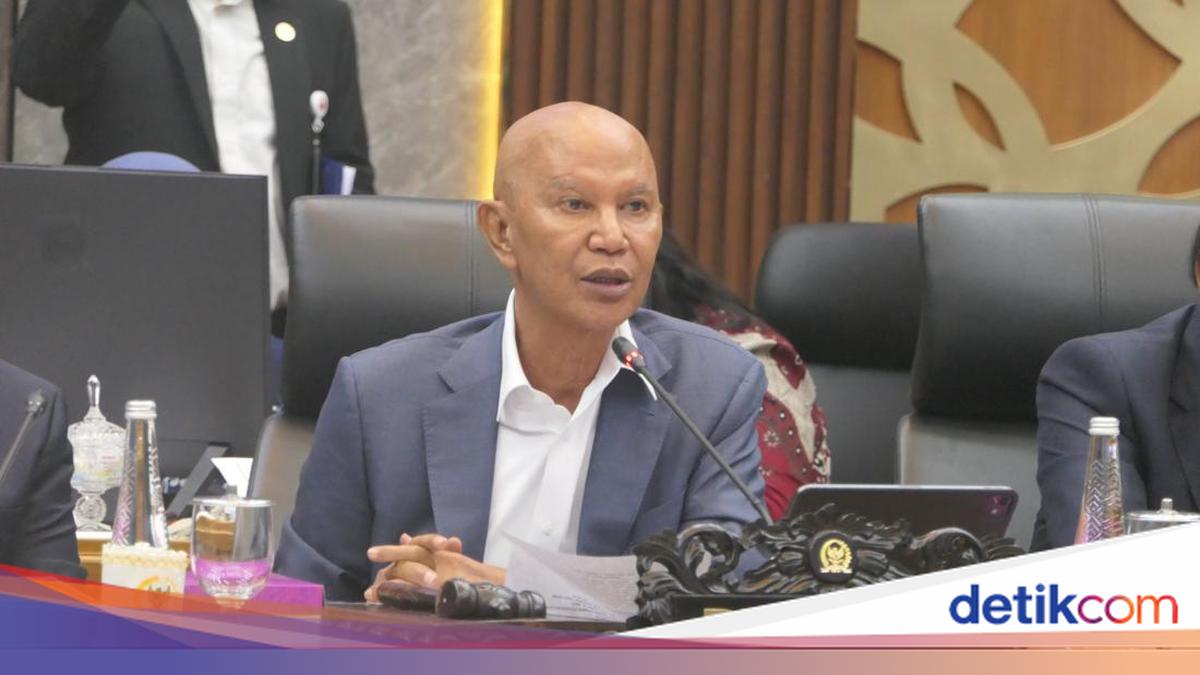
Chairman of the House of Representatives’ Budget Committee (Banggar) Said Abdullah has conveyed important views on several strategic points regarding the Principles of the Draft Law on the State Revenue and Expenditure Budget (APBN). Said highlighted a number of important findings from the joint evaluation of the 2025 APBN implementation. In essence, going forward the APBN must ensure that every programme has clear objectives, every programme must have measurable impact, and directly correlate with growth, equity, and economic justice. “Therefore, this principle is what we will continue to uphold in the upcoming discussions,” said Said in a written statement on Thursday (27/8/2026).
Said stated that the Banggar leadership has examined a number of macroeconomic and welfare assumption indicators, as well as the posture of the 2027 Draft State Budget (RAPBN). There is indeed alignment between the indicators in the KEM PPKF and those in the Financial Note of the 2027 RAPBN. However, several indicators listed in the 2027 RAPBN may need to be reconsidered, not because the indicator targets are wrong, but because the latest figures from Statistics Indonesia (BPS) are already too close to the targets in the 2027 RAPBN. “On the other hand, we also want to achieve more, considering that future APBN spending has reached Rp 4,097.2 trillion. We must give great meaning to this large spending,” said Said.
At the KEM PPKF meeting last June, the Banggar leadership agreed on economic growth of 5.8-6.5%, while the Financial Note proposed 6%. Said said it is possible that the target could be slightly increased. “Likewise with the Gini ratio target. The current Gini ratio stands at 0.368, while the Financial Note proposes 0.362-0.367. It seems we need to correct the upper limit so that the target is lower,” explained Said.
Said said his team also found issues with the unemployment rate target. Current BPS data shows the unemployment rate at 4.68%, while the Financial Note proposes 4.30%-4.87%. The upper limit target also needs to be reconsidered. “In line with this, as of May 2026 the proportion of formal workers has reached 40.7%, while the 2027 RAPBN proposes 40.8%, even though in February 2024 we were already at 40.83%. Our target should be higher,” Said asserted.
Said also mentioned that the rupiah exchange rate in the 2027 RAPBN has a midpoint of Rp 17,500 per US dollar. This figure is quite realistic. However, future monetary policy orchestration needs to be considered. If China tends to devalue the Yuan to make their export products competitive, on the other hand, since 2022 the United States has experienced a widening trade deficit due to the impact of the war in Ukraine, as well as rising inflation, and they prefer to strengthen the USD. The result is visible in the strengthening dollar index since 2022. “They expect the dollar’s strengthening to control inflation and make the dollar an attractive safe-haven asset,” said Said.
Furthermore, Said said that in an uncertain world and with fiscal limitations, there must be a narrative guiding the direction of future monetary policy, so that it can technically be implemented by Bank Indonesia (BI). “Ladies and gentlemen, whom we respect, every programme financed by the APBN must be based on accurate data. Because data serves as the foundation for the logical alignment between the core problem, programme intervention, and budget,” said Said. “If the data is wrong, the programme’s impact will also be skewed, and the objectives will certainly be absurd. Therefore, data-driven policy only applies if the data is properly collected and properly input,” he added.
Representing Banggar, Said raised the issue of data, as the media has been abuzz with citizens protesting their sudden rise to the top decile, and there may also be the opposite case, where those who are capable are placed in the bottom decile. Regarding this, Said asked BPS to conduct internal corrections and immediately revalidate the data. “Do not let data errors erase the opportunity for the poor to obtain economic justice. Especially since DTSEN is used as a major reference in various policies,” said Said.
For the first time in history, state spending has exceeded Rp 4,000 trillion. According to Said, behind this large figure lies a great responsibility to achieve equally large state revenues. “There are two main pillars: taxation and non-tax state revenue (PNBP). We must be careful about taxes. At a time when household economies tend to be below GDP growth, there is public sensitivity to new forms of taxation,” said Said.
Said added that his team sees targets for increases in Income Tax (PPh) and Value Added Tax (PPN). There is a target increase of Rp 64.8 trillion for PPh, and a target increase of Rp 132.8 trillion for PPN. “We hope the increase targets are natural, driven by economic growth, not from new taxation that could potentially burden the people,” said Said.
Conversely, there is actually a decrease in the PNBP target in the 2027 RAPBN. From the 2026 outlook, PNBP realisation is estimated at Rp 575 trillion, but the 2027 RAPBN targets Rp 517.4 trillion. “We know that export commodity prices next year have the potential to be low, but with improved natural resource governance, as instructed by President Prabowo, the 2027 PNBP target should still be able to remain high,” said Said. “We hope this target will be recalculated,” he continued.
In the session, Said also reminded about the discussion two years ago regarding the roadmap towards a balanced APBN. The direction towards that cannot be immediate. “There is a medium-term transition that needs to be prepared. Moving towards a balanced APBN is a roadmap to fiscal health, while also building stronger trust among market players,” Said asserted.
The 2026 APBN deficit has the potential to reach 2.85%, larger than last year’s 2.81%, even though in previous years we were able to stay below 2.4%. Said hopes the government will be disciplined in maintaining the 2027 fiscal deficit at the 2.4% level. “Because this step is a gradual path towards a balanced APBN. Our debt service ratio is already very large,” said Said. “This is the…”
Source: jawawa.id (https://jawawa.id/newsitem/said-abdullah-urges-2027-state-budget-to-be-more-impactful-and-equitable-1787820798)
Originally published by detikcom (https://news.detik.com/berita/d-8636656/said-abdullah-dorong-apbn-2027-lebih-berdampak-dan-berkeadilan), translated from Indonesian