
Said Abdullah: Total Defence Remains Relevant for Indonesia
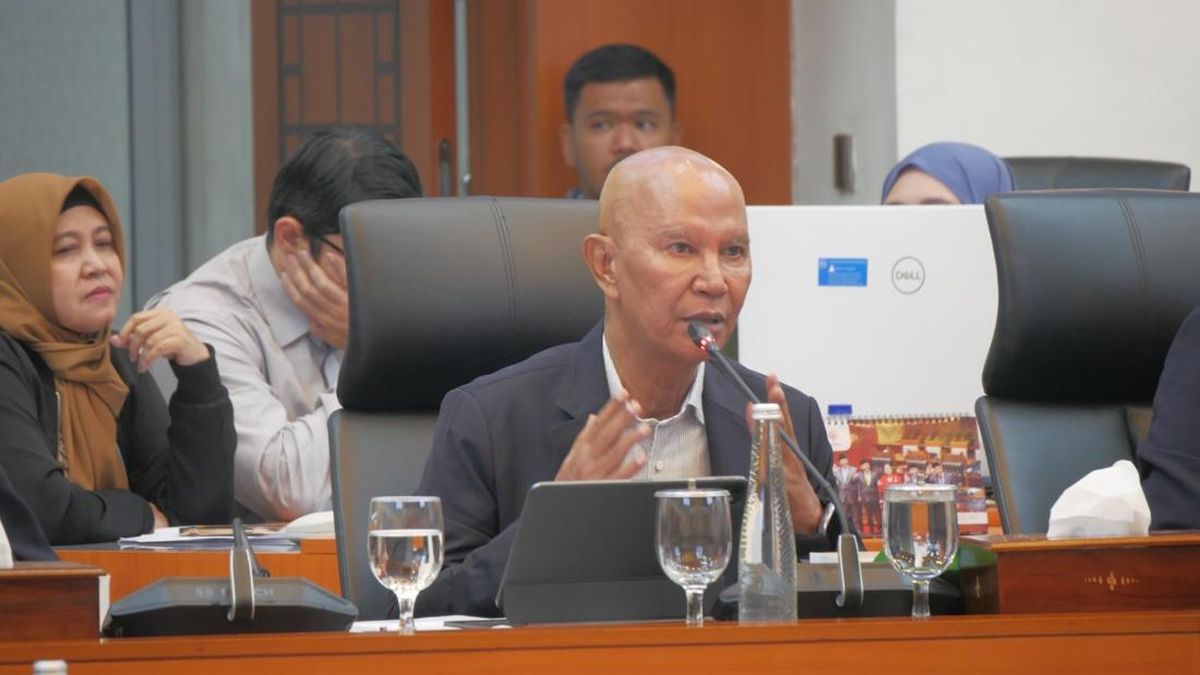
The concept of total defence is considered still relevant to be applied in Indonesia amidst the development of increasingly complex security and defence threats. The strengthening of national defence does not only rely on military strength but also requires the involvement of the community as part of the supporting force.
This was stated by a Member of the Indonesian House of Representatives (DPR RI) and Chairman of the PDI Perjuangan Central Executive Board, Said Abdullah. According to him, changing security challenges necessitate that the total defence concept be translated to suit the needs of the era.
Historically, military and democratic issues have often been placed in opposing positions. According to Said, this perspective should not be maintained, especially after Indonesia passed through the Reformation era.
The experience of the New Order era, when the military held a significant role in various civilian and political institutional positions, became part of the history that shaped the national consensus to strengthen democracy.
Post-New Order, the TNI (Indonesian National Armed Forces) is considered to have positioned itself professionally by focusing on the national defence sector. Said believes this position must be continuously maintained so that the TNI can carry out its primary duty as the nation’s defence force.
“What we need to think about next is translating trained reserve and supporting forces,” said Said.
According to Said, the foundation regarding total defence is actually enshrined in the 1945 Constitution. Article 27, paragraph 3 regulates the rights and obligations of citizens to participate in national defence efforts. Meanwhile, Article 30, paragraph 2 positions the TNI and Polri (National Police) as the primary forces, with the people as the supporting force.
Currently, the implementation of this concept is realised through the TNI as the primary defence force and the Reserve Component (Komcad) consisting of members of the community who undergo military training.
However, Said believes there is still room to strengthen the “total” aspect of this defence concept. One way is by expanding community involvement in a targeted manner and according to their respective capacities.
Learning from Other Nations
The idea of strengthening the community’s role in defence is not entirely new. Several democratic countries still implement compulsory military service through various models.
South Korea, Turkey, Brazil, Russia, Algeria, Armenia, Estonia, Israel, and North Korea are recorded as implementing compulsory military service. Several European countries such as Finland, Sweden, Norway, and Switzerland also have similar policies.
In the Southeast Asian region, Singapore and Thailand also implement compulsory military service, while Malaysia applies a selective model through the National Service Training Programme (PLKN).
Said believes these various models show that citizen involvement in defence can be adjusted to the characteristics and needs of each respective country.
“There are various models of compulsory military service in different countries. South Korea requires all men aged 18 to 28 to undergo military service for 18 to 24 months across various military branches. Those considered to have high-level international achievements are exempted by their government,” said Said.
Meanwhile, in the United States, Said noted, the model is different. After compulsory military service ended in 1973, the country implemented a selective system through the Selective Service System (SSS).
“Those who pass the SSS are obligated to undergo military service,” said Said.
Strengthening Total Defence
Said assesses that the total defence doctrine, which is based on the thinking of General A.H. Nasution in 1953, remains relevant today. The difference lies in the increasingly complex forms of threats.
The development of asymmetric warfare and hybrid warfare means that threats to the state do not always appear in the form of conventional military conflict. This condition demands broader defence readiness.
Therefore, according to Said, strengthening the TNI remains a priority. The development of a professional TNI posture and the fulfilment of the Minimum Essential Force (MEF) must continue to be pushed.
At the same time, the reserve component also needs to be reconsidered as a layer of defence. Community involvement can be directed through an approach of volunteerism and training that meets specific needs.
“Trained people are not just those involved in the Komcad; more than that, it is an inherent awareness, attached to every citizen, both personally and institutionally, with their respective expertise and capacity,” he said.
Within this framework, members of the community with various skills can become part of the support for national defence. Professionals, for example, can contribute through their expertise while also receiving training within the framework of national defence.
Said also introduced the idea of limited compulsory military service for the younger generation. This concept, according to him, is not solely aimed at meeting the needs of the Komcad, but also at building a culture of discipline, character, and national defence awareness.
This education can be conducted through collaboration between schools, the TNI, the Polri, and practitioners using long-term training and development patterns.
The goal is not only to build defence readiness but also to create a culture for the younger generation that is more productive, innovative, disciplined, and possesses noble character.
On this occasion, Said also expressed his hope that the TNI continues to be the fortress of the Republic while remaining close to the people.
“Happy 81st Anniversary to the TNI; may it become an even stronger fortress of the republic and remain loyal to the people, as per the theme of the 2026 TNI Anniversary: TNI Strong Together with the People, Indonesia Sovereign, Just, and Prosperous.”