
Said Abdullah Reveals Q2 2026 National Economic Growth
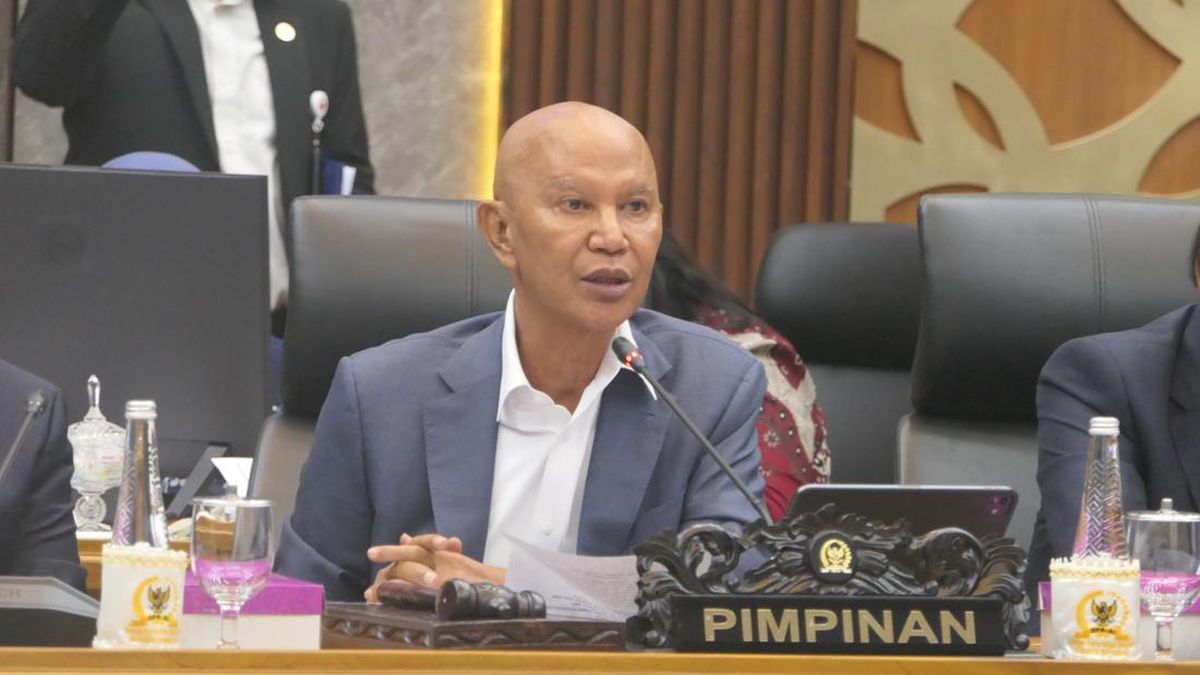
House Budget Committee (Banggar) Chair Said Abdullah expressed gratitude that amidst current geopolitical turmoil, the national economy still recorded growth of 5.29 per cent year-on-year (YoY), according to data released by Statistics Indonesia (BPS). Said noted that the school holiday period in the second quarter of 2026 contributed significantly to the growth of the accommodation, food and beverage sector, which expanded by 10.6 per cent. Seasonal factors such as the school and higher education admissions period, as well as grade promotions, also helped drive growth in the telecommunications sector to 6.97 per cent. The dry season, which boosted demand for electricity to supply air conditioning, coupled with geopolitical conflicts that increased gas prices, saw the electricity and gas sector record growth of 10.81 per cent. At the same time, Said cautioned against a slowdown in the manufacturing industry. In the first quarter of 2026, this industry grew 5.04 per cent YoY, but in the second quarter the figure fell to 4.52 per cent. “It is important for the government to be wary of this, because the manufacturing industry contributes 18.5 per cent of GDP, as well as being a contributor to 13.5 per cent of the national workforce, and a reflection of the majority of formal labour,” Said stated. Meanwhile, the simultaneous rice harvest in July has not yet succeeded in boosting growth in the agricultural sector. In the first quarter of 2026, the agricultural sector grew 4.97 per cent YoY, while in the second quarter growth was lower at 3.8 per cent YoY. “This needs to be a concern for the government because the agricultural sector reflects the primary sector, while contributing 13.57 per cent to GDP. The agricultural sector also contributes 28.75 per cent of the national workforce, thus its role is very strategic,” Said remarked. A similar trend occurred in household consumption, which also declined. In the first quarter of 2026, it grew 5.52 per cent, driven by the homecoming and Eid al-Fitr period. In the second quarter of 2026, the growth rate became 5.05 per cent. According to Said, household consumption, which supports 53.3 per cent of GDP, is still performing well. Meanwhile, the performance of capital goods investment (PMTB) and exports also showed positive growth, with PMTB growing 6.87 per cent and exports 4.13 per cent, compared to the first quarter of 2026 when national exports only grew 0.9 per cent. Amidst the issue of layoffs in various sectors, the employment landscape still shows positive figures. Workers in both the formal and informal sectors increased. In February 2026, formal sector workers totalled 59.93 million, rising to 60.31 million (40.7 per cent) in May 2026, while informal workers increased from 87.74 million to 87.88 million (59.3 per cent) over the same period. Although the absorption capacity for formal sector workers increased, Said assessed that this achievement has not significantly changed the proportion of formal and informal workers compared to 2025. In November 2025, formal sector workers still accounted for 42.30 per cent and informal workers 57.7 per cent. This means that in one semester, the proportion of informal labour increased by 1.6 per cent compared to the end of last year, and the proportion of formal workers decreased by 1.6 per cent. “The future challenge is how we increase the proportion of formal labour to be much larger than informal labour. The key is to improve the business climate in the industrial and large trade sectors, and to continue to encourage inclusion in higher education,” Said stated. Responding to the gap between formal and informal labour, Said noted that it contributes to the rise in the social inequality index (Gini ratio). In line with the BPS release, the Gini ratio in March 2026 reached 0.368, whereas in September 2025 it was 0.363. The increase in the Gini ratio was also strongly felt in urban areas, rising from 0.383 to 0.387. “The above figures also explain that those who remain working in the formal sector are better able to survive, or even grow, due to the support of various social security schemes, while those in the informal sector are more exposed to rising inflation in the transportation, education, health and food sectors,” he said. “I hope there is an affirmative programme from the government to provide various social security programmes, specifically aimed at informal workers, such as scholarships, easier access to BPJS, and expansion of job opportunities,” Said concluded.