
Said Abdullah Praises Stock Market Reforms
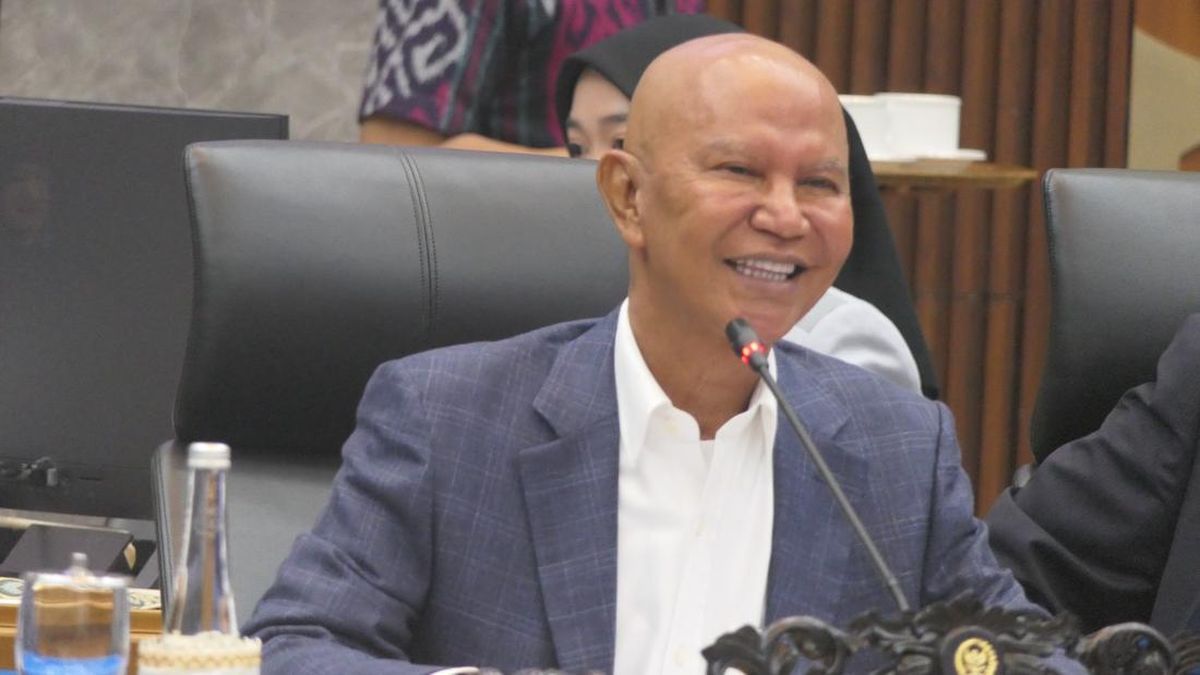
House of Representatives (DPR) Budget Committee chair Said Abdullah has praised measures by the Financial Services Authority (OJK) and the Indonesia Stock Exchange (BEI) to reform the capital market.
The various improvements are seen as important steps towards strengthening exchange governance and restoring the confidence of domestic and foreign investors.
Said said the reforms demonstrated the capital market authorities’ commitment to addressing concerns raised by global index providers over share-ownership transparency, disclosure and trading practices.
He said the changes were important after Indonesia’s capital market came under pressure over the past year. The Jakarta Composite Index (IHSG) fell sharply, at one point reaching 4,904 after having stood at a peak of 9,134 early in the year.
The market conditions also put psychological pressure on investors, particularly novice and retail investors whose portfolio values declined.
Nevertheless, Said said the pressure should be used as an opportunity to strengthen the foundations of Indonesia’s capital market, making it more transparent and credible, and better able to compete globally.
“We need to address the various issues that have attracted the attention of several index providers, because foreign investors use them as a reference,” Said said in a statement on Monday (9 November).
He stressed that restoring foreign investors’ confidence was important not only for the development of the capital market, but also for perceptions of Indonesia’s economic fundamentals.
Investor confidence in the capital market, he said, could generate positive sentiment towards investment in government securities (SBN) and help maintain rupiah exchange-rate stability.
“Foreign investors’ confidence in the BEI is not merely a matter of developing our capital market; it reflects something much broader: Indonesia’s macroeconomic fundamentals,” he said.
Despite the market pressure, Said also pointed to positive developments in the domestic investor base. As of October 2026, the number of capital-market investors had reached 33.5 million single investor identification (SID) accounts, up 65 per cent from the end of 2025.
The number of mutual fund investors also grew to 32.19 million SID, an increase of 68 per cent. Meanwhile, equity and bond investors totalled 10.36 million SID, up 21 per cent from the end of last year.
Said said this growth indicated that public interest in Indonesia’s capital market remained strong despite the challenges facing the exchange.
More than 70 per cent of capital-market investors are under 40, demonstrating the significant participation of younger generations in expanding the domestic investor base.
He said the growth in domestic investors could serve as a long-term buffer for Indonesia’s capital market.
On the other hand, Said acknowledged that foreign investors continued to have a major influence on market movements because of the large share of assets they held. Improving governance was therefore key to attracting global investors back to the market.
Said said OJK and BEI had undertaken various reforms in response to feedback from global index providers. These include a minimum free-float requirement of 15 per cent for new issuers introduced in April 2026, which is being phased in for existing issuers.
In addition, BEI, the Indonesian Central Securities Depository (KSEI) and OJK have expanded the granularity of investor classifications from nine categories to 39 sub-classifications. The move has been accompanied by the disclosure of High Shareholding Concentration (HSC) data to improve transparency around share ownership.
Said also praised OJK’s efforts to strengthen enforcement against capital-market violations. From January to October 2026, 835 parties were subject to sanctions and enforcement measures.
He said consistent enforcement was necessary to ensure the capital market operated transparently and offered investors better protection.
The reforms are not limited to issuers and market participants; they also extend to the BEI’s institutional structure through a demutualisation policy.
Under the policy, ownership of the BEI will no longer be restricted to exchange members, with non-member investors, both individuals and legal entities, also able to acquire shares.
Said said the change could broaden the scope for oversight and scrutiny of exchange management policies.
He expressed hope that the entire reform agenda would be implemented consistently and address the various concerns global index providers have raised about Indonesia’s capital market.
“If we implement capital-market reform fairly, as everyone hopes, the BEI should no longer face the threat of exclusion. More than that, it should be recognised, at the very least with a return to a positive rating, while remaining in the emerging-market category,” Said said.
He said implementation of the improvements made by OJK and the BEI needed to be monitored continuously to ensure market confidence recovered sustainably.
With these measures, capital-market reform is expected not merely to respond to external pressure, but also to lay the foundations for a healthier, more transparent and more competitive market in the future.
Source: jawawa.id (https://jawawa.id/newsitem/said-abdullah-praises-stock-market-reforms-1794203481)
Originally published by CNN Indonesia (https://www.cnnindonesia.com/nasional/20261109120935-633-1424886/said-abdullah-apresiasi-reformasi-bursa-saham), translated from Indonesian