
Said Abdullah Discusses the Moment Prabowo and Megawati Held Hands
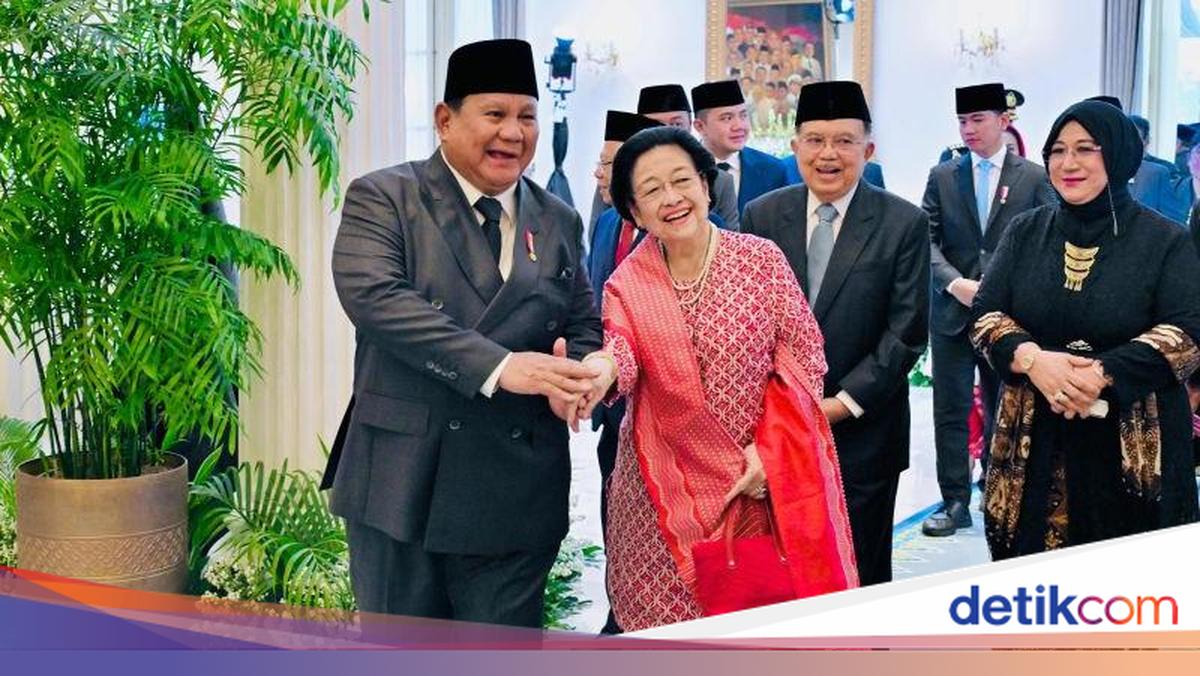
According to Said, the relationship between the two leaders can be viewed through several aspects. The first aspect is a long-standing friendship that has been established for decades. “Both of them (Prabowo and Megawati) even fought together in the 2009 presidential election, where both served as a Presidential and Vice-Presidential candidate pair. That friendship and kinship have continued even after the 2009 election concluded,” Said stated in a written release on Tuesday (2/6/2026).
Said mentioned that even when the PDI-P nominated Joko Widodo (Jokowi) for the 2014 presidential election, competing against Prabowo at the time and in the subsequent period, the relationship and kinship between the two remained well-maintained. “Their friendship is robust, not merely a superficial connection often perceived by the public. Their friendship is sincere and without flaw,” explained Said.
The second aspect, according to Said, is Megawati’s current position as the Chairperson of the Advisory Board of the Agency for the Development of Pancasila Ideology (BPIP) and the National Research and Innovation Agency (BRIN). Despite the change in presidency, Prabowo continues to entrust these state duties to Megawati, even though the PDI-P is not part of the government. “This means that President Prabowo views Mrs Megawati as possessing statesmanship, just as he does, so that these matters transcend practical politics,” Said emphasised.
Said stated that both leaders share the same vision. He noted that state institutions such as BPIP must be led by statesmen, as well as individuals with the persistence to instil Pancasila values. Furthermore, Said noted that matters concerning Pancasila transcend all else, and therefore serve as a guide for both Prabowo and Megawati. “Thus, the warmth displayed during the Pancasila Day commemoration is a manifestation of this,” he said.
The third aspect is the relationship between Megawati and Prabowo, which is built upon a foundation of national political views. Differences in political paths, where the PDI-P serves as a balancing force, are not interpreted by Prabowo as enmity. “In fact, in President Prabowo’s speech to the House of Representatives on 20 May, he respected and appreciated the various inputs provided by PDI-P cadres in the DPR. To me, both figures have reached a level of ‘politics beyond’—politicking for the nation and the state, rather than solely for power,” Said remarked.
Said assessed that these three foundations and perspectives are the reasons why the relationship between Megawati and Prabowo remains enduring and untarnished, despite their parties having different political inclinations. “I believe this exemplary behaviour is also followed by the members of the PDI-P and Gerindra factions in the DPR. Both factions can engage fluidly, discussing and exchanging views on government policies and programmes; although differences in opinion occur, both understand their respective positions and respect each other as political allies who can still synergise,” he concluded.