
Said Abdullah Criticises MSCI’s Stance on Indonesia’s Stock Exchange
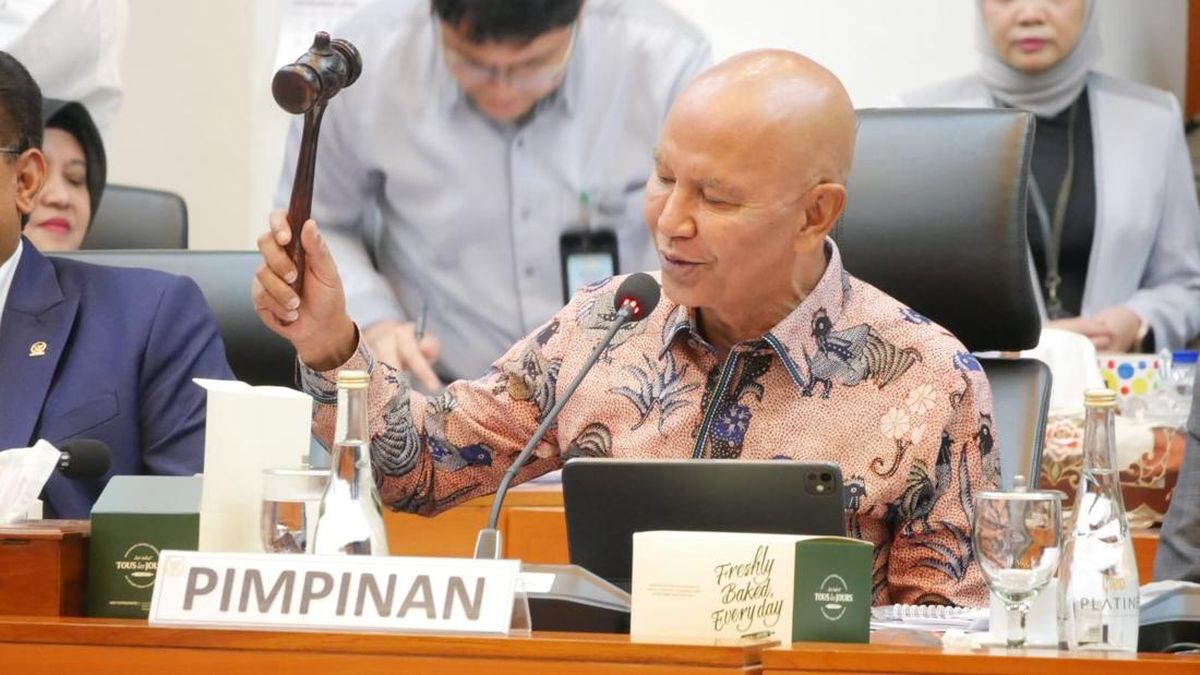
House of Representatives (DPR) Budget Committee chair Said Abdullah has criticised Morgan Stanley Capital International’s (MSCI) approach to Indonesia’s capital market, saying it triggered turmoil on the Indonesia Stock Exchange (IDX).
He said efforts to improve stock-market governance should continue, but should not create disruption that harms the market. His criticism followed an MSCI announcement that affected trading in Indonesian shares.
On 16 October 2026, the Jakarta Composite Index (JCI) plunged 11.57 per cent in a single day. Several large-cap and blue-chip shares also fell sharply, with some dropping by nearly 15 per cent.
In a statement titled “MSCI Is No Prophet”, Said questioned whether MSCI’s treatment of the IDX was proportionate. He said assessments by the global index provider should be taken seriously, but its decisions remained open to criticism.
“MSCI is certainly not a religious institution where essential truth resides, and its officials are not prophets with sole and perfect authority,” Said said in a statement quoted on Sunday (18 October).
He said Indonesia’s capital-market authorities and MSCI should build their relationship through communication and mutual evaluation. This would help ensure that efforts to improve transparency and governance did not lead to recurring volatility.
Said said that, according to performance reports submitted to the DPR, the IDX and the Financial Services Authority (OJK) had gradually implemented a number of recommendations to improve the capital market. The Indonesia Central Securities Depository (KSEI) and the OJK were also actively communicating with MSCI, he said.
One measure he highlighted was the OJK’s decision to raise minimum public shareholding, or free float, requirements on a tiered basis according to market capitalisation: 15 per cent, 20 per cent and 25 per cent. The OJK has also imposed hundreds of sanctions on market participants.
However, Said questioned the apparent lack of recognition for these measures. He contrasted MSCI’s response with that of FTSE Russell, which retained Indonesia in its Secondary Emerging Market group alongside countries including China, India, the Philippines, Vietnam and Saudi Arabia.
Said said FTSE Russell’s decision took account of various reform efforts, including investor classification, higher free-float levels and stronger market supervision.
“Why has FTSE Russell recognised efforts to improve the IDX, while MSCI has not?” he wrote.
Nevertheless, Said acknowledged that reform of Indonesia’s capital market remained unfinished. He said alleged share-price manipulation persisted and that information on share ownership was still limited.
He said KSEI and the OJK needed to refine investor classifications and broaden access to more detailed share-ownership information. Such transparency was important to help investors make decisions based on accurate data and adequate risk calculations, he said.
Said said he understood that MSCI, as a provider of global investment benchmarks, had an interest in ensuring that investors had sufficient information. However, he argued that assessments of Indonesia’s capital market should also take account of progress made by the authorities.
He also highlighted the effect of MSCI’s announcement on share prices. In his view, recurring market turbulence could run counter to the goal of improving the capital market’s quality.
Said also referred to foreign investor transactions during the market sell-off on 16 October 2026. He said foreign investors bought shares on the IDX worth Rp9.18 trillion as the JCI slumped following MSCI’s announcement.
Said stressed that he was not accusing MSCI of deliberately driving share prices down to benefit particular investors. However, he said the effects of its policy warranted scrutiny because they could create opportunities for market participants, including hedge funds.
“Of course, I am not accusing an institution of MSCI’s standing of conspiring to drive down the JCI and pave the way for foreign investors to profit. But it is difficult to deny the fact that, consciously or otherwise, MSCI’s policy benefits hedge funds,” he wrote.
He also questioned the consistency of MSCI’s approach. If share-price manipulation was considered harmful to investors, Said said, decisions by index providers that had a major impact on market movements should also be evaluated.
For Said, criticising MSCI did not mean opposing capital-market reform. He emphasised the importance of identifying the IDX’s underlying problems without disregarding the effects of the reform process.
He likened efforts to improve Indonesia’s capital market to searching for a needle in a rice field with ripening rice. The needle still had to be found, he said, but the search should not damage the growing crop.
“Improving Indonesia’s capital market is like searching for a needle in a rice field where the rice is ripening. Let us find the needle, but not damage the ripening rice by trampling it while searching,” Said wrote.
Source: jawawa.id (https://jawawa.id/newsitem/said-abdullah-criticises-mscis-stance-on-indonesias-stock-exchange-1792291831)
Originally published by CNN Indonesia (https://www.cnnindonesia.com/nasional/20261018091643-633-1416625/said-abdullah-kritik-sikap-msci-terhadap-bursa-indonesia), translated from Indonesian