
Sahroni States Polri and Komnas HAM Must Mutually Correct Human Rights Issues
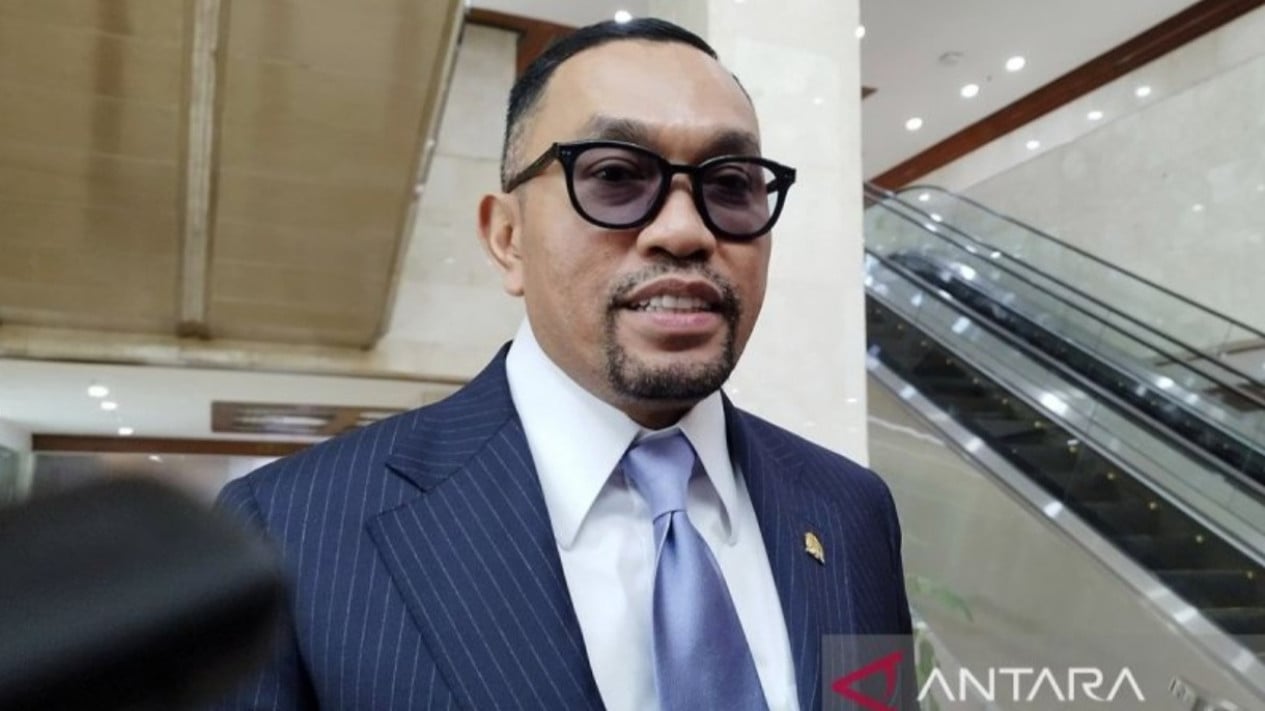
Jakarta, VIVA – The Deputy Chairman of Commission III of the DPR RI, Ahmad Sahroni, stated that the National Police (Polri) and the National Commission on Human Rights (Komnas HAM) must work together to mutually correct issues regarding alleged human rights violations.
Sahroni noted that recent criticisms have tended to focus on police actions deemed to have the potential to violate human rights, such as the shooting of street robbers.
“We want the police to also be able to correct human rights issues through Komnas HAM. It should not just be Komnas HAM correcting us by stating that certain actions are not allowed or constitute human rights violations, but the police must also be able to provide corrections to the relevant parties,” said Sahroni during a hearing regarding the Police Bill (RUU Polri) at the DPR RI Building on Tuesday, 2 June 2026.
The legislator specialising in law enforcement stated that the protection of human rights is the responsibility of all parties. However, in terms of oversight, every institution must safeguard each other’s credibility.
“Human rights belong to everyone, regardless of who they are, but the credibility of other institutions must also be maintained. There must be the ability to correct what has been done or stated in the public sphere. We must not allow the public to become confused,” he added.
In the context of the Police Bill, Sahroni wants the mechanism for correcting and supervising the police to remain professional so that narratives developing in the public sphere do not cause harmful impacts.
“The Police Bill will become stronger and better in the future. Strong not because of power, but because of one factor: being properly maintained by all of us, including through oversight,” he said.
This statement was made by Sahroni in response to a presentation by a constitutional law lecturer from Pancasila University, Fritz Edward Siregar, regarding the importance of human rights and democracy in police education.
According to Fritz, human rights education is a standard of police professionalism because the authority of Polri directly touches upon bodily freedom, mobility, and human dignity. Therefore, he stated that human rights education needs to be an integral part of formation, training, promotion, evaluation, and professional ethics within the police force.
“In this way, human rights will not weaken the firmness of Polri; rather, human rights education will make Polri’s actions more legitimate, more proportional, and more trusted,” he concluded.