
Sahroni Sets Schedule for Asset Forfeiture Bill Debate, Targeting Passage on 15 December
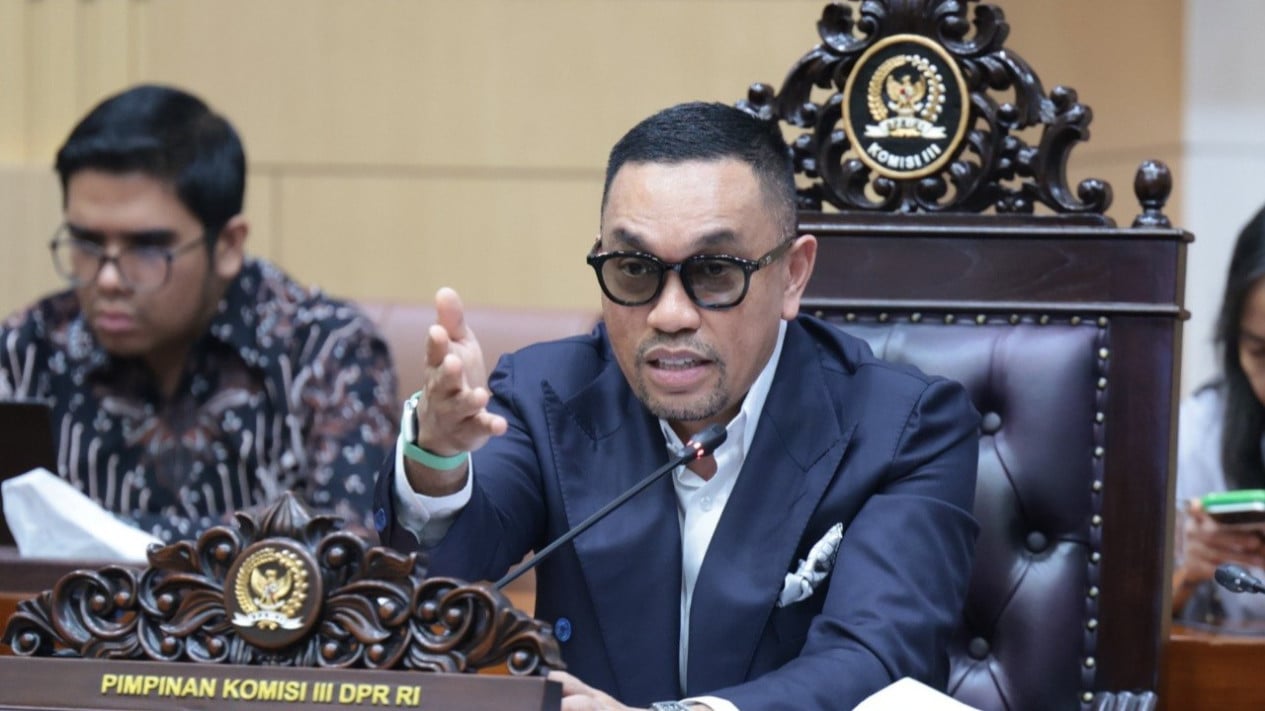
Jakarta — The House of Representatives’ Commission III has scheduled discussions on the substance of the Asset Forfeiture Bill to begin on 5 November 2026. Before substantive deliberations start, the commission is holding public hearings to gather input from various groups.
Commission III deputy chair Ahmad Sahroni said the hearings involved a range of speakers, including experts, lawyers, students and civil society organisations. Their contributions will be reviewed and used in preparing the bill’s draft.
“Hopefully it can be completed sooner, in line with Professor Sufmi Dasco’s commitment that it will be passed on 15 December. Hopefully it can be even quicker. What matters is that these public hearings continue until 5 November,” Sahroni said after a meeting at the parliamentary complex in Jakarta on Wednesday (28 October 2026).
Sahroni said 86 speakers had so far presented their views and aspirations on the proposed regulation.
One issue frequently raised at the hearings was the risk of abuse of authority. Some submissions stressed that the Asset Forfeiture Bill must not be used as an instrument of power or to target particular individuals.
“The Asset Forfeiture Bill must not be turned into an instrument of power or used to target anyone. We do not want it to be misused,” he said.
Sahroni said another proposal was to allow the tracing and forfeiture of all assets belonging to offenders that originated from criminal activity.
He said law enforcement agencies should lead these efforts to ensure that no proceeds of crime remain untouched. Other submissions concerned the calculation of state losses and which institution should be authorised to audit them.
“The calculation of state losses should be assigned to the institution — the institution ultimately determined by the Constitutional Court to have authority to audit, namely the Audit Board of the Republic of Indonesia (BPK RI),” he said.
Sahroni said the submissions received at the public hearings would be studied before being considered for inclusion in the bill’s draft. This is part of the process Commission III is undertaking before substantive discussions begin.
However, as of Wednesday, 28 October 2026, Commission III had not prepared an official draft of the Asset Forfeiture Bill. Sahroni explained that documents currently circulating publicly may be illustrative material rather than a draft produced by the commission itself.