
Sahroni Agrees State Losses Are Not Corruption, Calls for Revision of Corruption Law
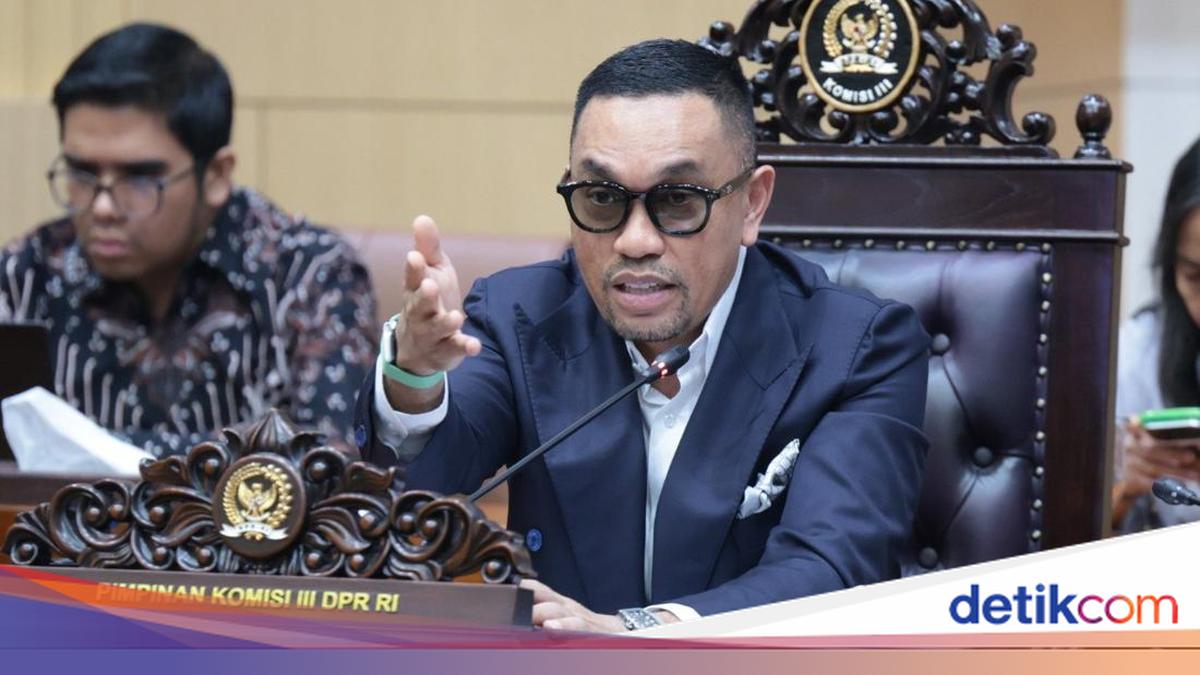
Deputy Chairman of Commission III of the House of Representatives Ahmad Sahroni has agreed with National Economic Council (DEN) Chairman Luhut Binsar Pandjaitan’s proposal that state losses should not, in themselves, constitute corruption. He recommended revising the Corruption Eradication Law.
“I agree with what Mr Luhut said: the criteria for corruption must distinguish between state business and criminal acts committed by state officials,” Sahroni said when contacted on Thursday (22 October 2026).
He cited corruption by regional heads as an example, saying they should prioritise the interests of local communities.
“If a regional head is supposed to prioritise the community but instead takes [for themselves], that is corruption. We should assess it in terms of mens rea,” he said.
The NasDem Party’s central executive board treasurer said Luhut’s proposal should be examined carefully. He also called for it to be followed up through amendments to the Corruption Eradication Law.
“Mr Luhut’s proposal must be studied in depth to establish a distinction between corruption in the state’s interests and corruption that clearly harms the public. The latter must be followed up with amendments to the Corruption Eradication Law, providing a strong basis for law enforcement agencies. Mr Luhut’s idea is very good,” he said.
Luhut’s statement
Luhut previously proposed reviewing the definition of corruption in Indonesia. He presented the proposal directly to President Prabowo Subianto.
“The President also agreed with the study conducted by the National Economic Council team on the definition of corruption,” Luhut said at Merdeka Palace in Central Jakarta on Tuesday (20 October).
His proposal is that state losses should not constitute corruption. He said this was in line with the United Nations Convention against Corruption (UNCAC), which the government has ratified.
“We refer to the UN Convention’s chapter on the definition of corruption. The definition in the UN convention, which the government ratified 20 years ago, concerns bribery; it does not refer to state losses,” Luhut said.
He said Indonesia was the only country to treat state losses as a form of corruption. According to Luhut, this burdens the operations of state businesses and state-owned companies, including Danantara’s ability to undertake corporate actions.
“Indonesia is the only country that applies the issue of state losses in this way. This does make it difficult for entities such as Danantara to conduct business, when every business activity carries risks. So I think this is important,” Luhut said.