
Safety Standards Remain a Challenge for Electric Motorcycle Manufacturers
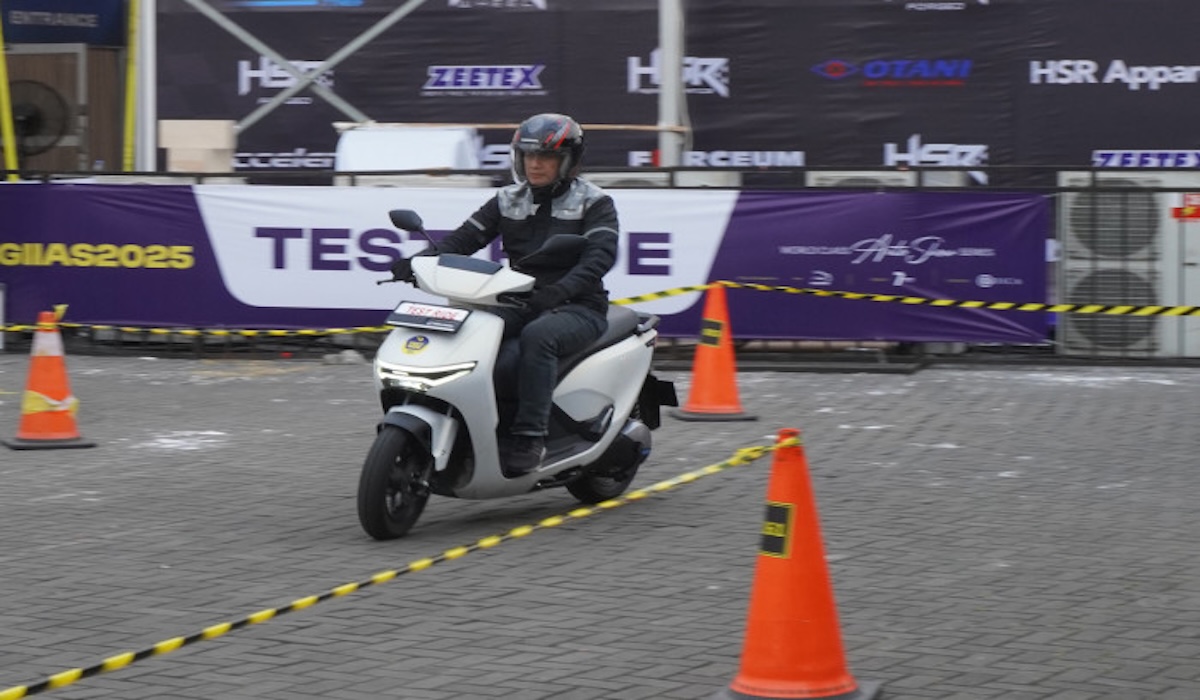
The Ministry of Industry is continuing to finalise the electric motorcycle incentive scheme, whose launch has been postponed until July 2026. However, behind the push to accelerate the adoption of two-wheeled electric vehicles, a more fundamental issue has emerged: safety standards have not progressed as rapidly as market growth.
This issue came to the fore after Septian Hario Seto, Member and Executive Secretary of the National Economic Council (DEN), stated that the government, through the Ministry of Industry, is still reviewing the standardisation of two-wheeled electric vehicles. The review covers motorcycle components, batteries, charging systems, and battery swap mechanisms.
This situation creates a policy gap. On one hand, electric motorcycle incentives are expected to roll out soon and could increase the number of electric vehicles on the road. On the other hand, safety standardisation for key electric vehicle components remains in the study phase with no clear completion target.
Concerns over safety aspects are increasingly relevant because the electric motorcycle market in Indonesia has already developed with highly diverse specifications. Evvy Kartini, Founder of the National Battery Research Institute (NBRI), revealed that there are at least 58 electric motorcycle brands circulating in Indonesia with varying battery specifications.
Yet the battery is not merely a power source for electric vehicles. This component is also one of the most crucial elements in vehicle safety, particularly regarding potential system failures, charging, and risks in daily use.
The problem is that Indonesia still lacks binding national safety standards for critical components such as batteries, electrical systems, and braking on electric motorcycles. As a result, market growth risks outpacing the strengthening of safety standards.
The context of two-wheeler safety itself remains a major challenge. Data from the National Police’s Pusiknas recorded that more than three million motorcyclists were involved in accidents between 2023 and 2025, accounting for approximately 76 percent of total traffic accidents. This figure indicates that motorcycle safety risks remain high, even before the more massive acceleration of electric motorcycle adoption.
Niti Emiliana, Daily Chairperson of the Indonesian Consumers Foundation (YLKI), believes the government needs to conduct a more comprehensive evaluation of safety standards and systems for two-wheeled vehicles, including electric motorcycles, before their penetration becomes more widespread.
“It is the right of consumers and the public to receive guaranteed safety standards for two-wheeled electric vehicles,” Niti said.
According to her, regulation should not be directed solely at encouraging electric vehicle adoption. The government must also ensure there are standards capable of anticipating system failure risks and other potential hazards that could endanger consumers.
“This standardisation is very urgent and must begin to be viewed as a primary need, no longer an optional feature,” she stated.
Similar encouragement has also come from motorcycle users. Yosi, a member of the Honda Jakarta Association community, believes safety features should not be positioned as added value available only in certain segments.
“Hopefully this can be implemented as a standard regulation, so it can be applied to all motorcycle brands in Indonesia,” he said.
The debate over electric motorcycle safety also highlights the limitations of an approach that has largely relied on education and law enforcement. Both remain important but are highly dependent on rider behaviour. Safety standards work differently: protection is built directly into the vehicle before it is used on the road.
This awareness has begun to spur initiatives from the industry. Last week, the Indonesian Road Safety Rating (IDRS) was officially declared as the first motorcycle safety rating system in Indonesia. Its presence is considered relevant amid the dominance of motorcycles in national traffic accident figures.
Soerjanto Tjahjono, Chairman of the National Transportation Safety Committee (KNKT), expressed support for IDRS. According to him, the safety rating system could become one of the instruments to help reduce motorcycle accident rates in Indonesia.
“We strongly support the existence of IDRS so that by 2030 the rate of road accidents involving motorcycles can be reduced,” he said.
However, IDRS remains voluntary and has not yet become part of mandatory safety standards required by regulators. As a result, the implementation of safety aspects could vary between manufacturers and has not yet become a uniform reference for the entire industry.
Electric motorcycles are indeed the trigger for the current debate. Yet the issue that has emerged is far broader: two-wheeler safety has not developed as quickly as the push to expand its adoption.
Therefore, amid the planned incentives and growth of the electric vehicle market, safety needs to be positioned as a basic standard in every policy, not as an afterthought once adoption targets are met.