
Safeguarding Water Before the Tap
Water is often only truly appreciated when its flow changes—becoming turbid, foamy, odorous, or suddenly diminishing. It is at such moments that the public realises that the seemingly simple water at the end of a tap actually depends on a long system with many points of vulnerability.
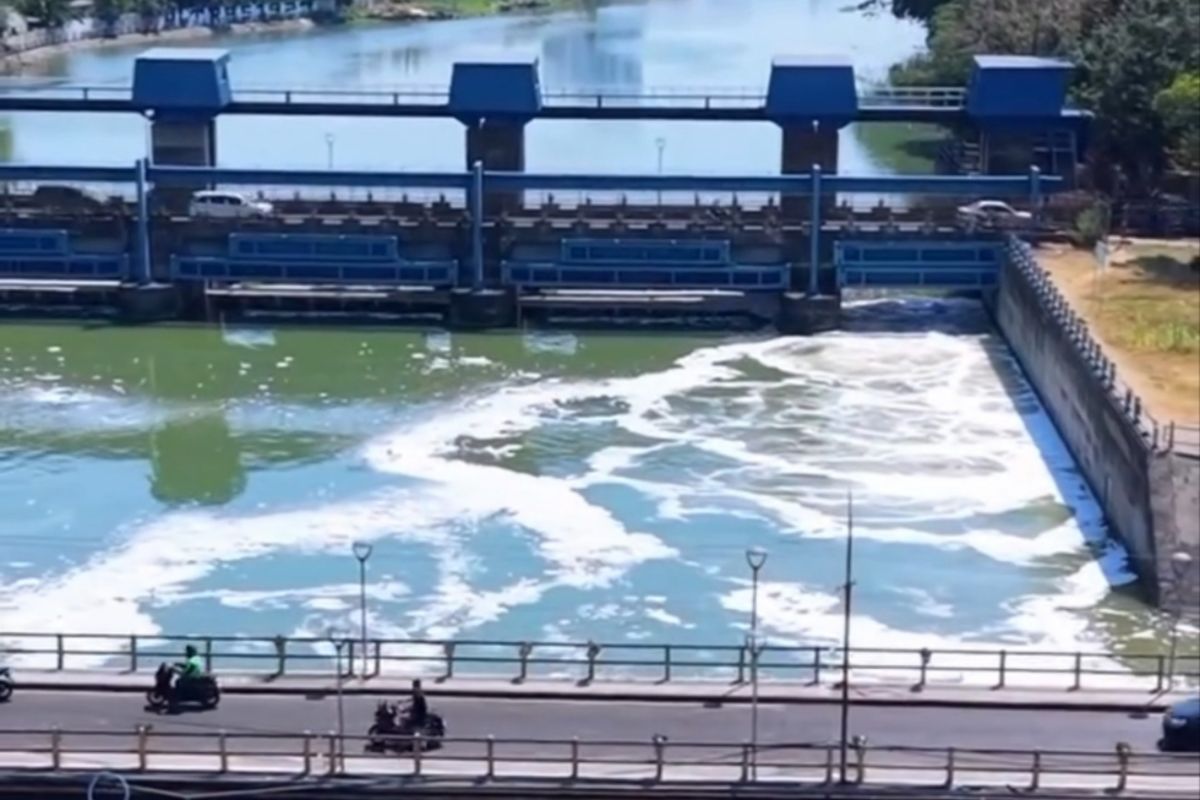
Experience in Surabaya, East Java, on 6 September 2026, demonstrated how thin the margin is between raw water quality and customer peace of mind. A large amount of foam was detected at the Karang Pilang Drinking Water Treatment Plant (IPAM). Subsequent inspections pointed towards the raw water entering the plant, suspected to be linked to pollution in the Surabaya River.
A rapid response ensured the issue could be managed. The regional water utility, PAM Surya Sembada, coordinated with Perum Jasa Tirta (PJT) I to perform water flushing, while foam control measures were implemented at the treatment plant. Production subsequently returned to normal. This event demonstrates that while the ability to respond to disruptions remains vital, prevention is far more strategic.
The question is not merely how quickly a company can restore conditions after pollution occurs. The more fundamental question is how early potential disruptions can be identified before raw water enters the treatment plant.
It is at this juncture that PAM Surya Sembada’s request for access to PJT I’s early warning system becomes crucial. The President Director of PAM Surya Sembada, Tias Alvin Papatria, expressed this need so that the company can more rapidly anticipate emergency conditions that have the potential to affect raw water quality.
An early warning system is more than just a technological tool; it is a component of risk governance. Information regarding changes in water quality from upstream must be translatable into operational decisions, security measures, and communication to customers before a disruption spreads.