
Safeguarding Village Cooperatives, Safeguarding the People's Hopes
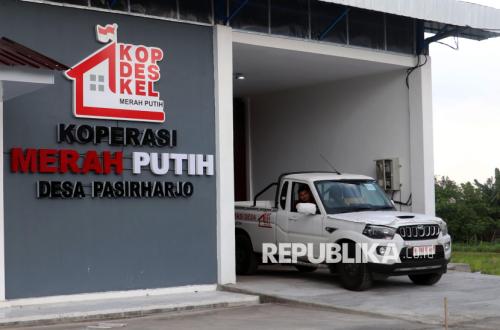
Amid the government’s high hopes of making the Red and White Village Cooperative a driver of the people’s economy, one thing the government must pay attention to is that a programme must be established with proper regulation, good governance, and strict oversight. The existence of appropriate and comprehensive regulation serves as a legal umbrella for the implementation of the Red and White Village/Sub-district Cooperative, guaranteeing legal certainty, effective programme execution, and the realisation of good cooperative governance. Good governance and strict oversight will be the main foundation so that village cooperatives not only grow in quantity but also develop in quality. With transparent, accountable, and participatory governance, every rupiah managed by the cooperative can be accounted for, every decision can be monitored, and every benefit can be felt by the community.
Programmes are often launched with very large budgets, a high number of cooperative units, and the glorification of a ‘grandiose’ launch, yet on the implementation side, maladministration frequently occurs in governance and oversight. The history of development in this country teaches us that good intentions often stumble over poor governance. It is at this point that the Indonesian Ombudsman’s step to coordinate with the Ministry of Cooperatives becomes a positive signal that oversight should be present from the beginning, not after problems arise.
The meeting between the Indonesian Ombudsman and the Ministry of Cooperatives demonstrates an awareness that public service in the cooperative sector must not only be oriented towards administrative targets but must be a state instrument to improve community welfare. If the process of formation, mentoring, and management does not run well, then those harmed are not just the figures in government reports, but the village residents who pin their hopes on the programme. The Ombudsman’s commitment to overseeing strategic programmes through follow-ups on public reports and Investigations on Own Initiative (IAPS) is an effective step that does not wait for maladministration to occur. It must be able to detect potential irregularities early, identify service obstacles, and ensure that every policy truly reaches the beneficiaries. Thus, oversight is not an instrument to find fault, but a mechanism to maintain the quality of public services.
On the other hand, the Minister of Cooperatives’ request for the Ombudsman to provide support and oversight indicates an important understanding that oversight is not a threat to state administrators. In fact, an institution confident in its governance will be open to criticism and supervision. In many cases, government programme failures often occur not due to a lack of resources, but because of the minimal independent and sustainable correction mechanisms. However, the real challenge lies in the field. Villages have different characteristics, diverse human resource capacities, and varying levels of understanding regarding cooperative governance. Therefore, oversight cannot be sufficiently carried out from meeting rooms or through administrative reports. Oversight must be able to hear the voices of cooperative members, monitor service quality, and ensure cooperatives do not turn into mere formalistic projects. If oversight runs well, governance is strengthened, and public service becomes a priority, then village cooperatives can become an economic empowerment tool with tangible benefits. Conversely, without strong oversight, cooperatives risk becoming a long list of programmes that promise change but fail to deliver prosperity.